1869–1891
Growing up in Vadsø
Johan Ludvig Harjo was born in Vadsø in 1869, the son of Johan Fredriksen Harju and Eva Gretha Johansdatter. He was usually called Ludvig. His father had been born in Kuivakangas in northern Sweden, and the family was in Norway by 1867, when Ludvig’s older brother Isak was born in Tromsø. By the 1875 census, they were living in Vadsø, where Johan worked as a fisherman and carpenter. [1]
Ludvig’s younger brother Karl Fredrik and sister Marie Cecilie grew up in the family too. Karl later went to sea; Marie would marry into the Børresen family. Ludvig became a fisherman, an occupation recorded when he married Anna Kathrine Børresen in Vadsø on July 5, 1891. He was about twenty-two and Anna about twenty. [2]
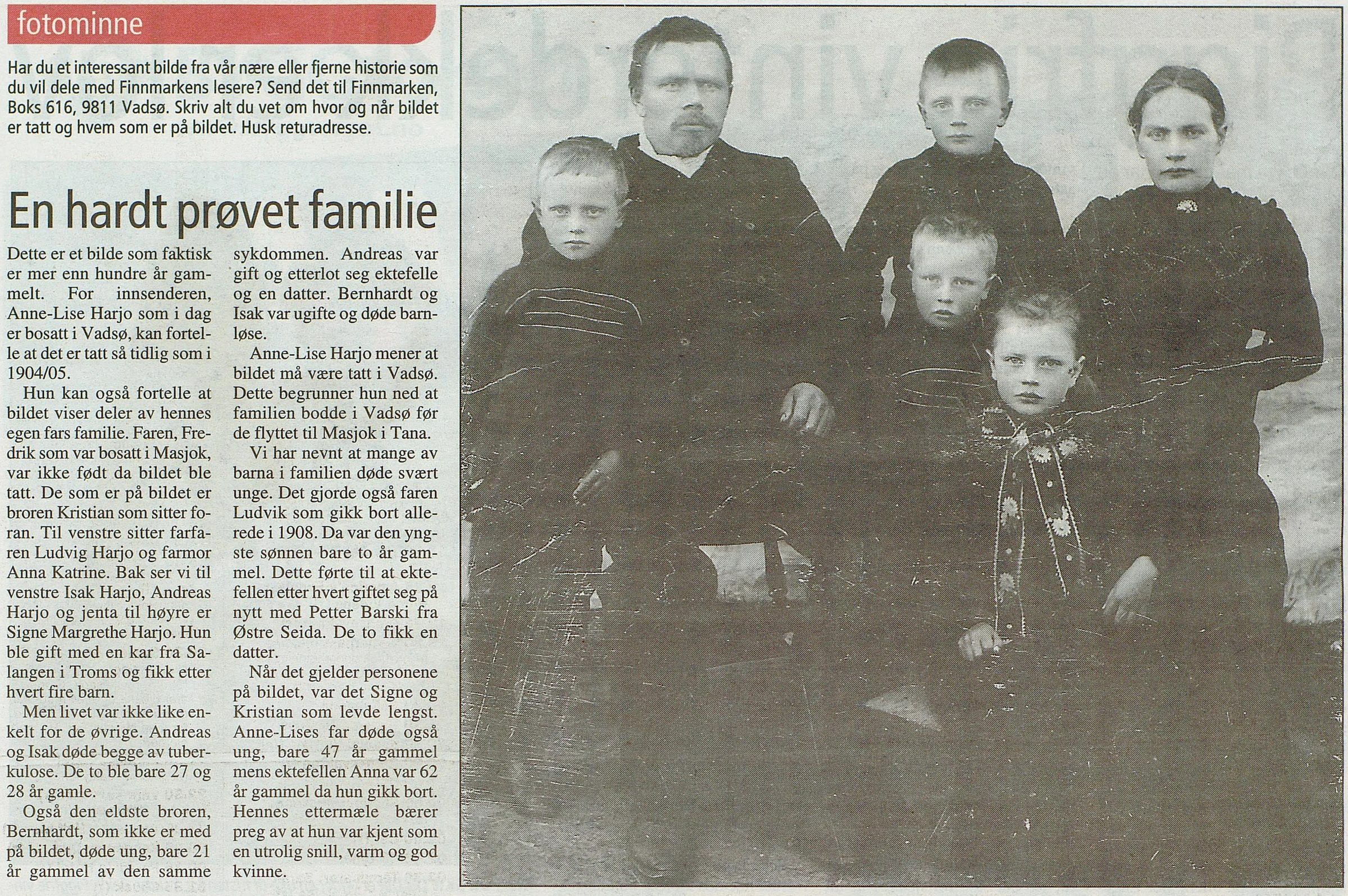
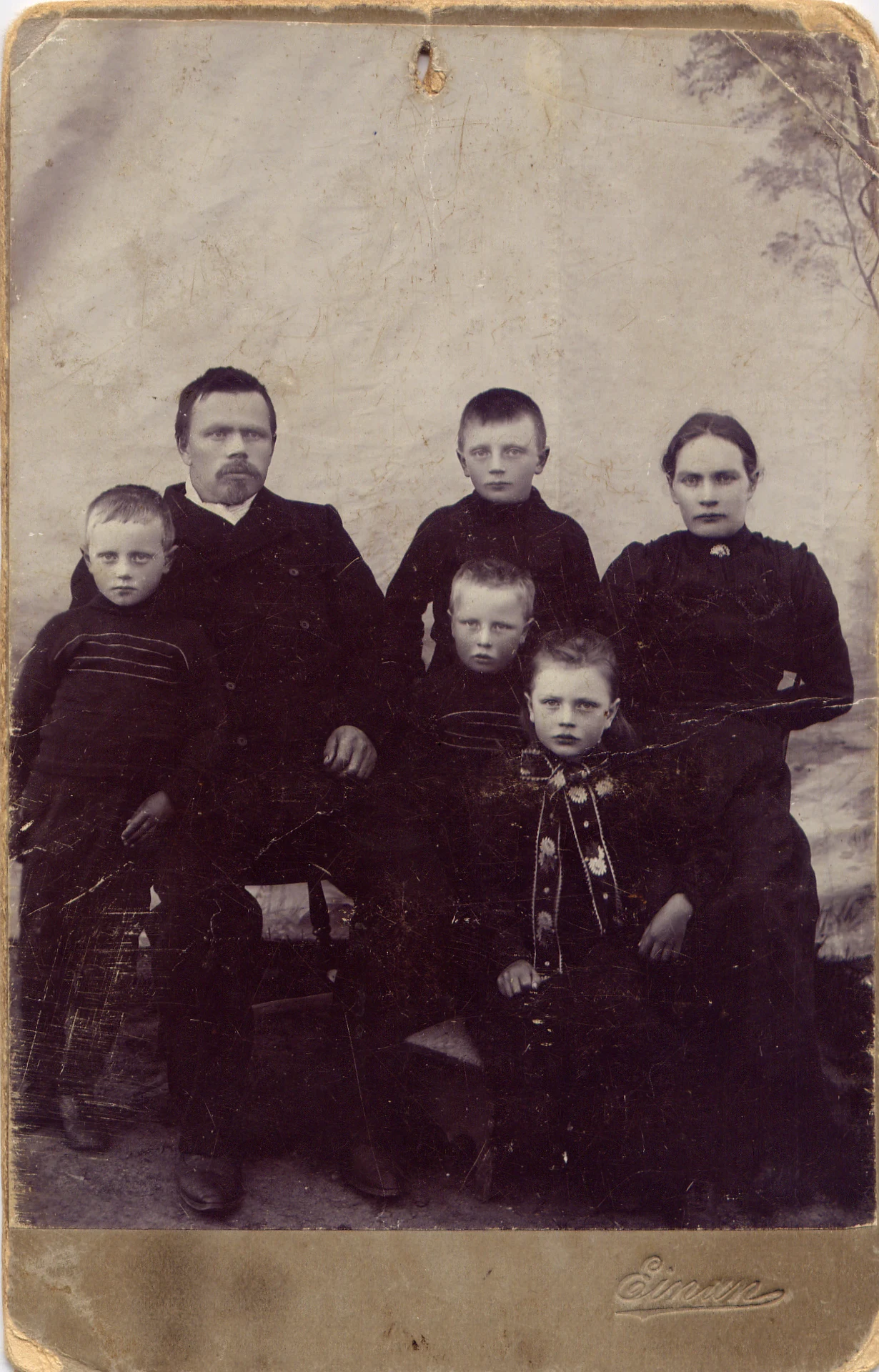
Anna had been born in Tana and was working as a domestic servant in Vadsø. Together they began the family whose children appear beside them in the surviving portrait. The portrait shows Isak, Andreas, Ludvig, Anna, Hans Kristian and Signe. Bernhard is not pictured. Their family also included Hans Fredrik and Karl Fredrik. Read Anna’s story.
1890s
A place in the town’s life
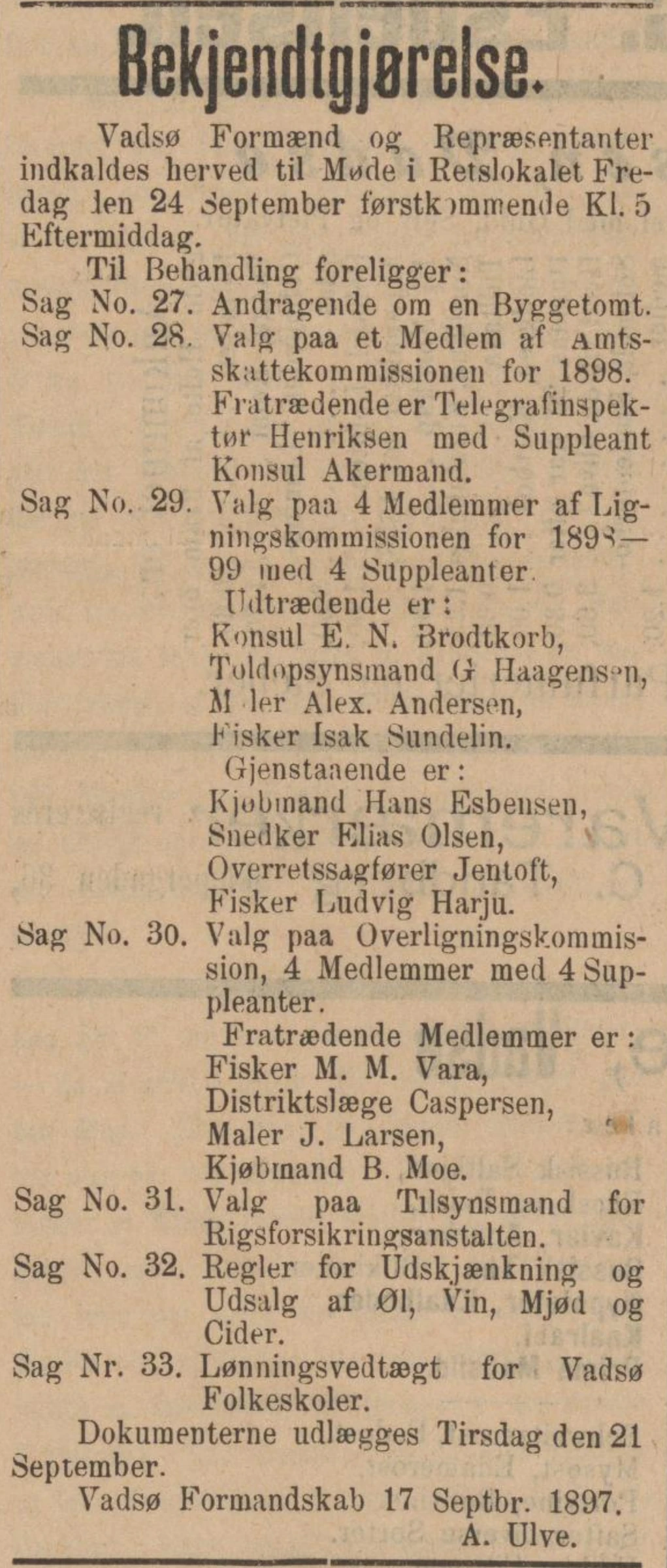
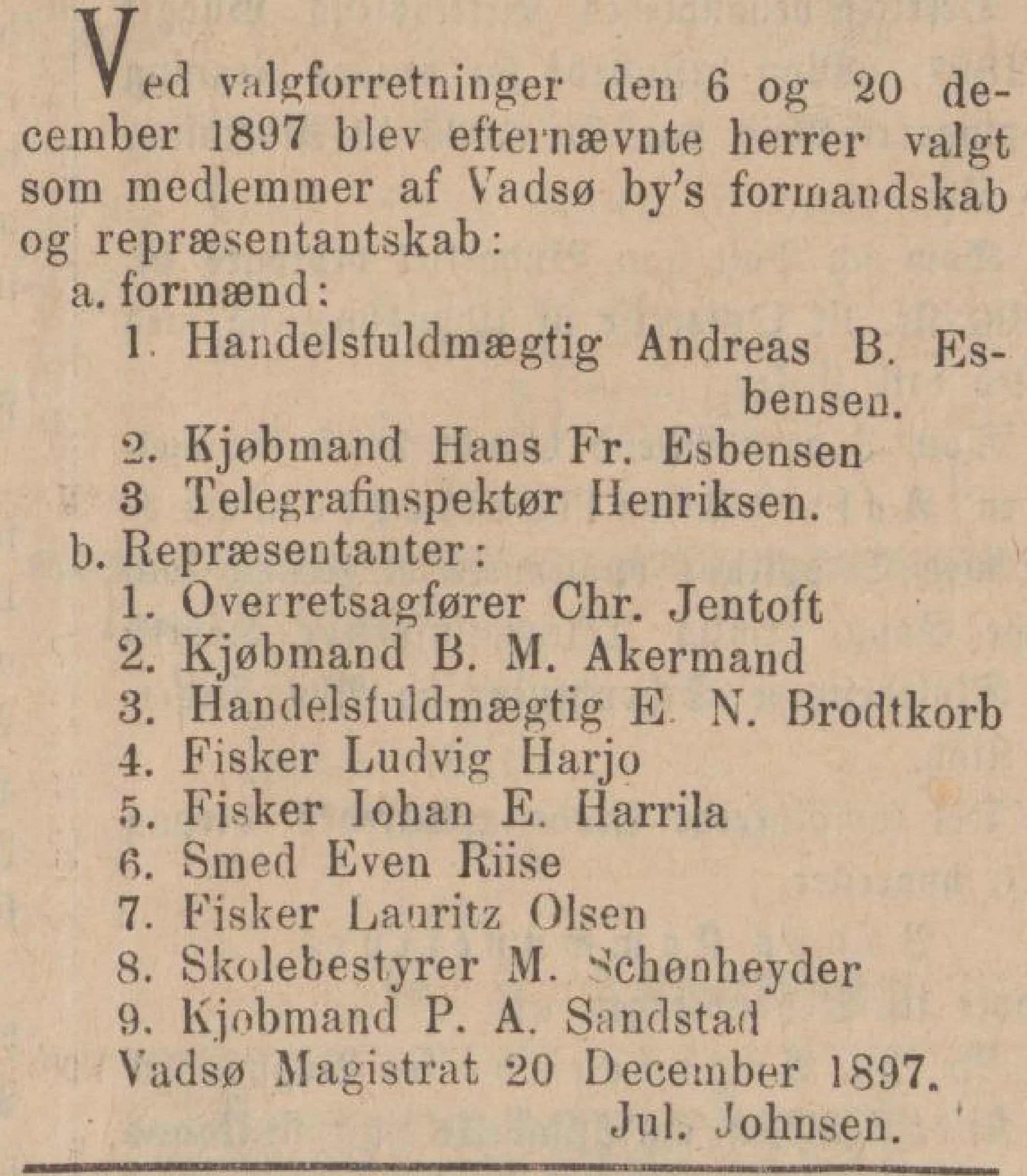
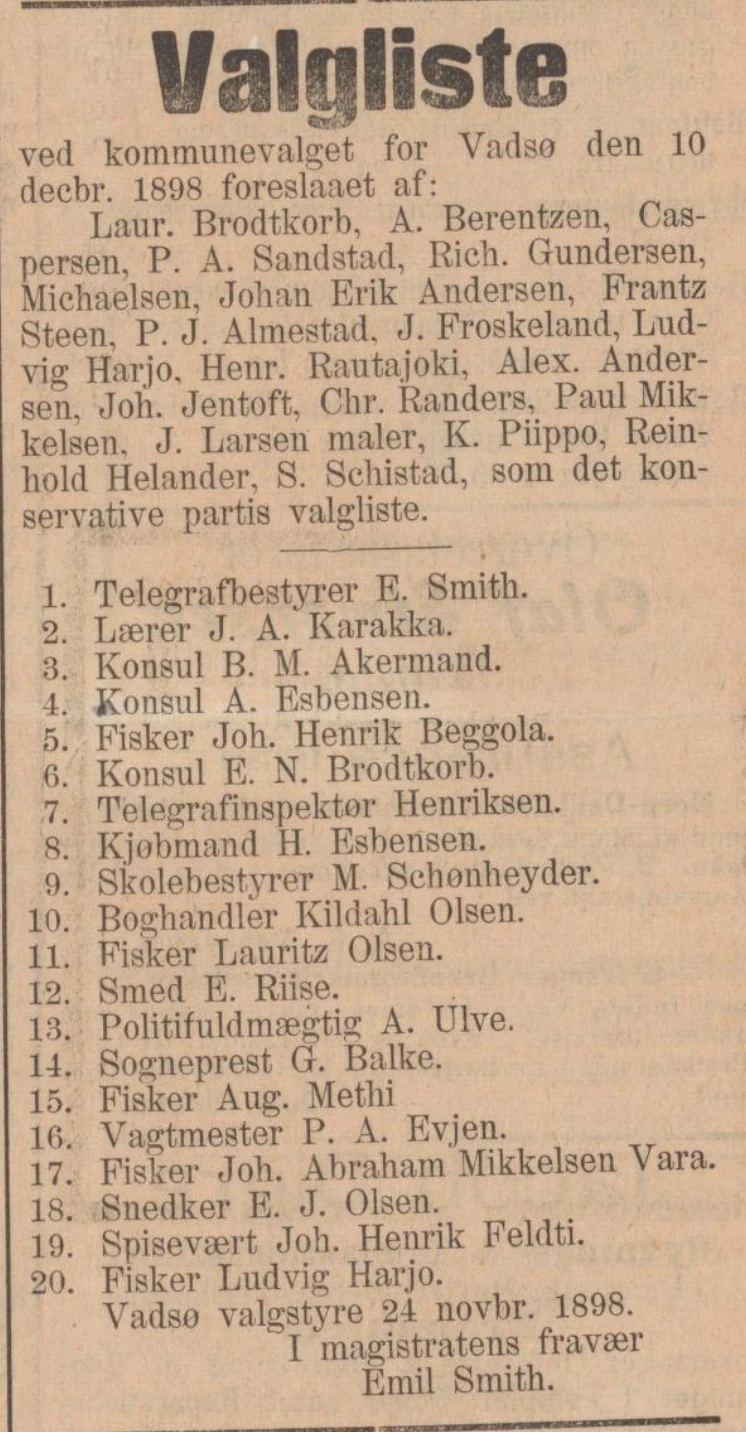
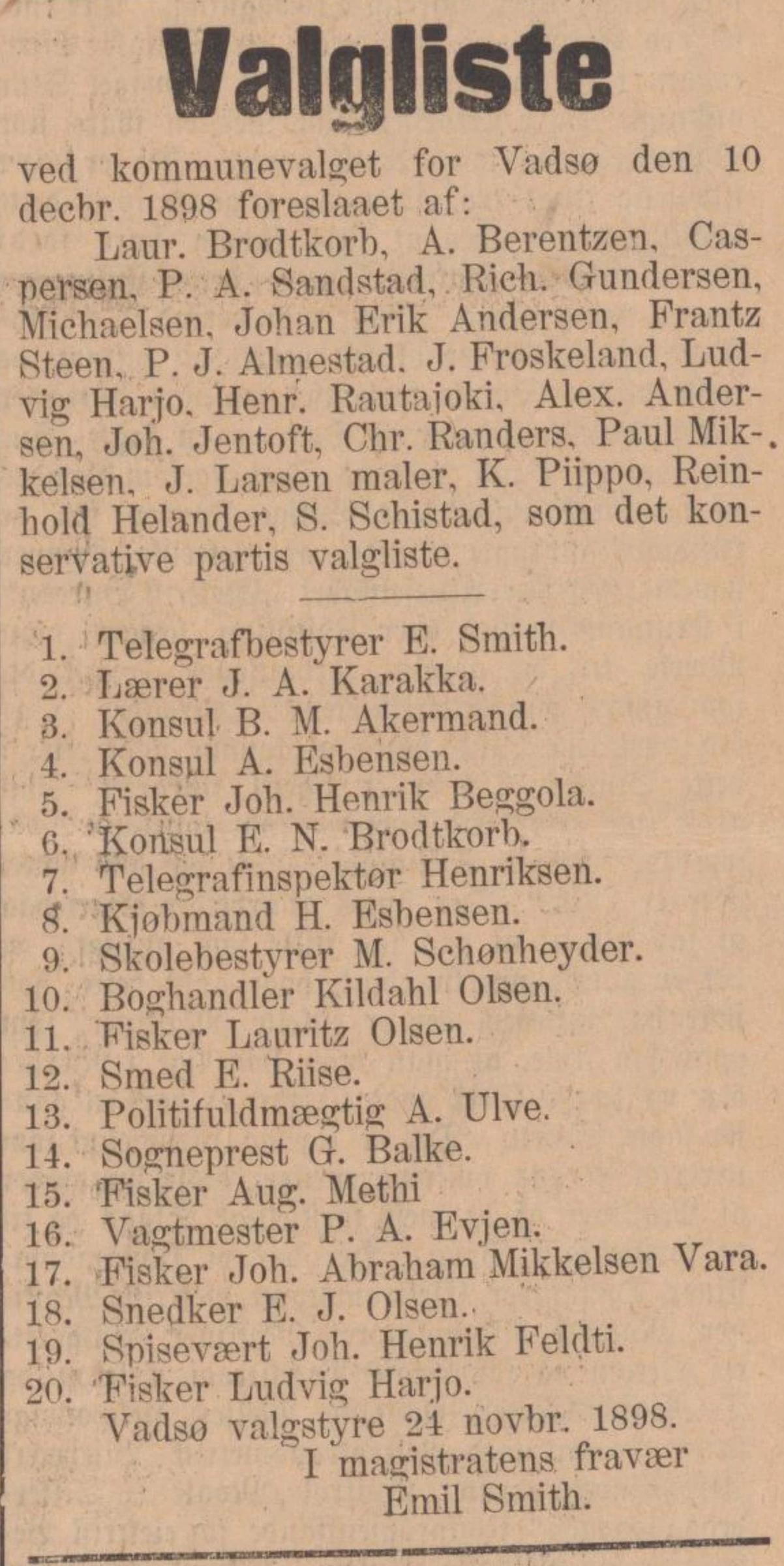
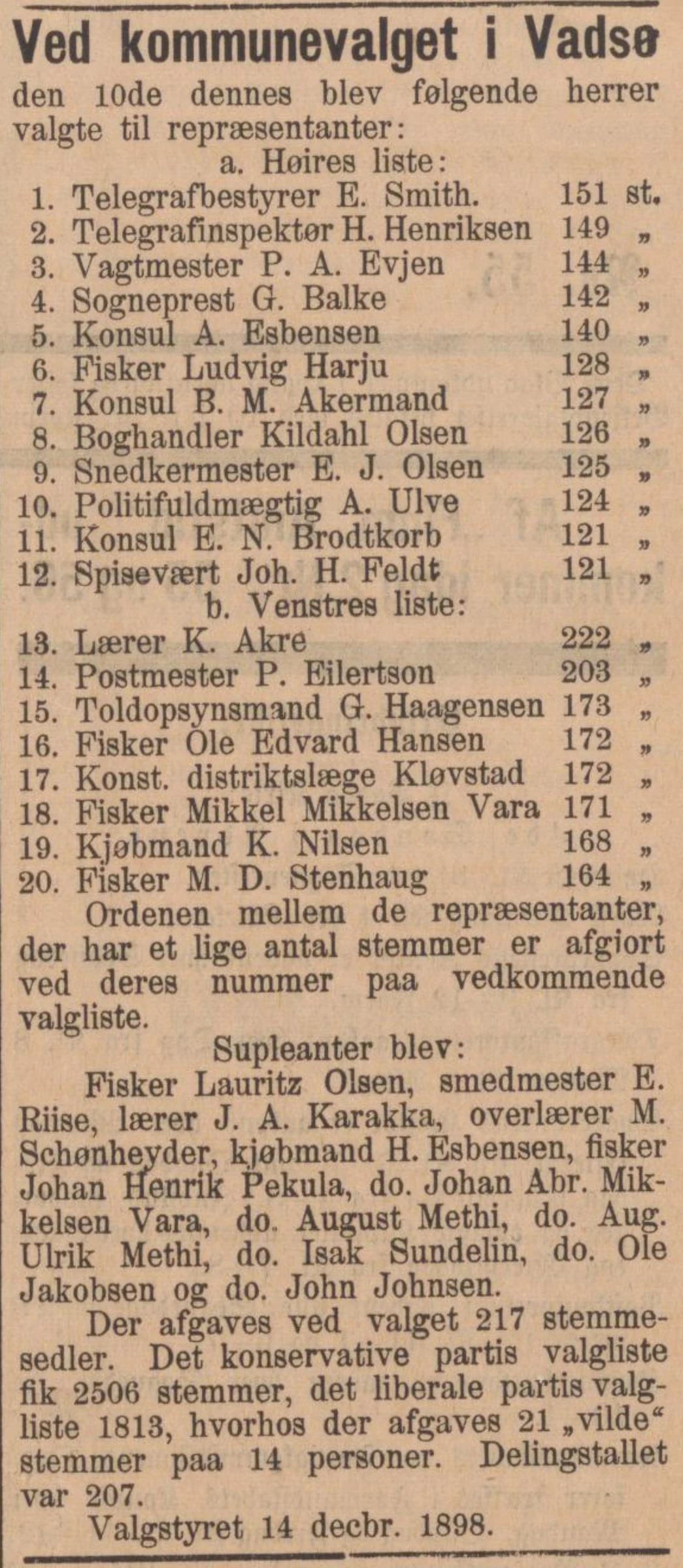
Alongside fishing and family life, Ludvig took part in local affairs. A newspaper announcement in December 1897 names him among those elected to represent Vadsø. He appeared again on a candidate list in 1898. These notices give us a glimpse of him beyond the family household: a fisherman whose name was also part of the town’s public life. [3]
The years brought losses as well as new beginnings. His mother Eva Gretha died in October 1895, and his younger brother Karl died at sea in April 1897. In between, in August 1896, Marie Cecilie married Anna’s brother Bernt Børresen. The two marriages made their children double first cousins, sharing both sets of grandparents.
1899–1900
A home and a shop in Masjok
Ludvig and Anna moved from Vadsø to Masjok, most likely in 1899. On May 2 that year, his father Johan bought a farm property called Larsnes and a second holding. The deed gives a combined price of 3,000 kroner, partly paid in cash and partly through taking over a mortgage. It was the older Johan who made this purchase. By Isak’s baptism later that year, Ludvig and Anna were living in Masjok. [4] [5]
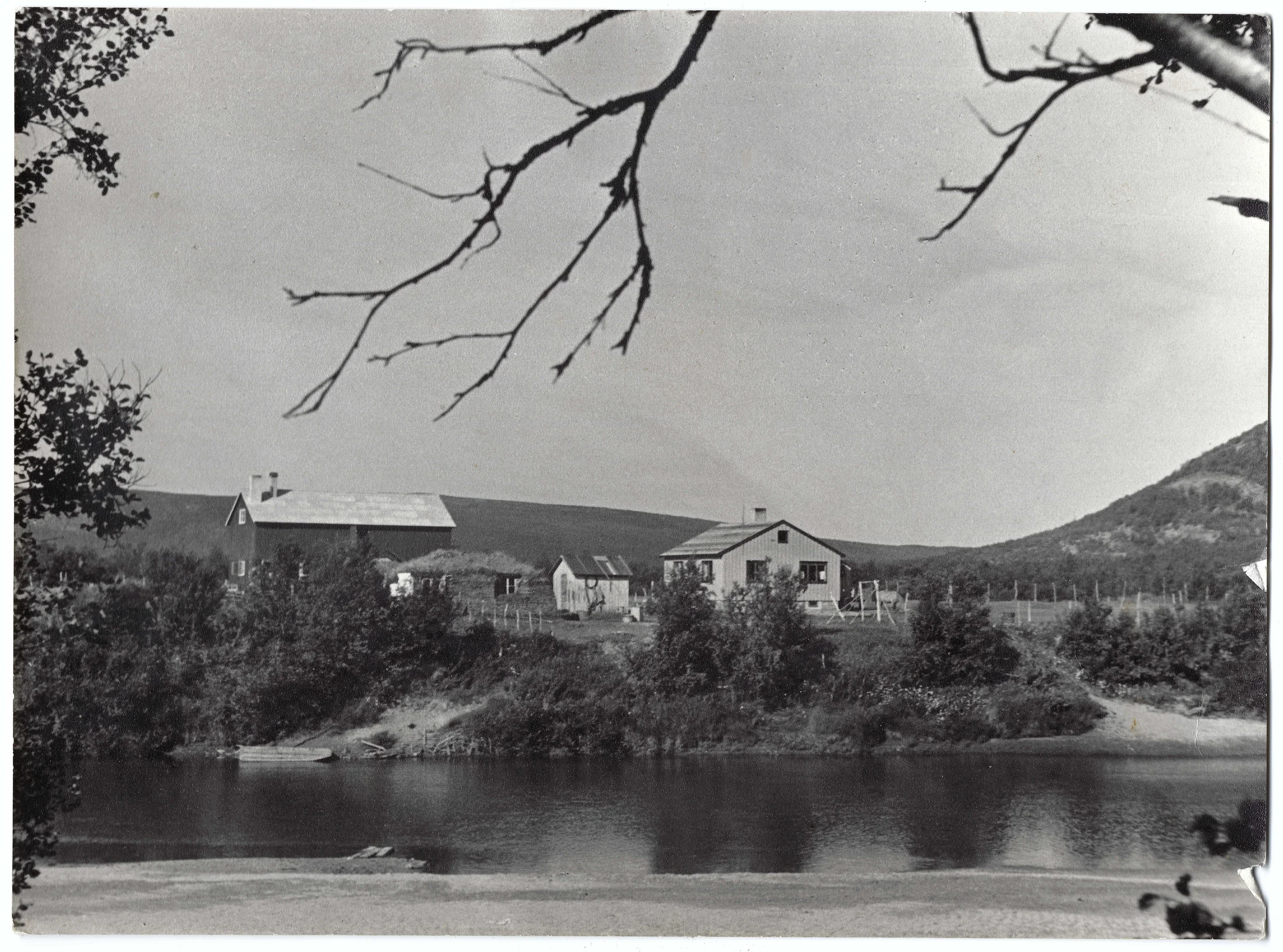
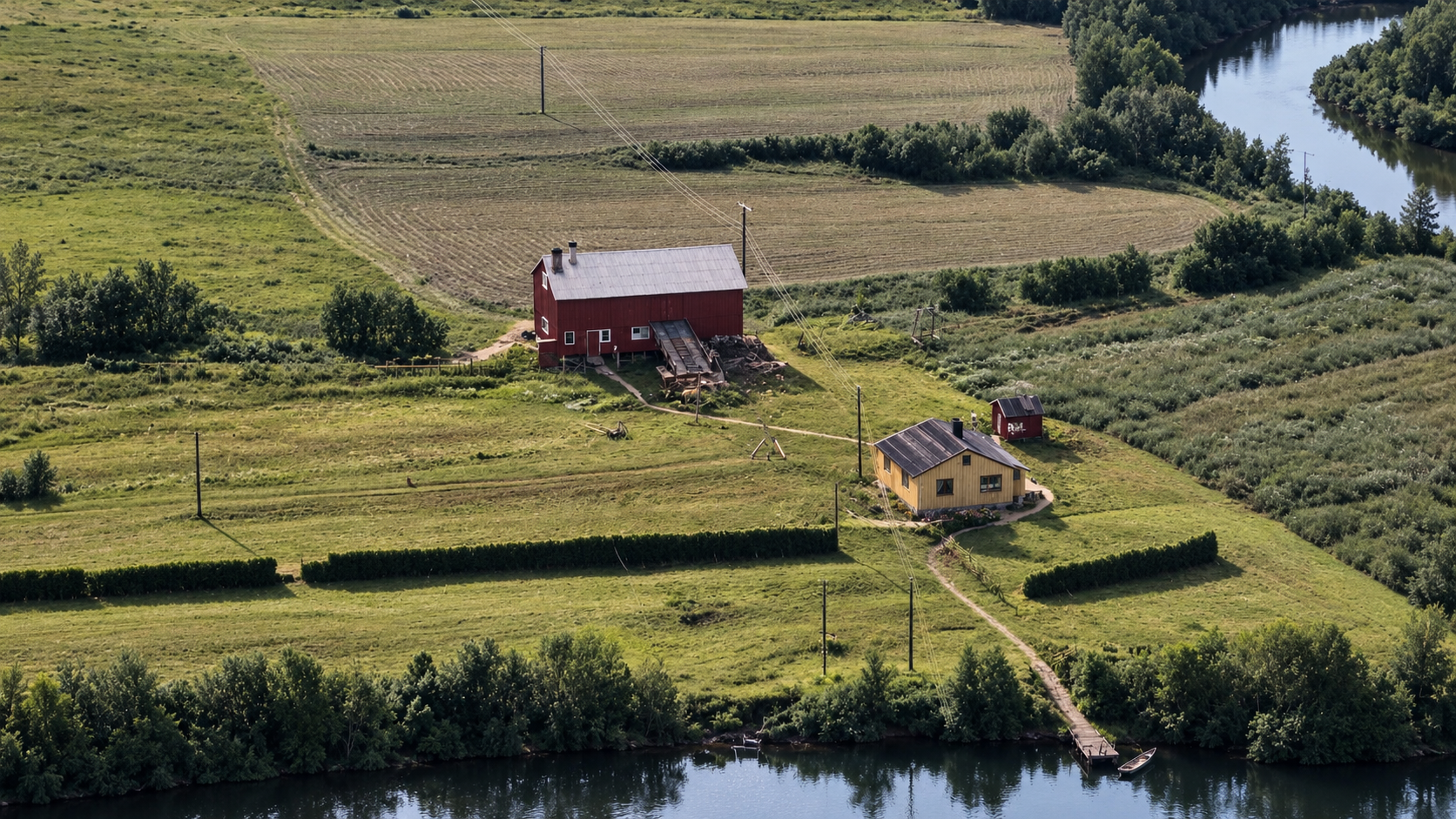
The 1900 census finds the family at Larsnes. Ludvig was described as a country merchant and tenant, while Anna cared for the home and the livestock. His widowed father was listed as a farm owner, carpenter and boatbuilder, temporarily away in Vadsø. The property brought their different kinds of work together in one family setting. [6]
Ludvig’s business was registered on October 10, 1900, under the name “Ludvig Harjos handel Masjok.” The published notice described ordinary country retail, with Ludvig alone authorized to sign for the business. It tells us when the firm was registered, though the shop may have opened earlier. [7]
1901–1904
When the shop fell into difficulty
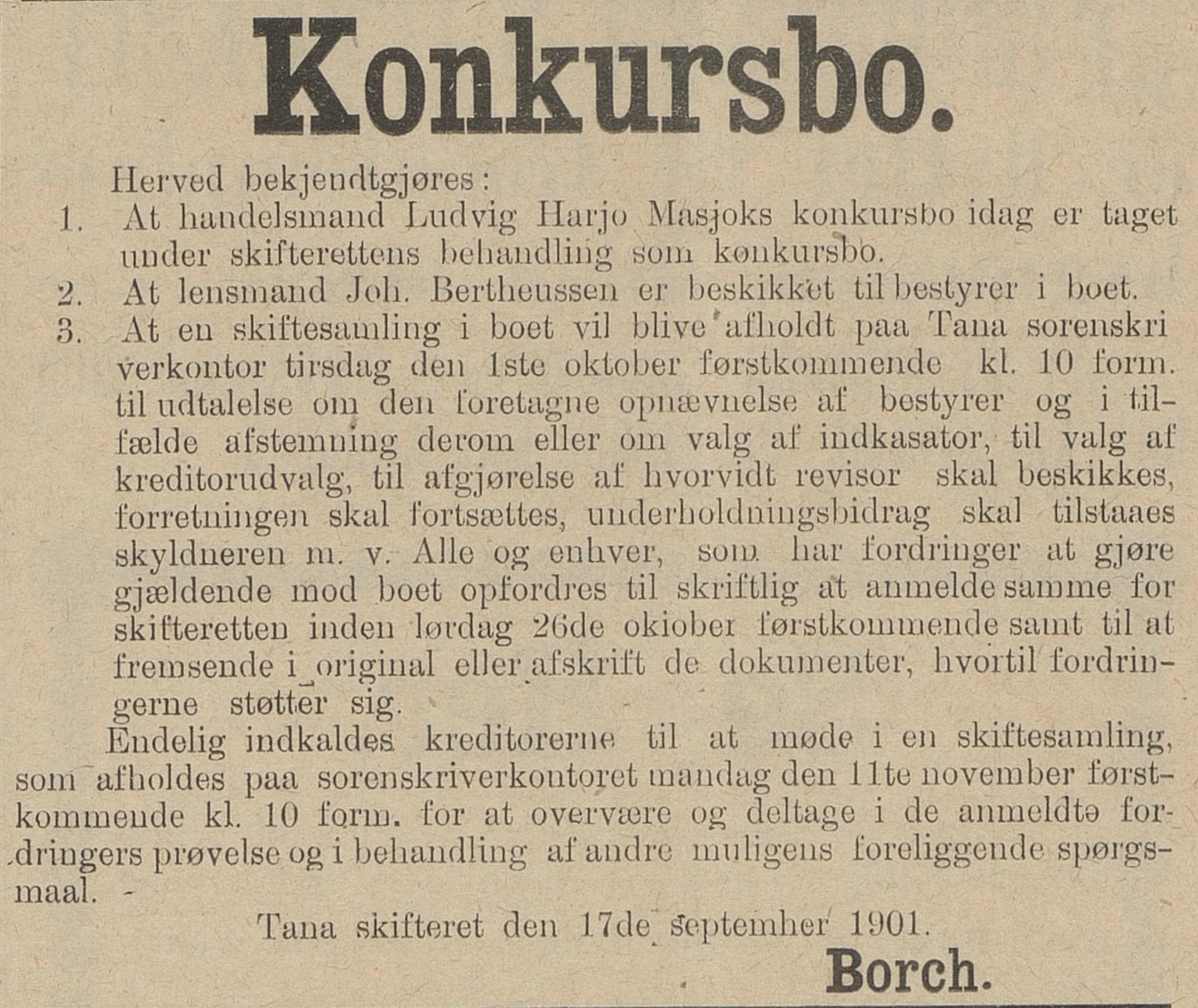
Less than a year after that registration, Ludvig’s name appeared in the newspaper under a different heading: “Konkursbo,” or bankruptcy estate. The notice, issued by Tana court on September 17, 1901, was published in Finmarken four days later. It appointed a trustee and called creditors to a meeting. One of the questions to be decided was whether the business should continue. See the original notice below.
Ludvig’s father stepped in to support a settlement with the creditors. In January 1902, he pledged security against his properties for up to 3,350 kroner. Under the arrangement, Ludvig was to pay thirty percent of unsecured claims. The shop’s difficulties had now reached beyond Ludvig’s own household. [8]
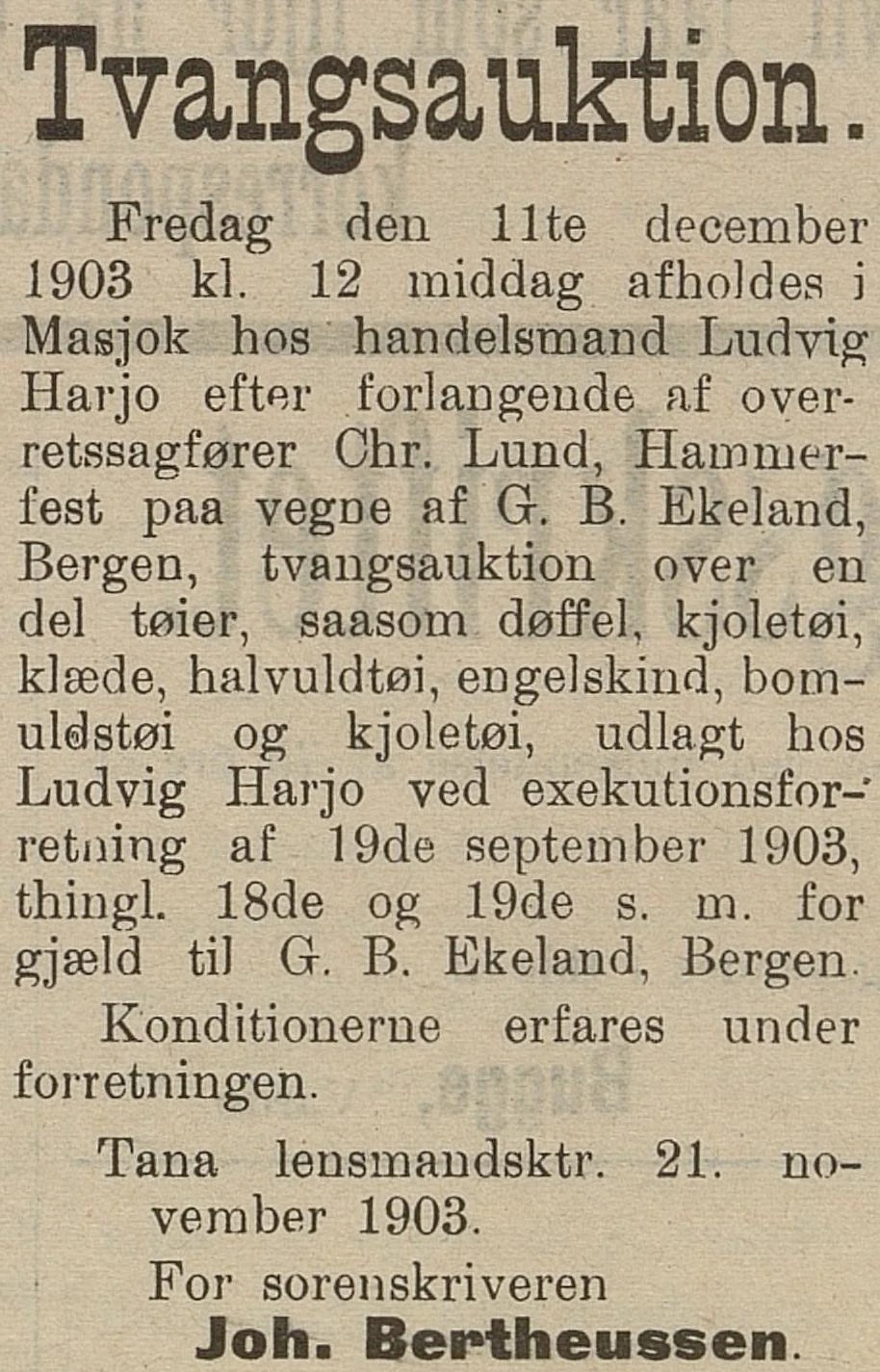
The trouble was not over. In November 1903, another newspaper notice advertised a forced auction of fabrics at Ludvig’s premises in Masjok, scheduled for December 11. The goods had been seized for a debt to G. B. Ekeland in Bergen. A further execution and inventory in May 1904 listed goods and property including cloth, a shop building and a boat. These records show the financial pressure on him, but do not establish the shop’s final closing date or the outcome of the advertised auction. See the auction notice. [9]
A family story offers another view of the man behind those notices. His grandson John Harjo remembered hearing that Ludvig was softhearted and gave goods away, or let customers pay later. In the family’s telling, that generosity helped bring the business down. The records document the debts; John’s recollection preserves the explanation passed down in the family.
1905–1908
The family he left behind
Ludvig’s father died at Masjok in August 1905. The following year brought the birth of Ludvig and Anna’s youngest son, Karl Fredrik. Then, on March 5, 1908, Ludvig himself died, aged thirty-eight. The church register describes him as a married fisherman and farmer and records burial at Tana churchyard on March 14. Anna was left with young children; Hans Kristian was six, and Karl was only about two. [10]
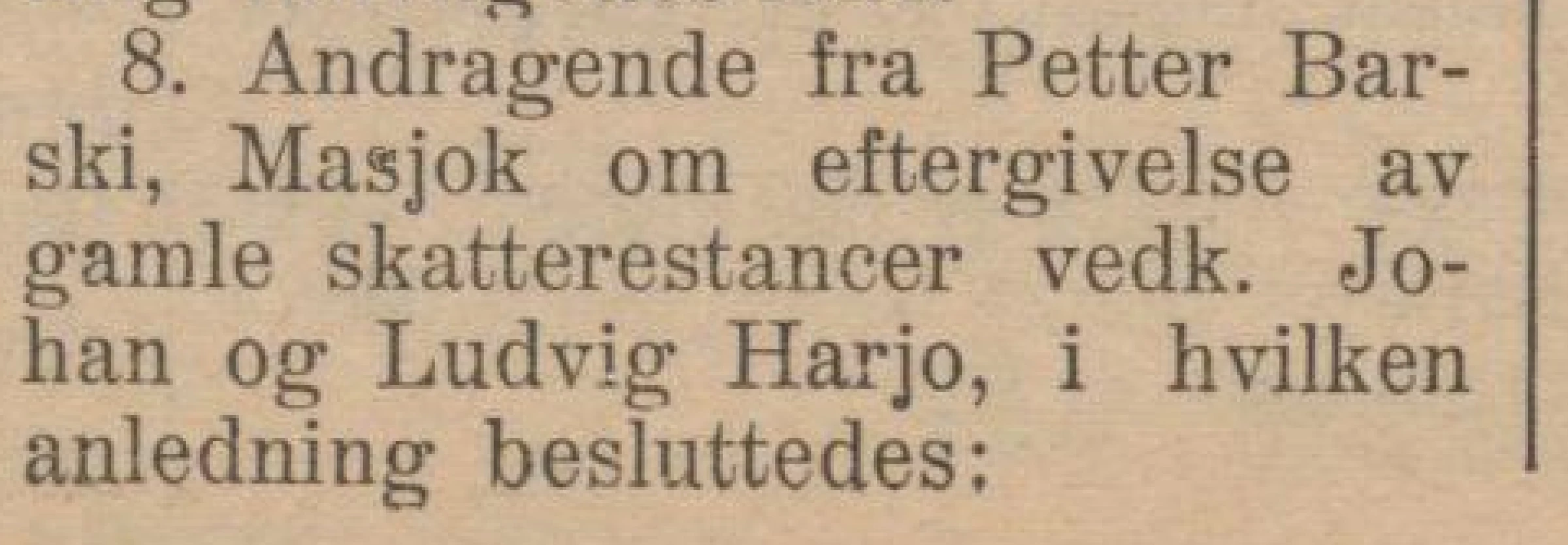
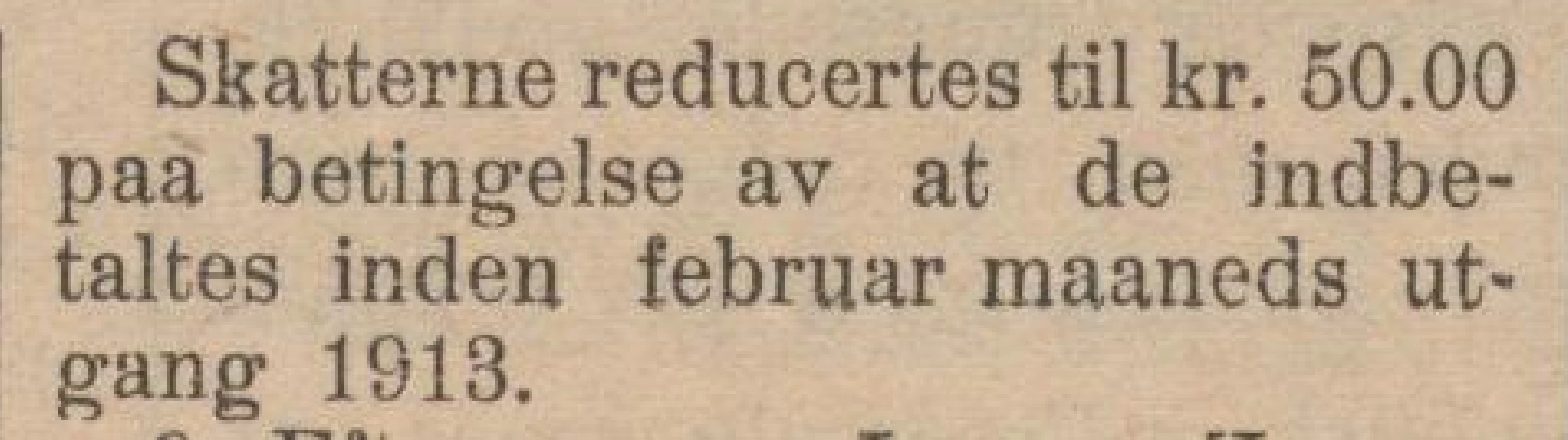
Anna later married Petter Barski and continued living at Larsnes. The paperwork from Ludvig’s estate lasted well beyond his death: later inheritance receipts refer to a settlement concluded on February 13, 1911. His family portrait, the farm photograph and the newspaper notices preserve different parts of his short life—a husband and father, a fisherman who became a shopkeeper, and a man whose financial troubles were remembered alongside his kindness. [11]