1906–1920 · Masjok and Nesseby
The youngest son at Larsnes
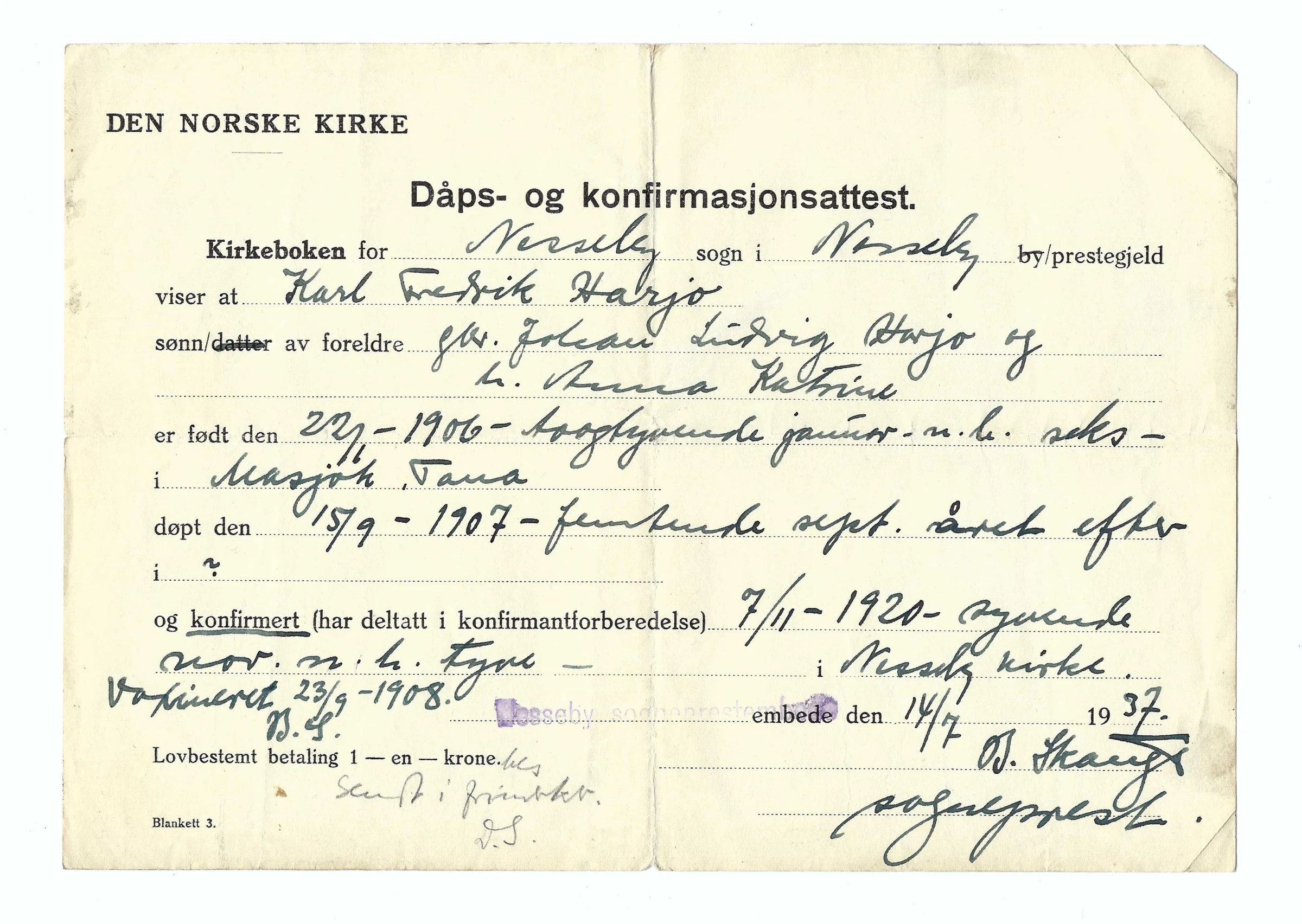
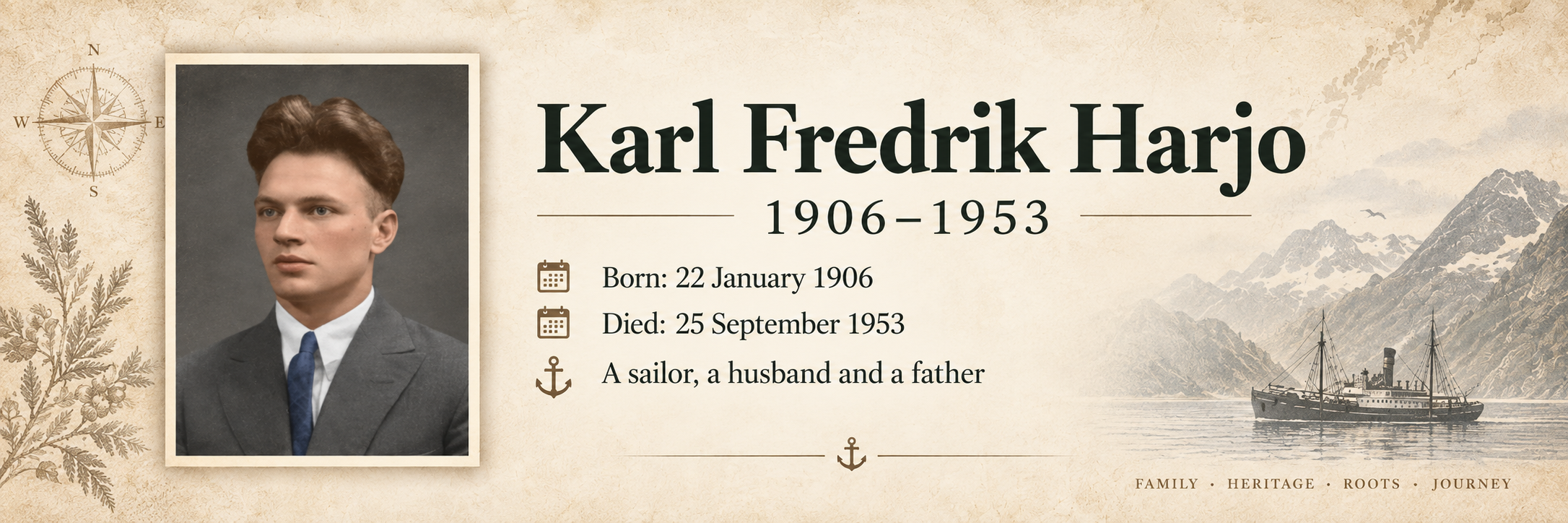
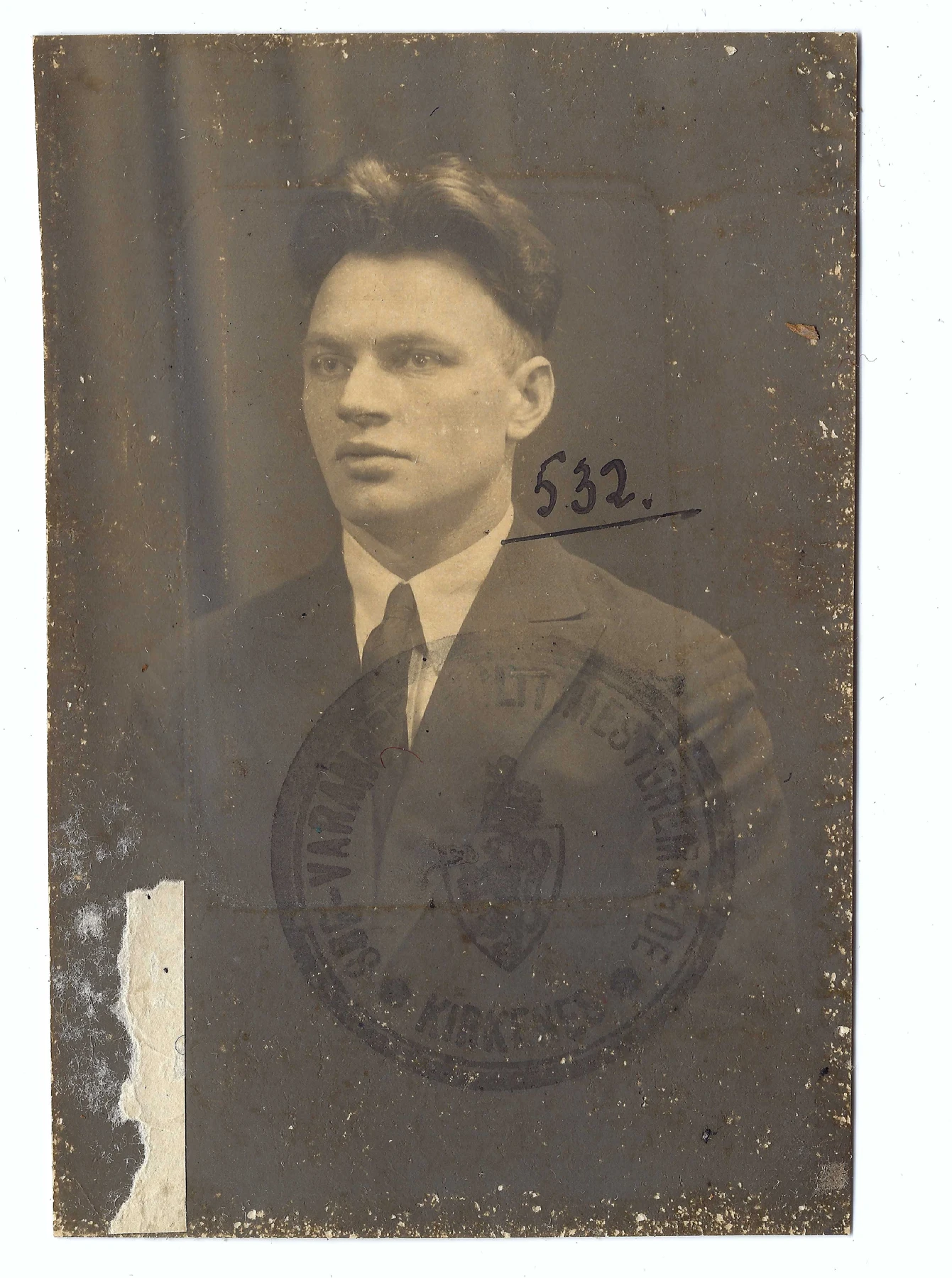
Karl Fredrik Harjo was born at Masjok in Tana on 22 January 1906, the youngest son of Johan Ludvig Harjo and Anna Kathrine Børresen. His parish entry records a home baptism on 31 January, followed by confirmation of that baptism in church on 15 September 1907. A church certificate kept among his own papers later brought his birth, baptism and confirmation together on one sheet. [1]
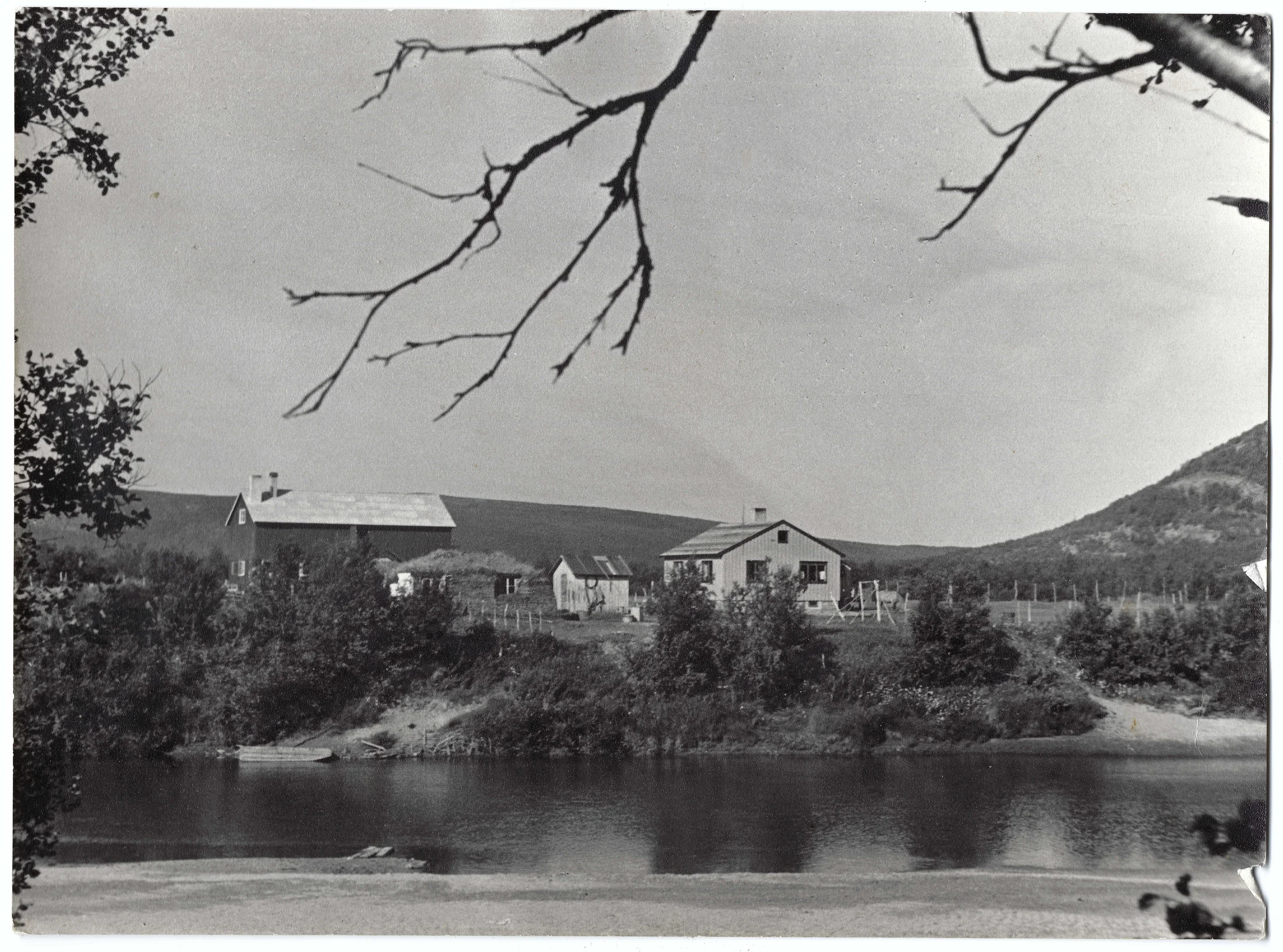
The family’s connection to Larsnes had begun before Karl was born. On 2 May 1899 his grandfather Johan—Johan Fredriksen Harjo, Ludvig’s father—bought Larsnes and another holding for a combined 3,000 kroner. Ludvig and Anna made their home at Larsnes, where Ludvig kept a country shop and Anna cared for the household and livestock. [13]
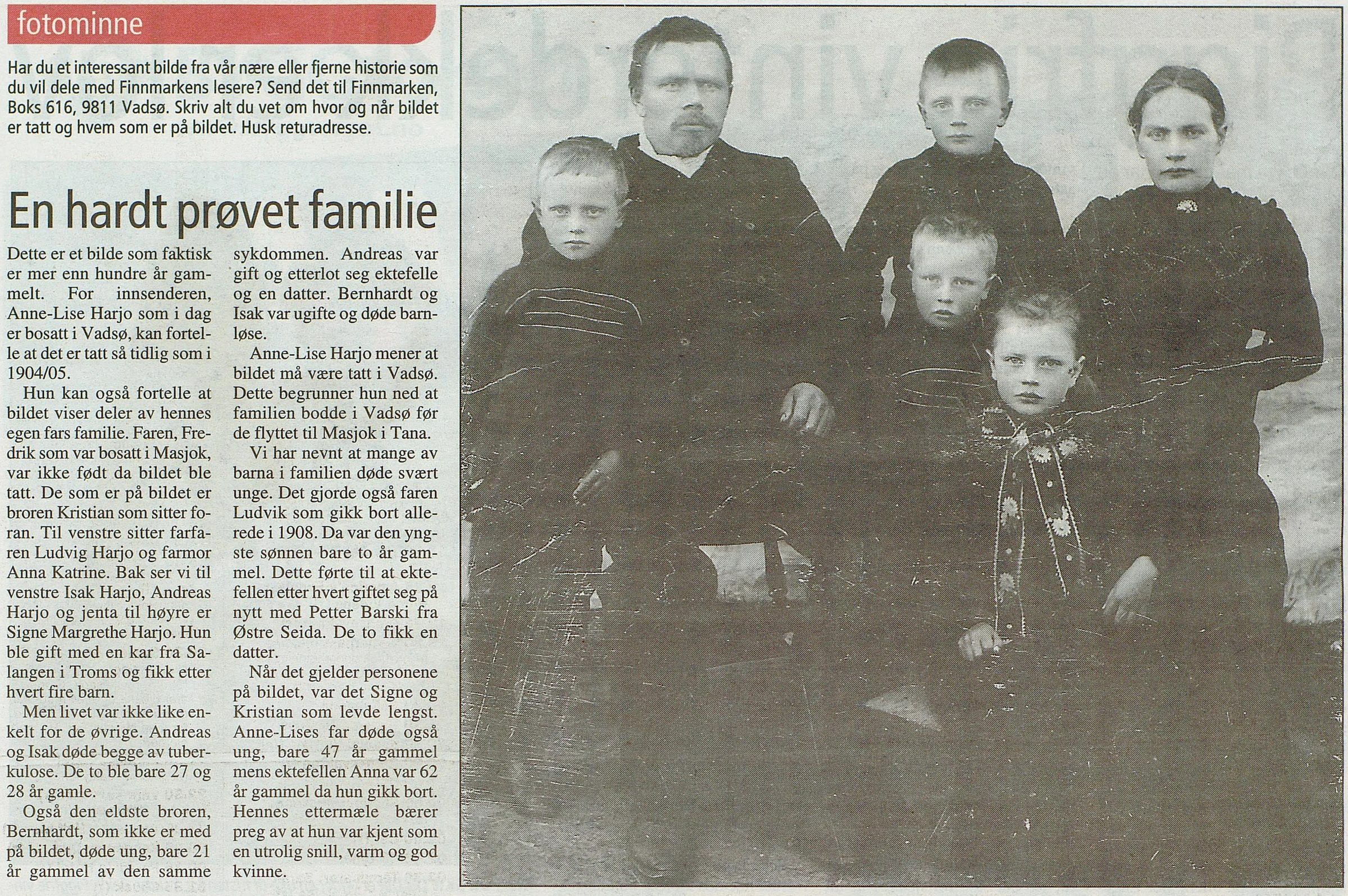
Karl was only two when Ludvig died at Masjok on 5 March 1908. Anna married Petter Barski on 13 June 1909, and the 1910 census places Karl at Larsnes with his mother, stepfather and siblings. His half-sister Anna Mathilde was born around 1911. By the 1920 census, however, Karl was in a different household: he was recorded as the foster son of Alfret and Hilma Abrahamsen at Øvre Brasmo in Nesseby. His confirmation took place at Nesseby on 7 November that year, when he was fourteen. The records do not yet explain when or how the foster arrangement began. [2]
1951 or 1952.
Remembered by his son
What Gunnar remembered hearing
Gunnar, Karl’s son, later told Hans Kristian’s grandchild about the boys’ early lives. In his account, Karl, Hans and the other boys left home as soon as they could because their stepfather treated them harshly. The stories included long walks to school through snow, a shorter route across the frozen river, unequal shares of food and boys made to pull a cart. [3]
1926–1931 · The surviving sea-service papers
Work on deck and below
By his early twenties Karl was earning his living at sea. His papers use several forms of his name: Karl Fredrik Ludvigsen on his seaman’s identity certificate, K. or Karl F. Ludvigsen in service records, and Karl Fredrik Ludvigsen Harjo on his later driving licence. [4]
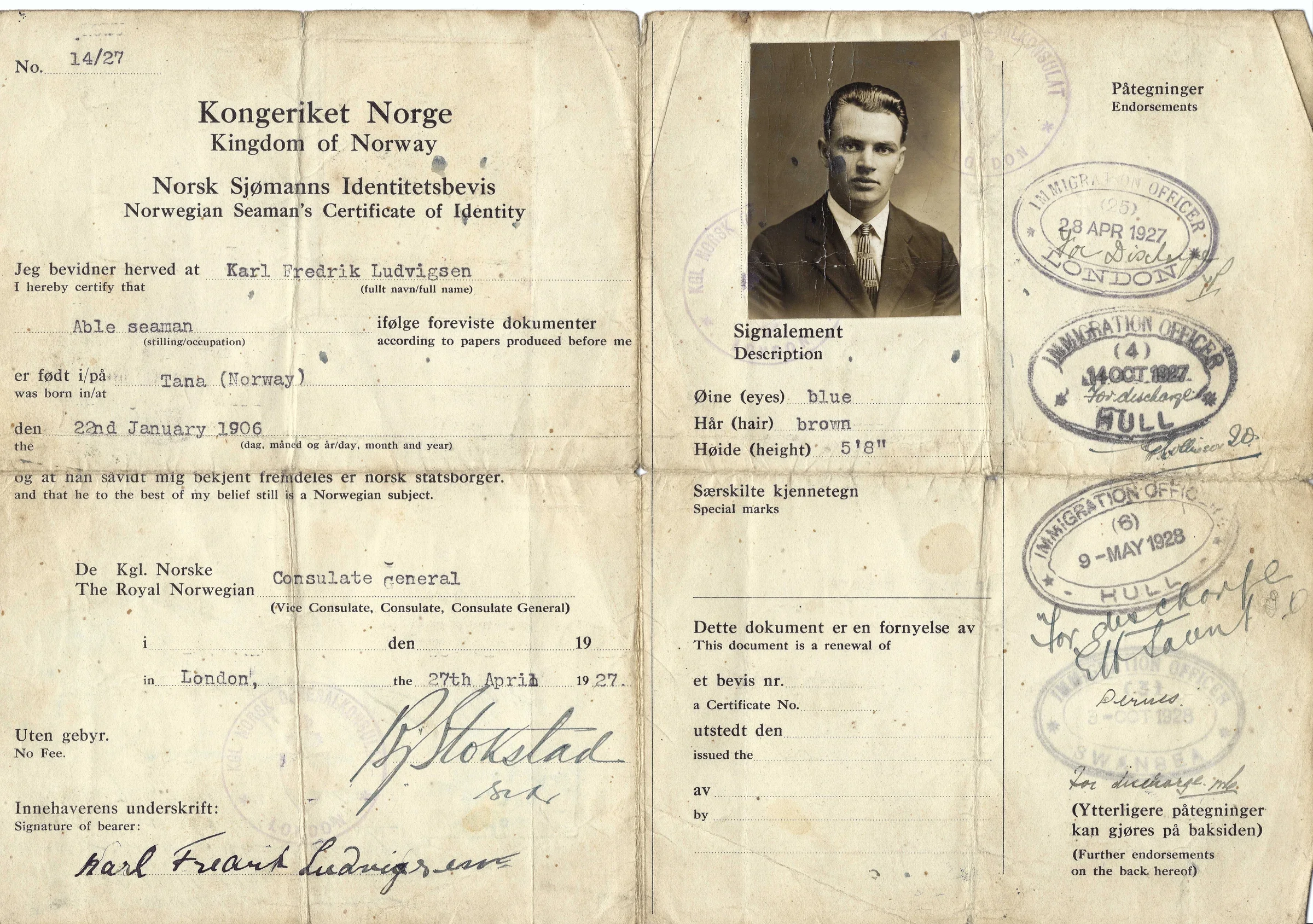
His Norwegian seaman’s certificate of identity was issued in London on 27 April 1927. It carries his photograph and signature, his Tana birthplace and 22 January 1906 birthday, and a physical description. Stamps on the reverse record further official encounters. The document placed his identity in a form that could travel with him from one port to another; it does not by itself tell us where he made his home.
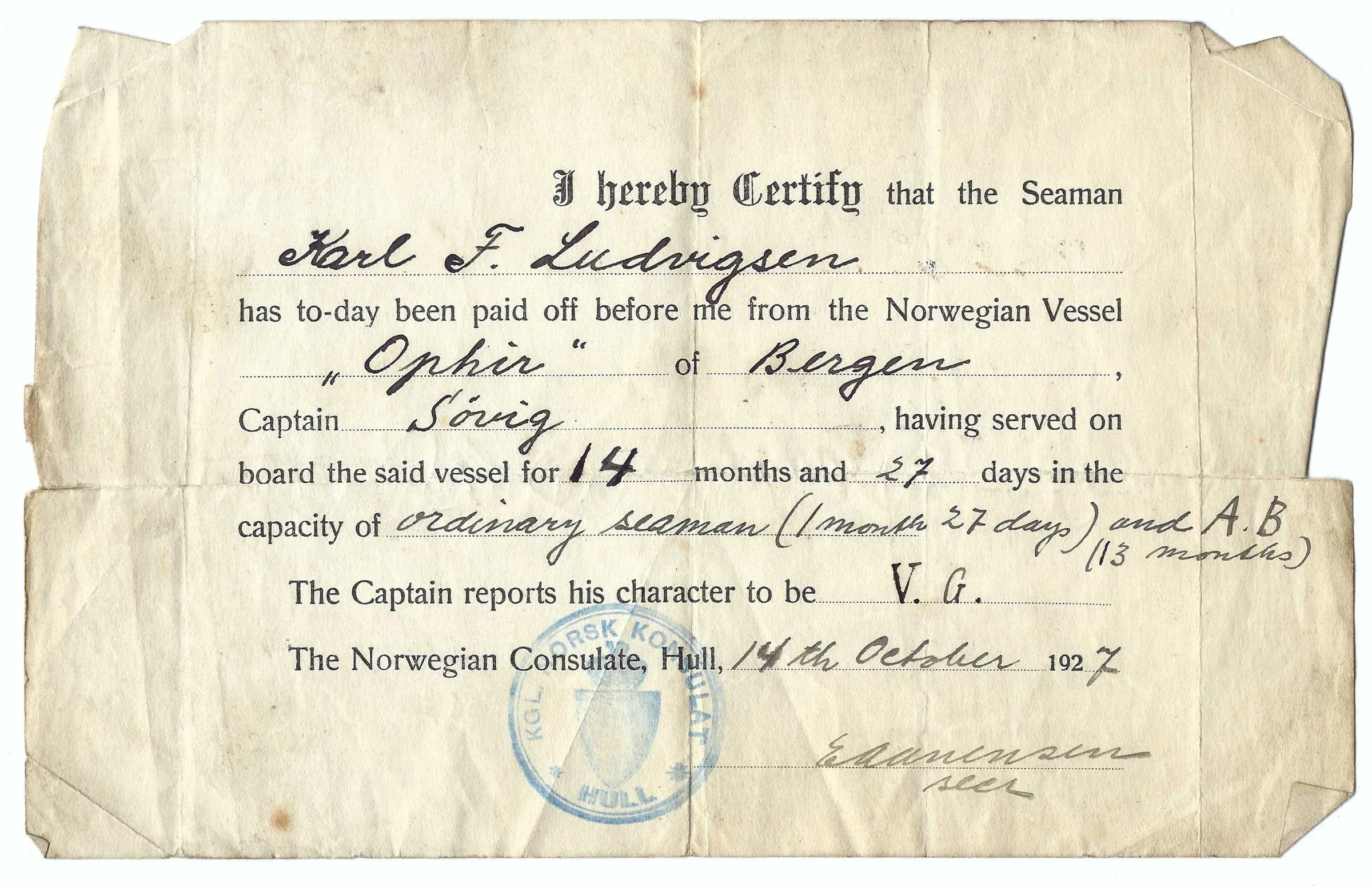
The Ophir certificate gives a longer stretch of working life. When Karl was paid off at Hull on 14 October 1927, he had served aboard for fourteen months and twenty-seven days: first as an ordinary seaman for one month and twenty-seven days, then as an able seaman for thirteen months. His conduct was rated very good. The length of service points to a start around July 1926, although the certificate is stronger evidence for the duration and discharge date than for a reconstructed joining date.
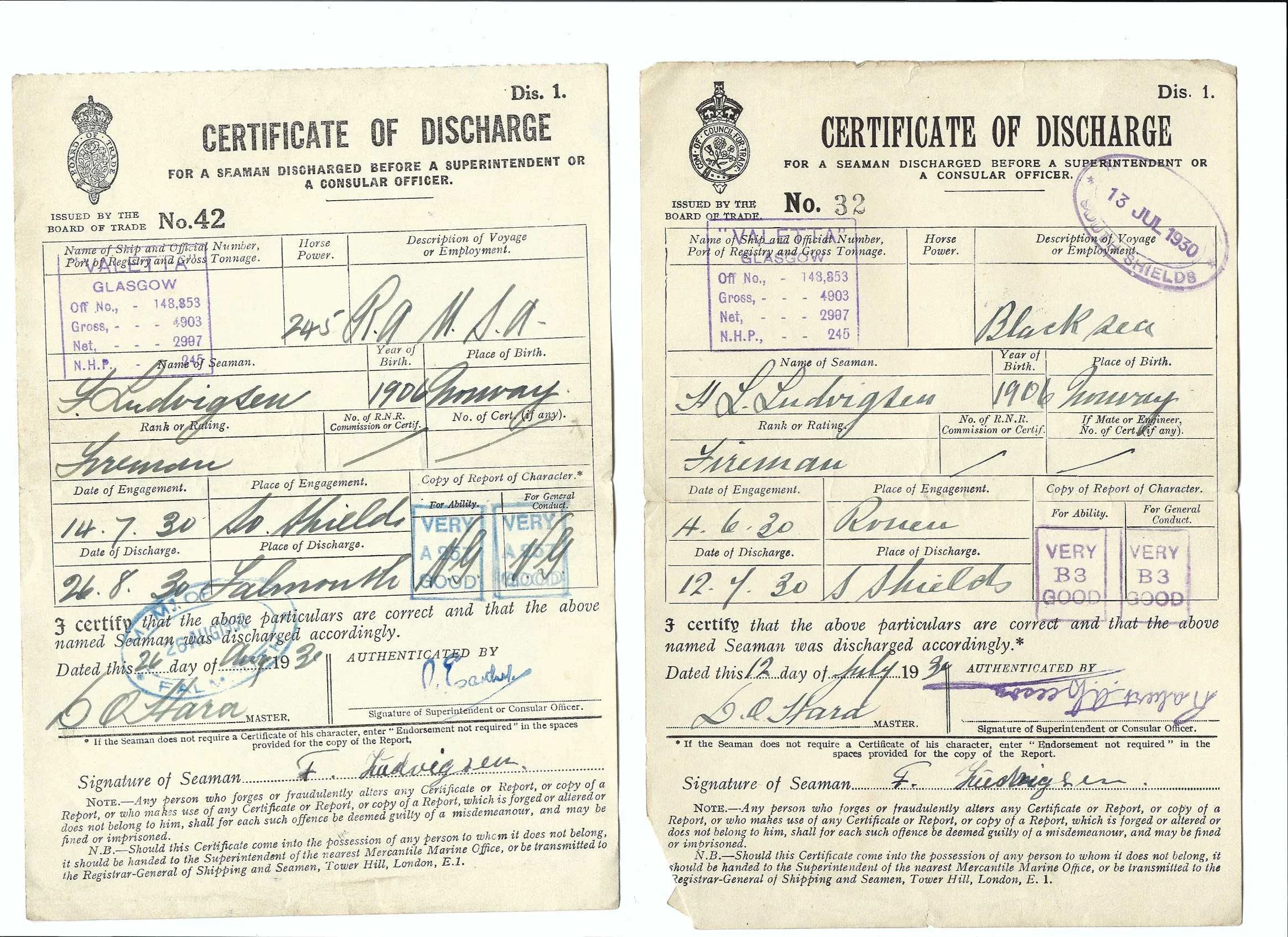
Two certificates record his next securely documented ship, Valetta, a British steamship registered at Glasgow, official number 148853. As a fireman, he joined at Rouen on 4 June 1930 and was discharged at South Shields on 12 July; the voyage is described as Black Sea. He signed on again at South Shields on 14 July and left at Falmouth on 26 August. Both certificates rate his ability and general conduct very good. A separate abbreviation for the second voyage remains uncertain. [5]
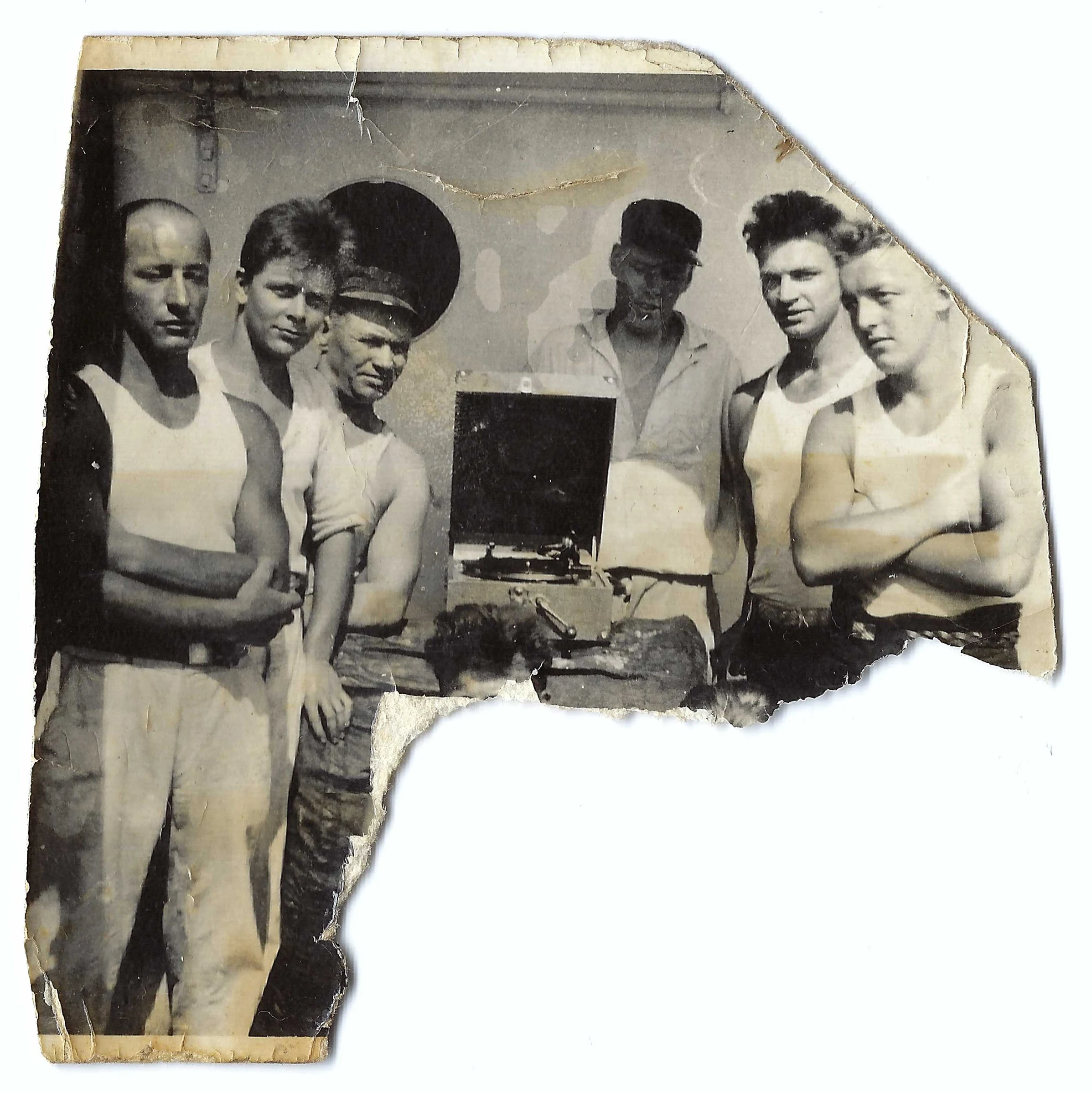
Preserved as “Karl on board a ship.” The ship, date and Karl’s position have not been established. The torn areas remain blank in both views.
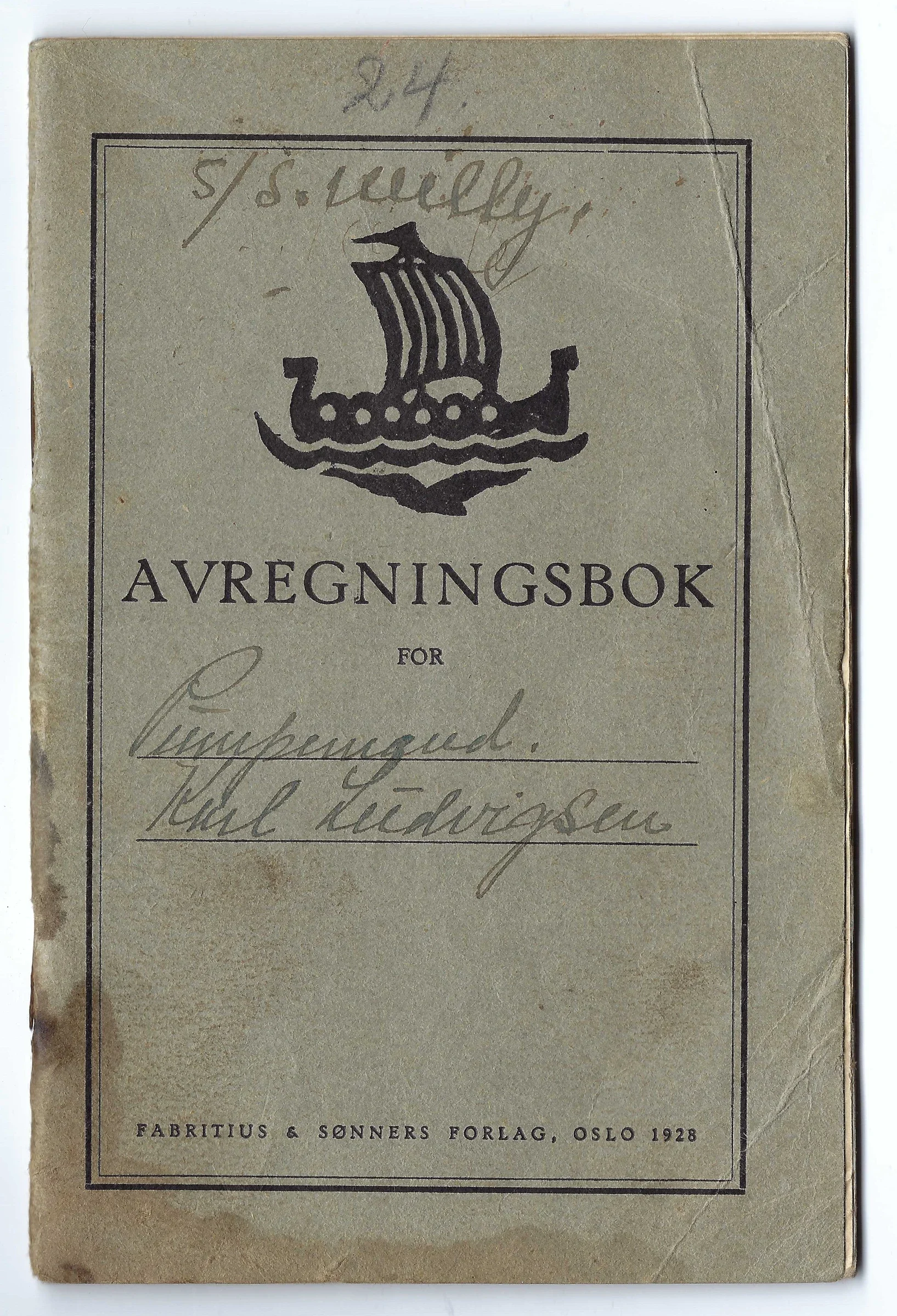
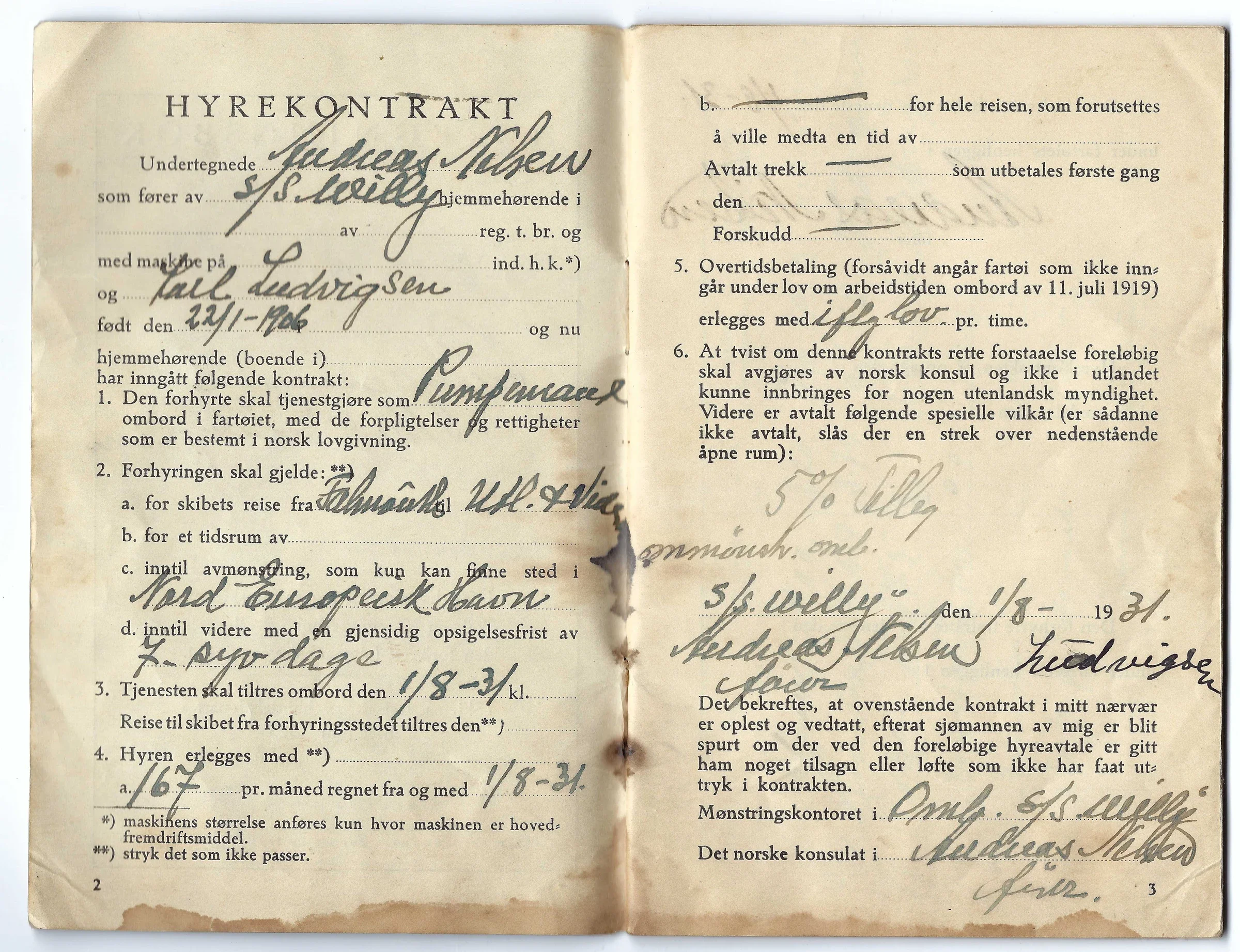
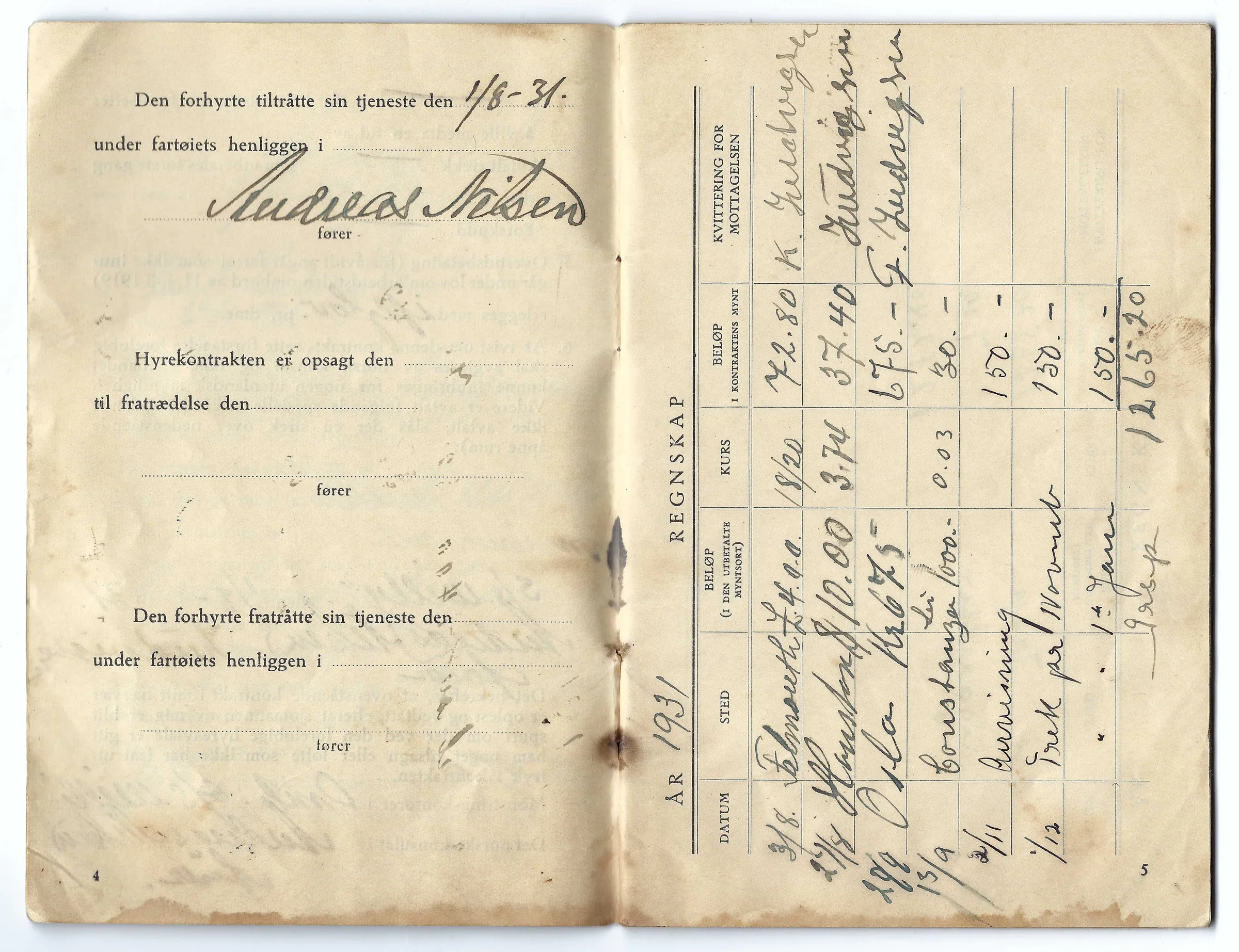
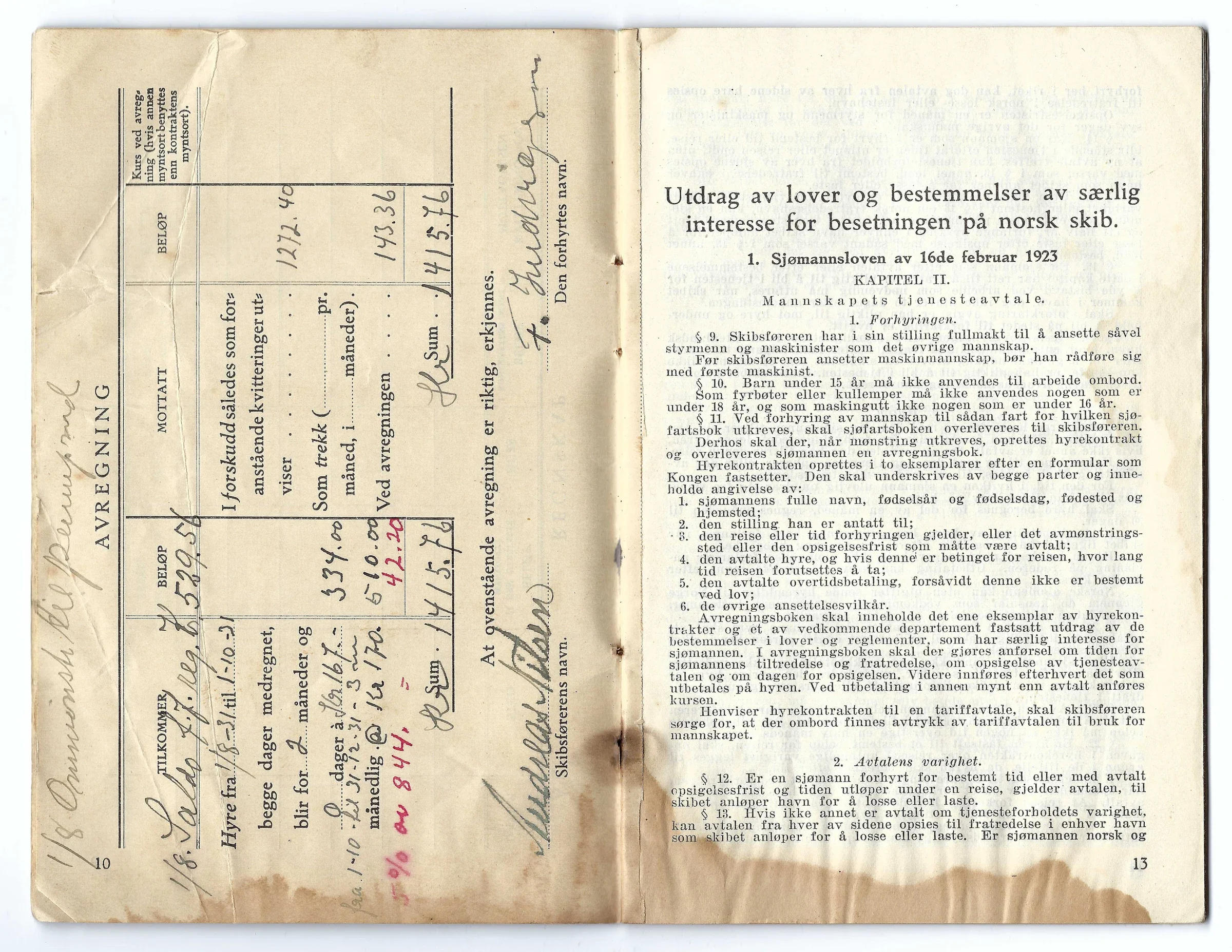
By 1 August 1931 he had signed on as pumpman aboard S/S Willy under master Andreas Nilsen. His wage book preserves the agreement, advances and accounts. The contract described voyages between Falmouth and the United States and discharge in a northern European port. A first cash entry was made at Falmouth on 3 August, and the accounts continue through 31 December. These are the dates the book supplies; the final account date is not a signed discharge date, and the entries are not a complete itinerary. [4]
A letter signed Isak, written at Tanagård on 2 September 1930 and addressed simply to a brother, brings the wider family into this period. Isak thanked the recipient for money, described his own illness, and passed on news of Kristian’s injury and work connected with whaling. The recipient was probably Karl, judging from the collection, but the letter does not name him. It is a reminder that some of the seafaring news in Karl’s papers concerns his brother Kristian rather than Karl’s own voyages. [14]
The records document three ships and several kinds of work. They leave gaps between engagements, and they do not yet explain when Karl finally came ashore. A newspaper clipping about Tusitala was also kept, but the clipping alone does not establish that he served on that ship.
Following Fredrik across the Atlantic
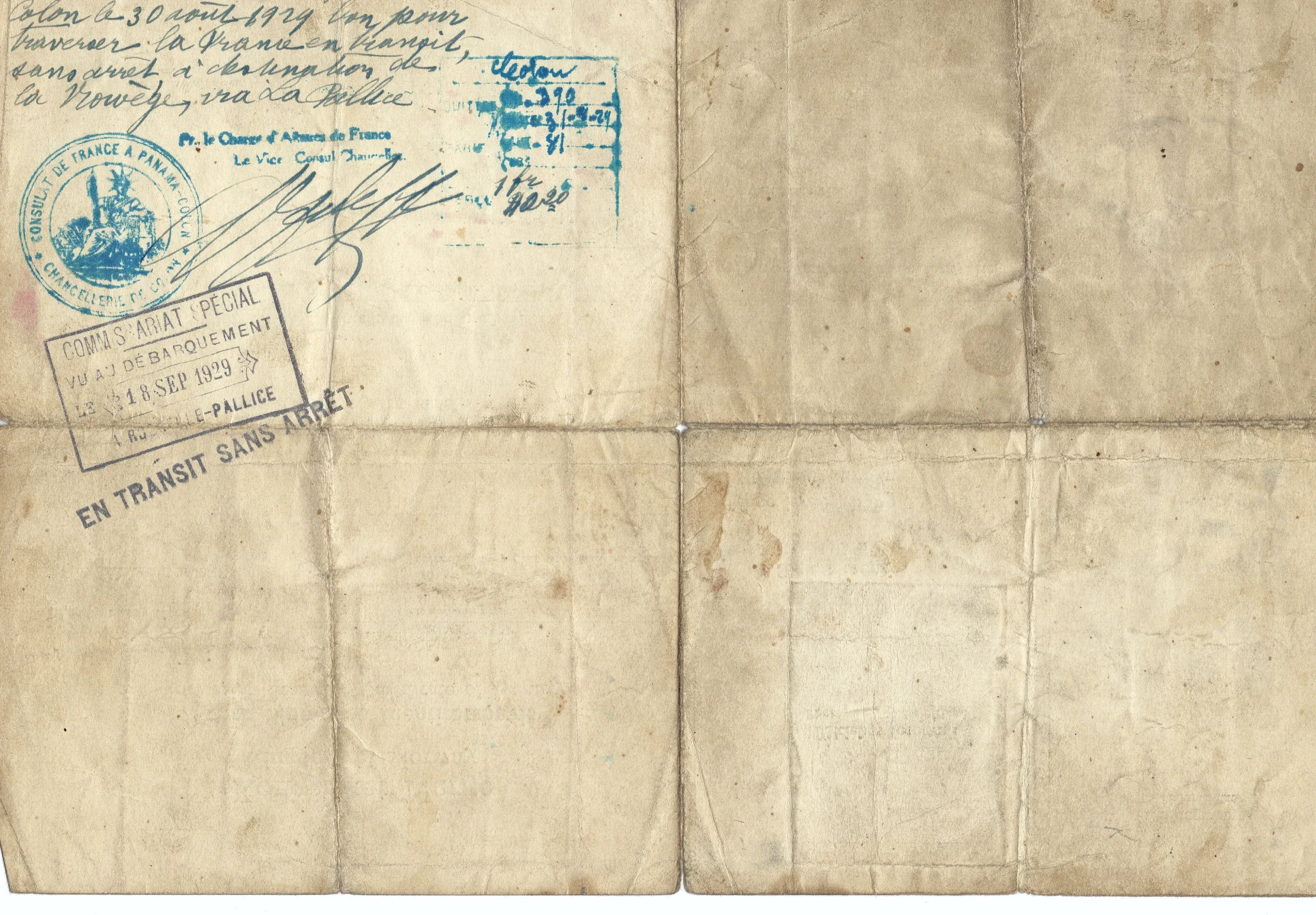
Karl’s papers followed him from port to port under the name Karl Fredrik Ludvigsen. His identity certificate was issued in London on April 27, 1927, describing him as an able seaman born in Tana on January 22, 1906. Hull endorsements record discharges on October 14, 1927, and May 9, 1928. On the reverse, a French transit visa issued at Colón on August 30, 1929, permitted passage through France toward Norway. A landing stamp places him at La Rochelle–La Pallice on September 18. The intended destination does not by itself establish when he reached Norway. Explore his identity document.
His surviving Willy contract names Karl Ludvigsen with the same birth date, employed as pumpman under Andreas Nilsen from August 1, 1931, for service from Falmouth to the United States. It provides a strong connection to four American crew records under Fredrik Ludvigsen or Ludviksen, although the identification of those manifest entries remains probable rather than certain.
The probable Willy voyages, 1930–1932
- November 3, 1930: Houston from Bordeaux, listed as fireman. The original heading says Houston, although the index associates the record with Galveston.
- August 23, 1931: Texas arrival from Falmouth, listed as fireman; the handwritten port appears to be Texas City.
- November 11, 1931: New Orleans from Hull, listed as pumpman; the date is supplied by the index.
- March 5, 1932: New Orleans from Havana, listed as pumpman.
The vessel, Norwegian nationality, names, captain in the earlier lists and later pumpman job fit Karl’s contract. However, the manifests give a height of five feet ten inches against five feet eight on his identity document; some ages are a year low. The August 1931 list still calls him a fireman, while his contract says pumpman. Repeated references to engagement at Bordeaux in September 1930 do not establish uninterrupted employment. These records suggest a fuller Atlantic working life, but unresolved details remain.
1937 onward · Gunvor and the children
A family of his own
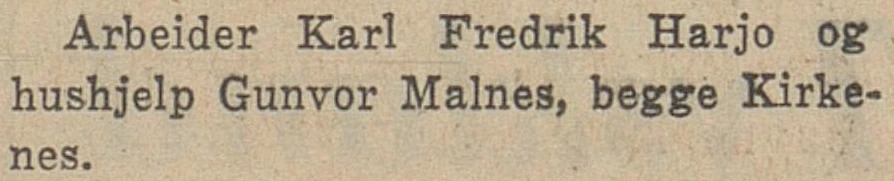
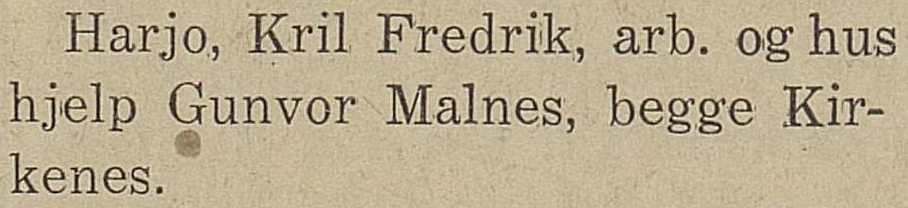
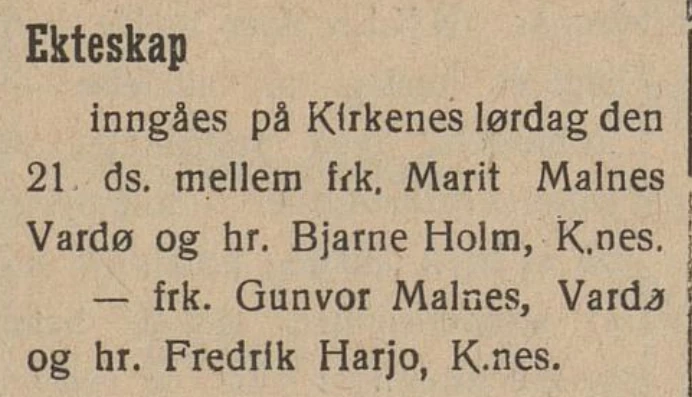
Karl Fredrik was known as Fredrik within the family. In 1937 he married Gunvor Malnes. He was working as a labourer in Kirkenes, and their wedding was announced for 21 August. [6]
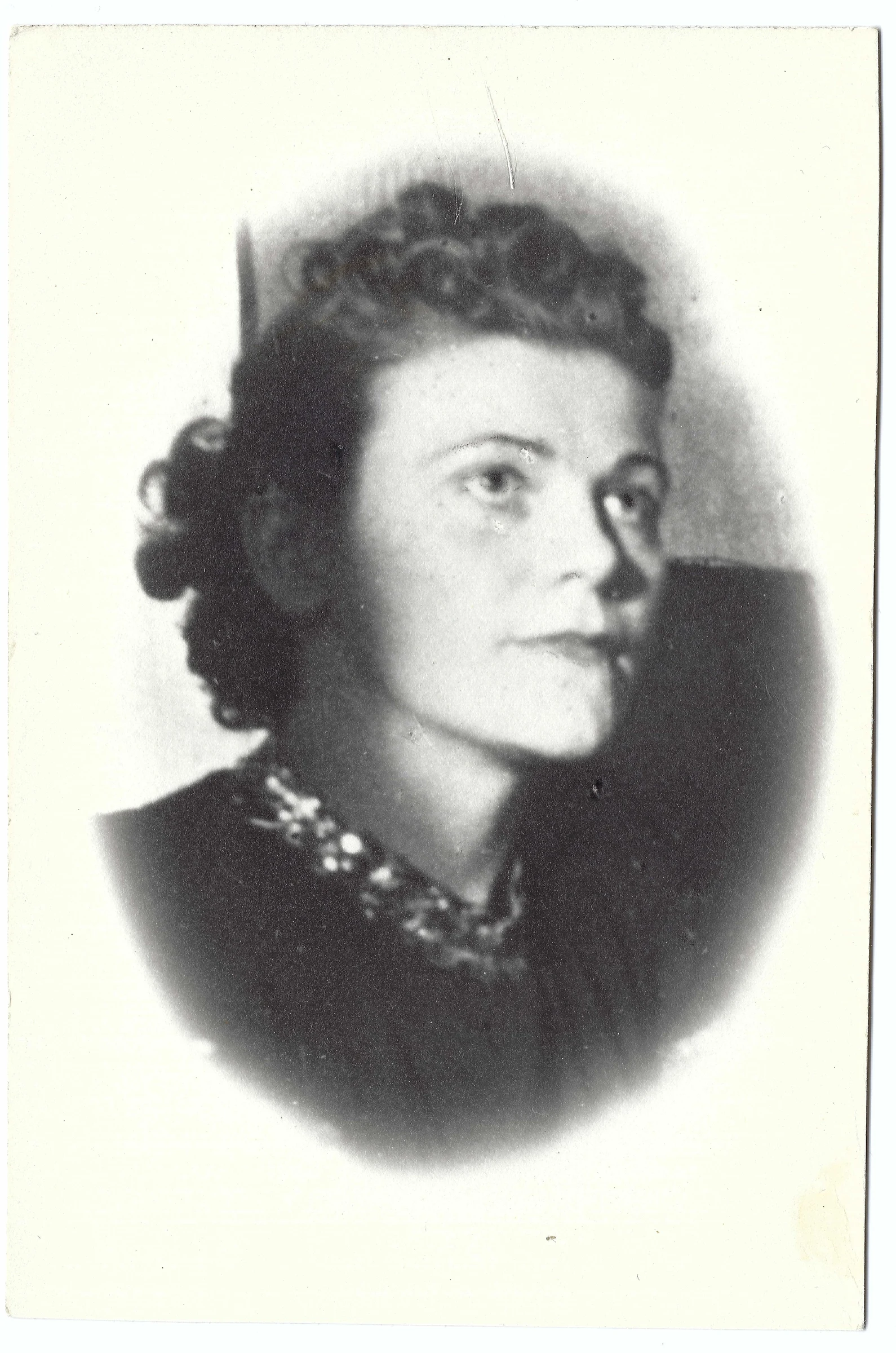
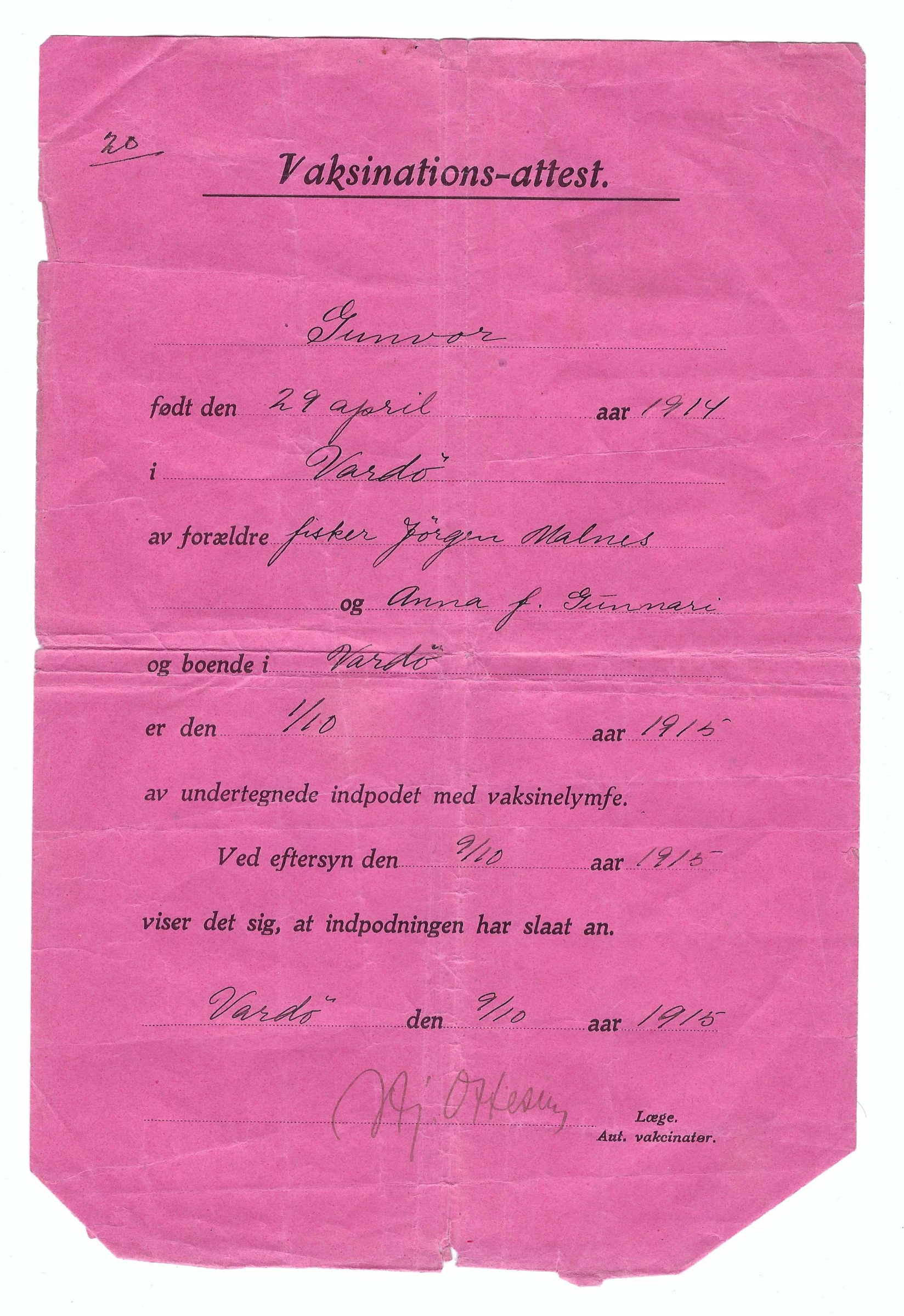
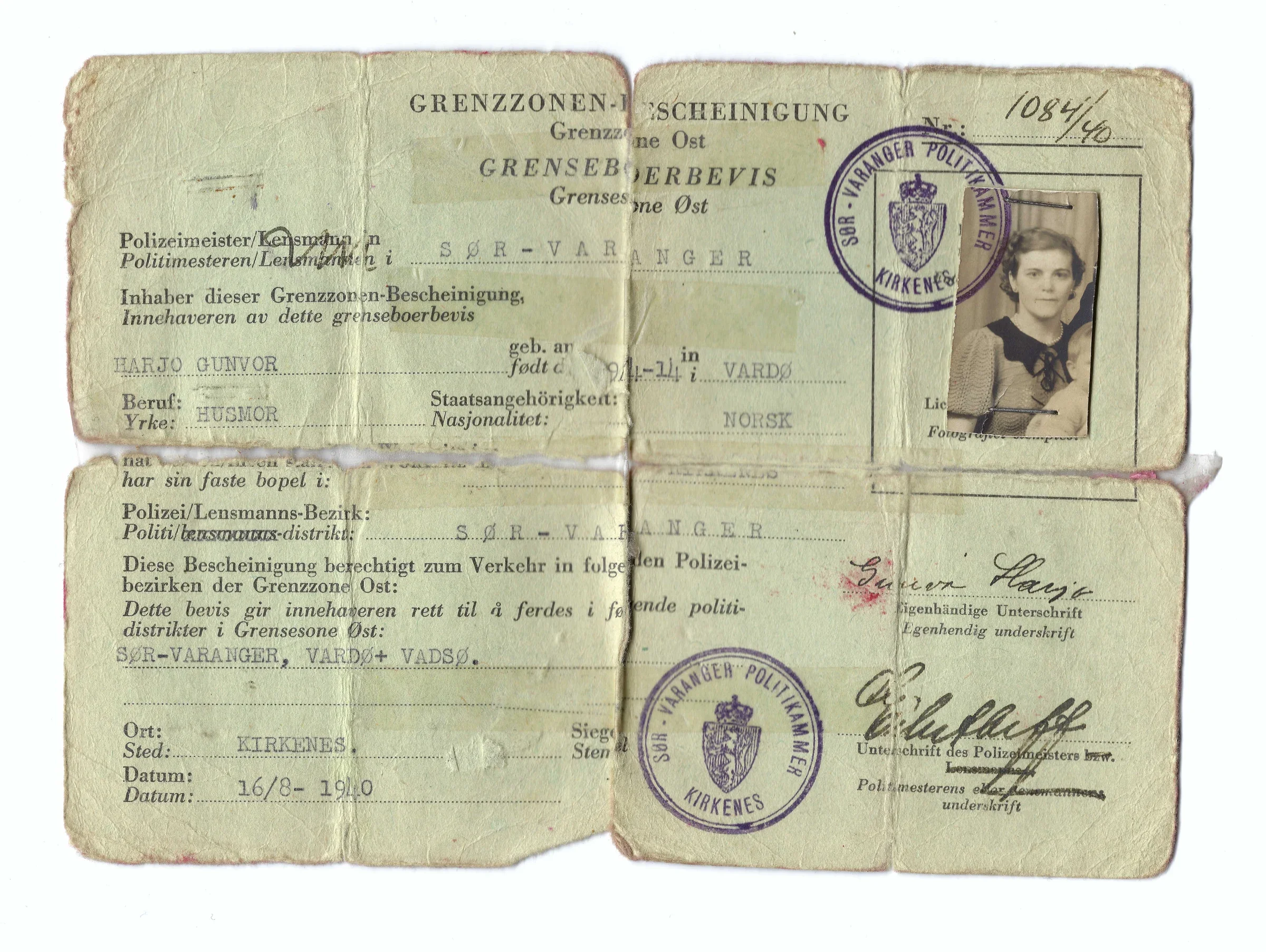
Gunvor was born at Vardø on 29 April 1914. Her childhood vaccination certificate names her parents as Jørgen Malnes and Anna, née Gunnari. A border-resident identity card issued at Kirkenes on 16 August 1940 records the same birth date and preserves another photograph and her signature. These small personal papers give her a place in the story beyond the later description of her as Karl’s widow. [15]
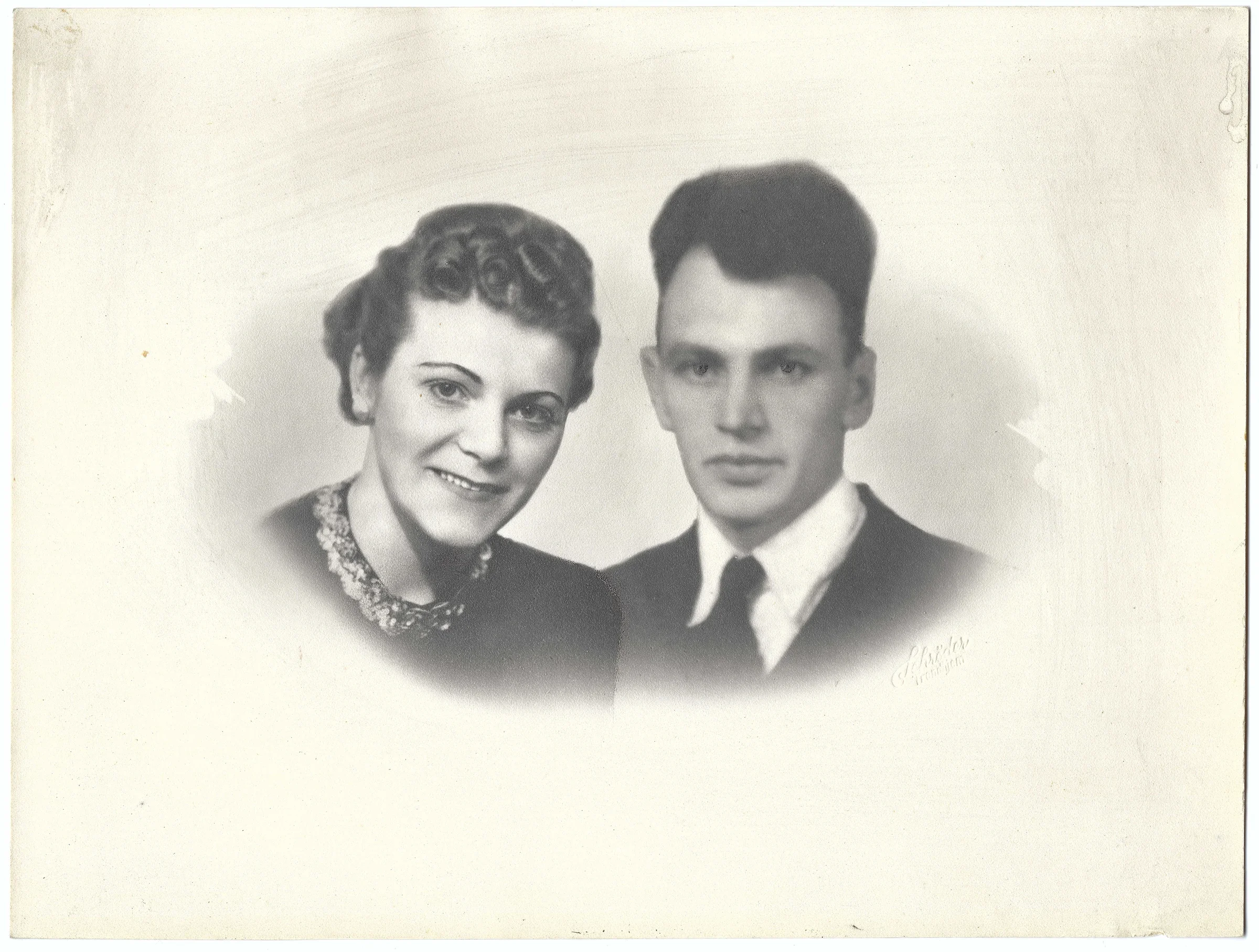
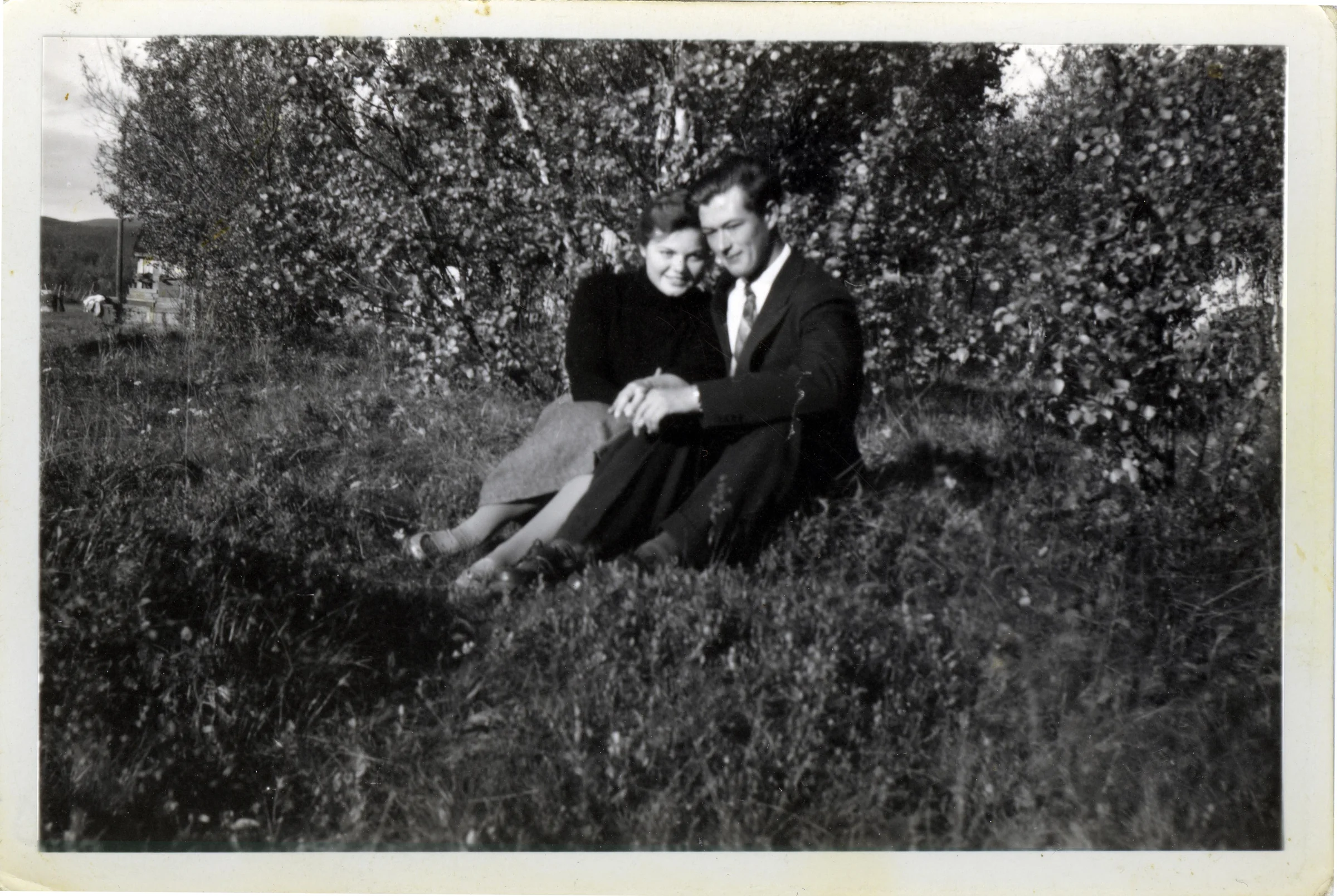
Two separate photographs combined into one portrait, with Gunvor on the left and Karl on the right.
Their children were Anne-Lise, born in 1938; Gunnar Fredrik, born on 25 October 1949; and Margrethe, born on 30 May 1953. [6] [18]
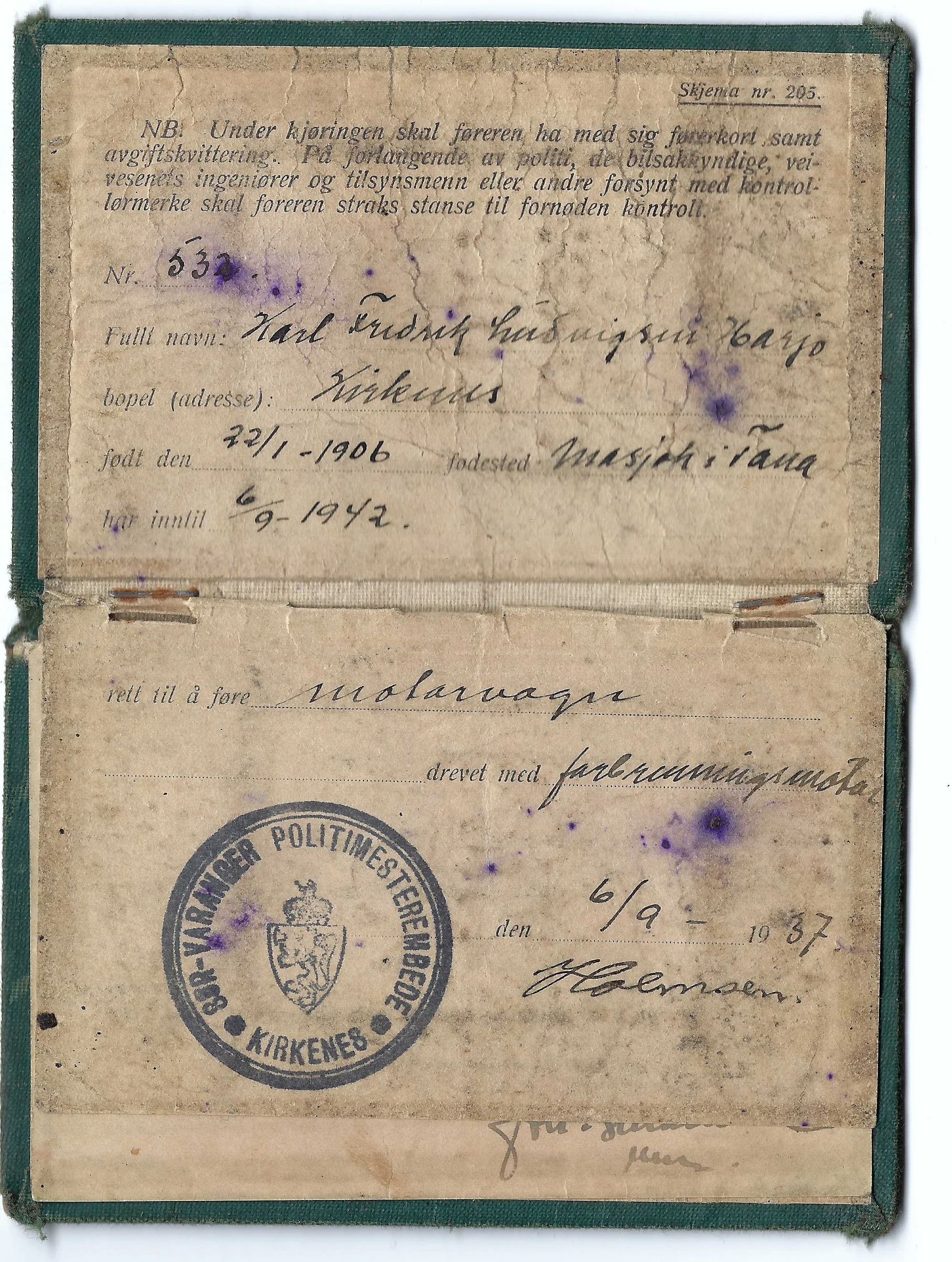
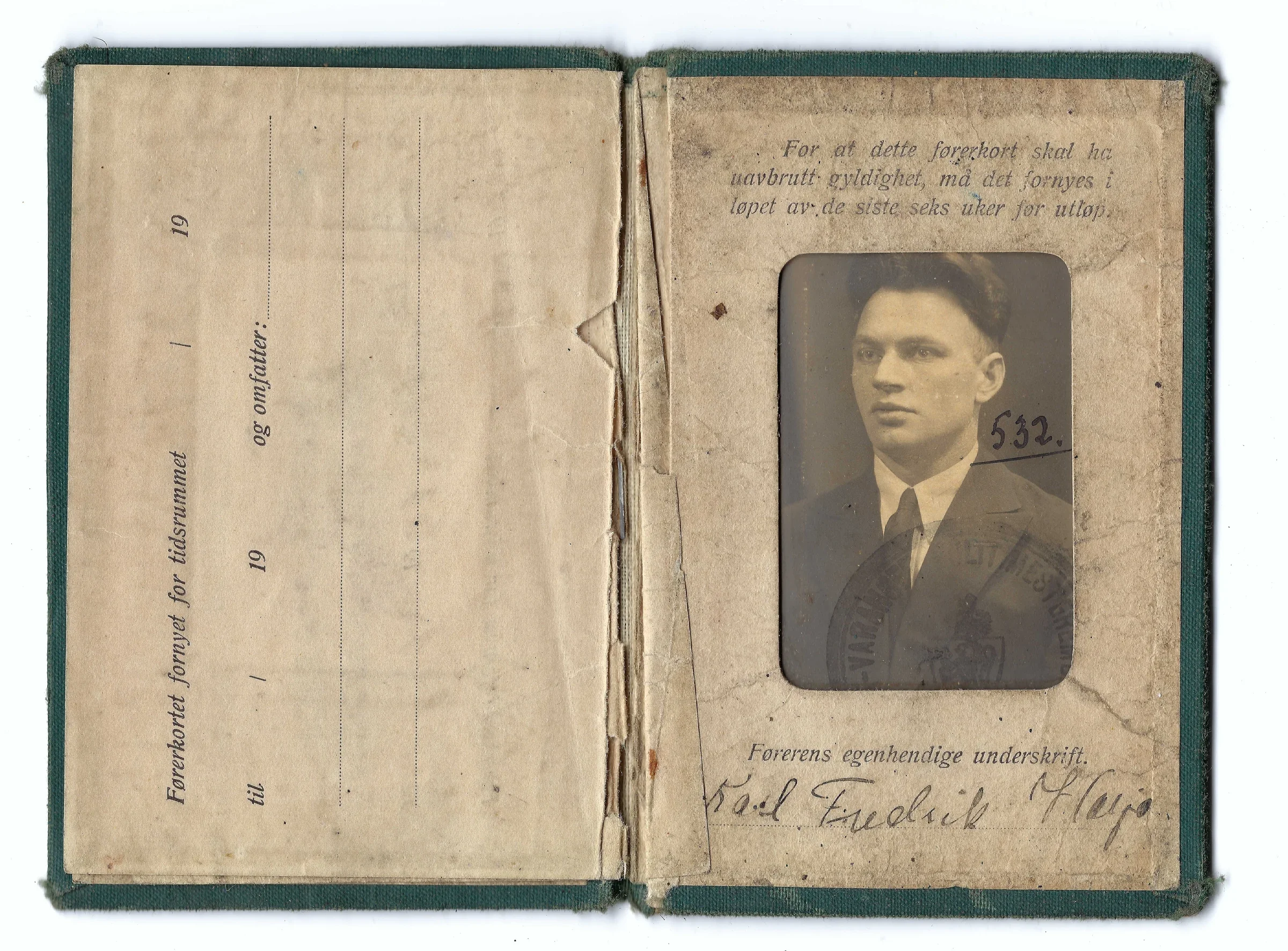
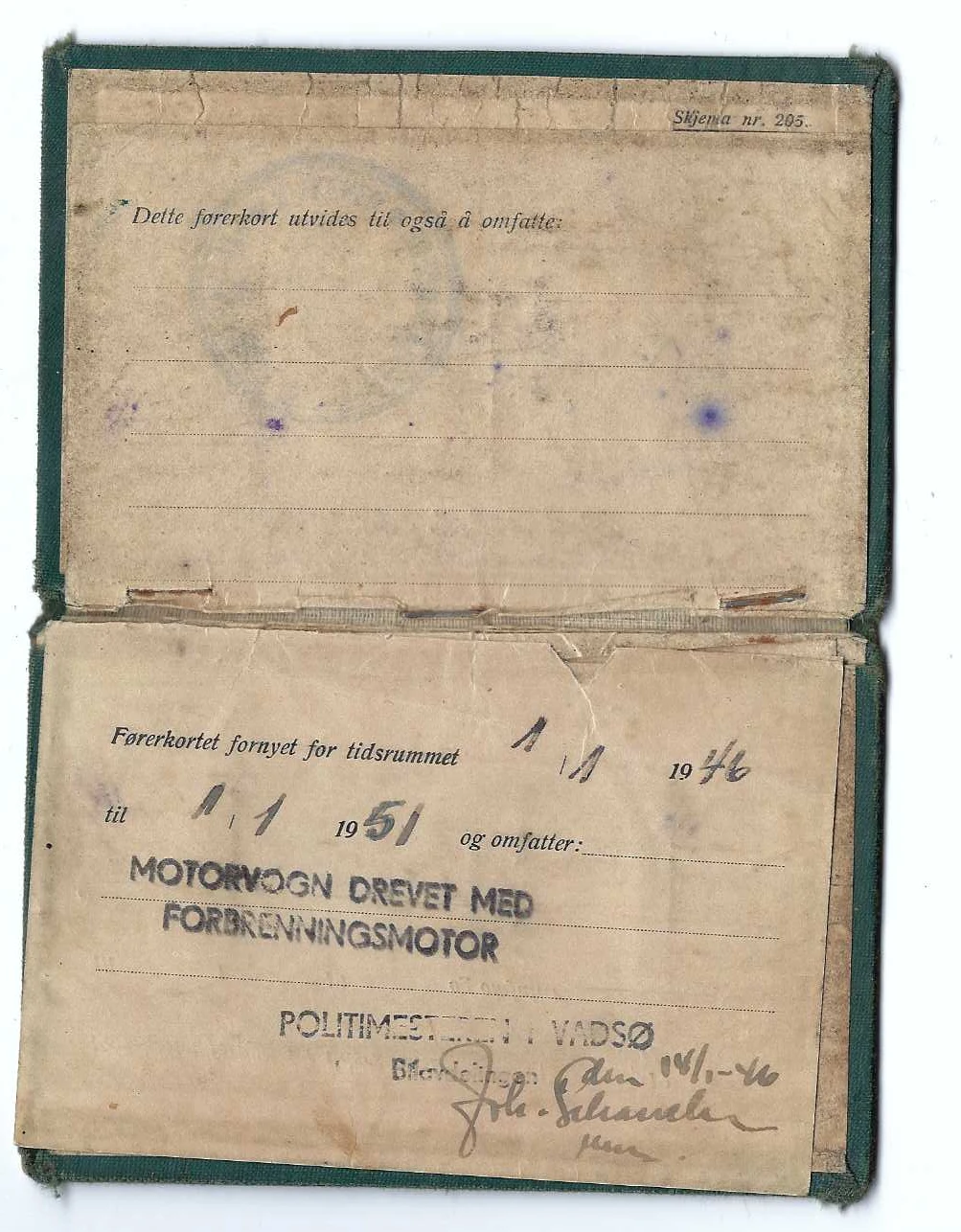
Karl’s driving licence was issued on 6 September 1937. It names Kirkenes and Masjok, Tana, and carries the same portrait that now introduces this page. During the war he worked as a driver in Kirkenes, doing taxi-like work. A later renewal of his licence ran from 1 September 1946 to 1 September 1951. His skill at handling machinery would also become important to the farming community. [4] [3]
1944–1949 · Purchase and destruction
Buying the family property
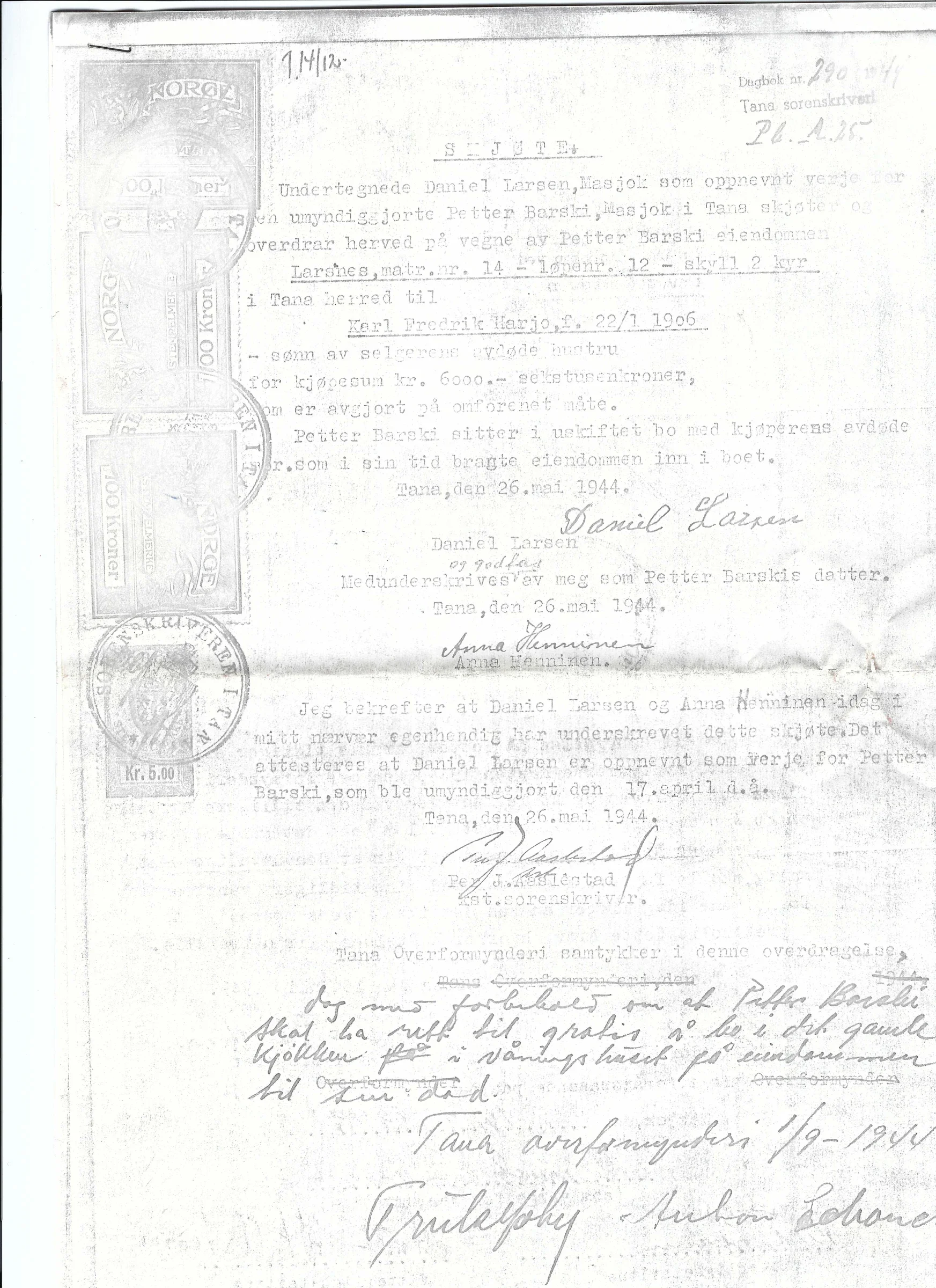
On 26 May 1944, Daniel Larsen of Masjok, acting as guardian for Petter Barski, conveyed Larsnes to Karl Fredrik Harjo for 6,000 kroner. The deed describes Karl as the son of the seller’s deceased wife and says that she had brought the property into the estate. Karl’s mother Anna had died in 1935. The document therefore records a purchase tied closely to his mother’s family history, rather than a simple, undocumented inheritance. [7]
The deed says the price was settled in an agreed manner; it does not say that Karl handed over 6,000 kroner in cash. Anna Henninen also signed, expressly identified as Petter’s daughter. Her mother is not named in this document, so that statement should not be stretched into a fuller relationship than the source establishes.
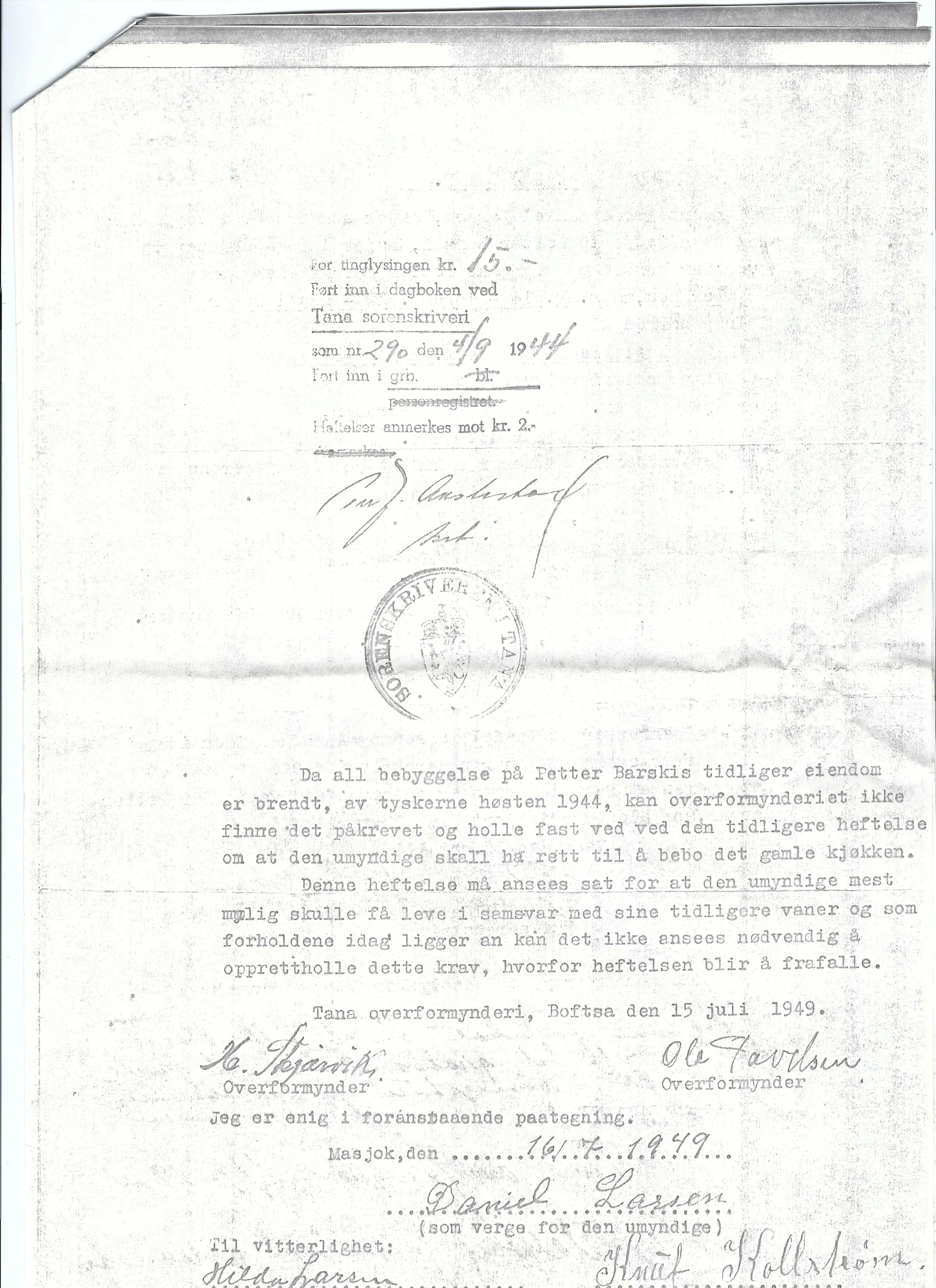
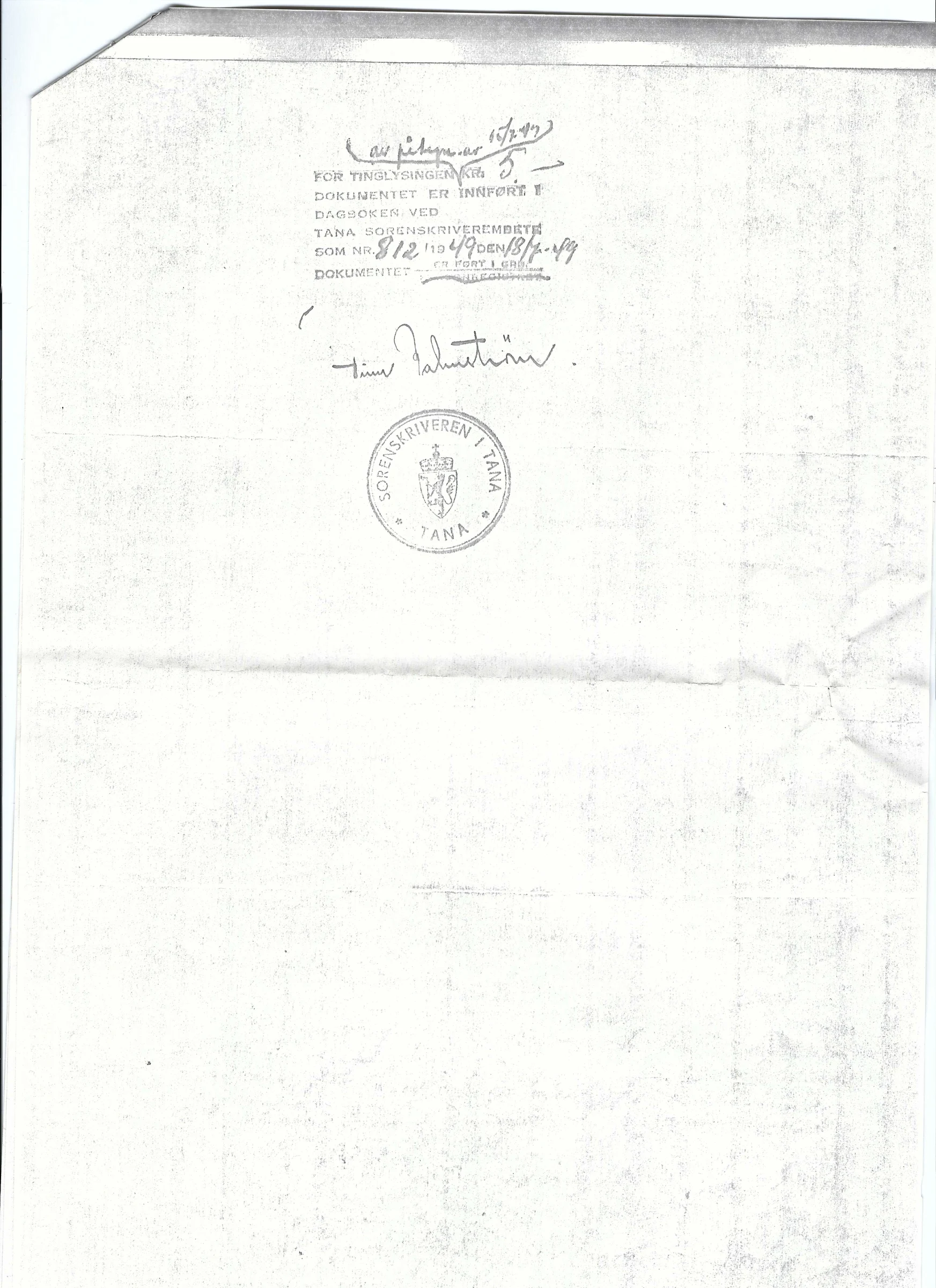
The purchase was followed within months by destruction. Later endorsements state that all the buildings on the property were burned by the Germans in autumn 1944. The deed had reserved accommodation for Petter in the old kitchen. Once that building no longer existed, the reserved accommodation became an issue to settle; declarations in July 1949 waived the condition. The paperwork carries the effects of the fire forward several years beyond the event itself.
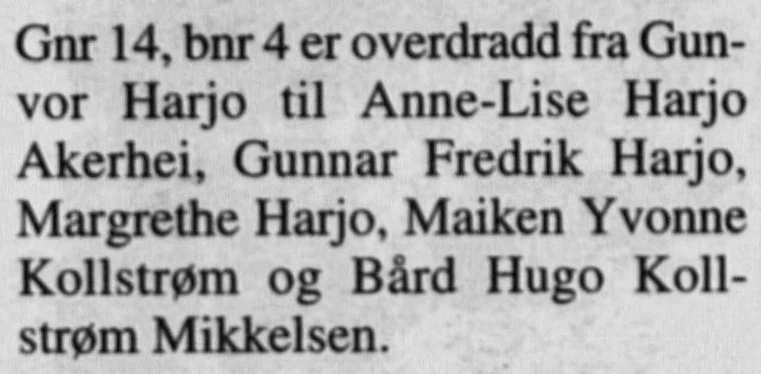
The old property description is matrikkel 14, løpenummer 12; the updated research identifies its later designation as gnr. 14, bnr. 4. The family’s continuing connection is to the property. Neither the 1899 purchase nor the 1944 deed establishes that today’s house is the house that stood there before the war. [13]
1945–1946 · Work after the war
“The most skilled tractor driver we have in Tana”
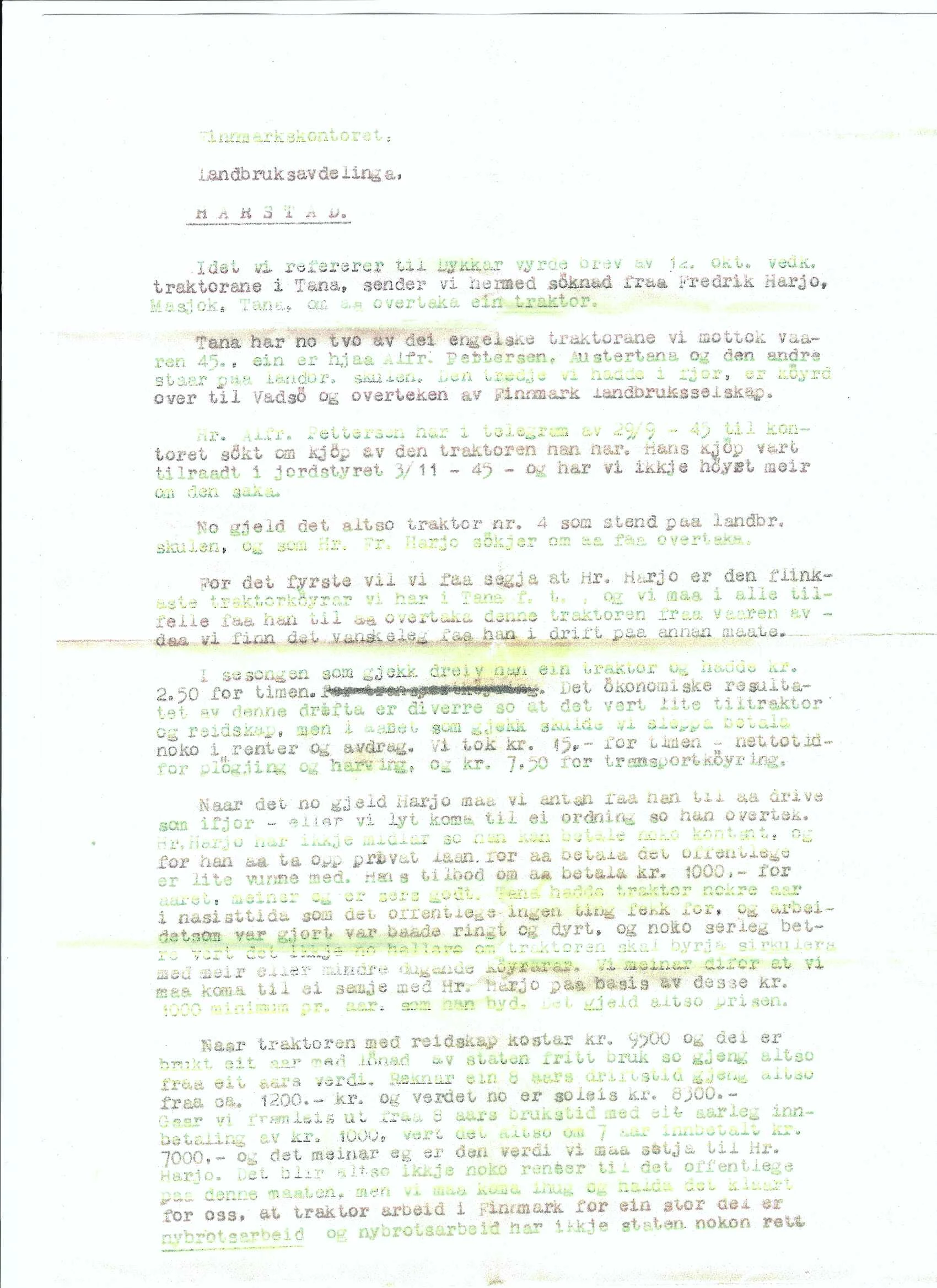
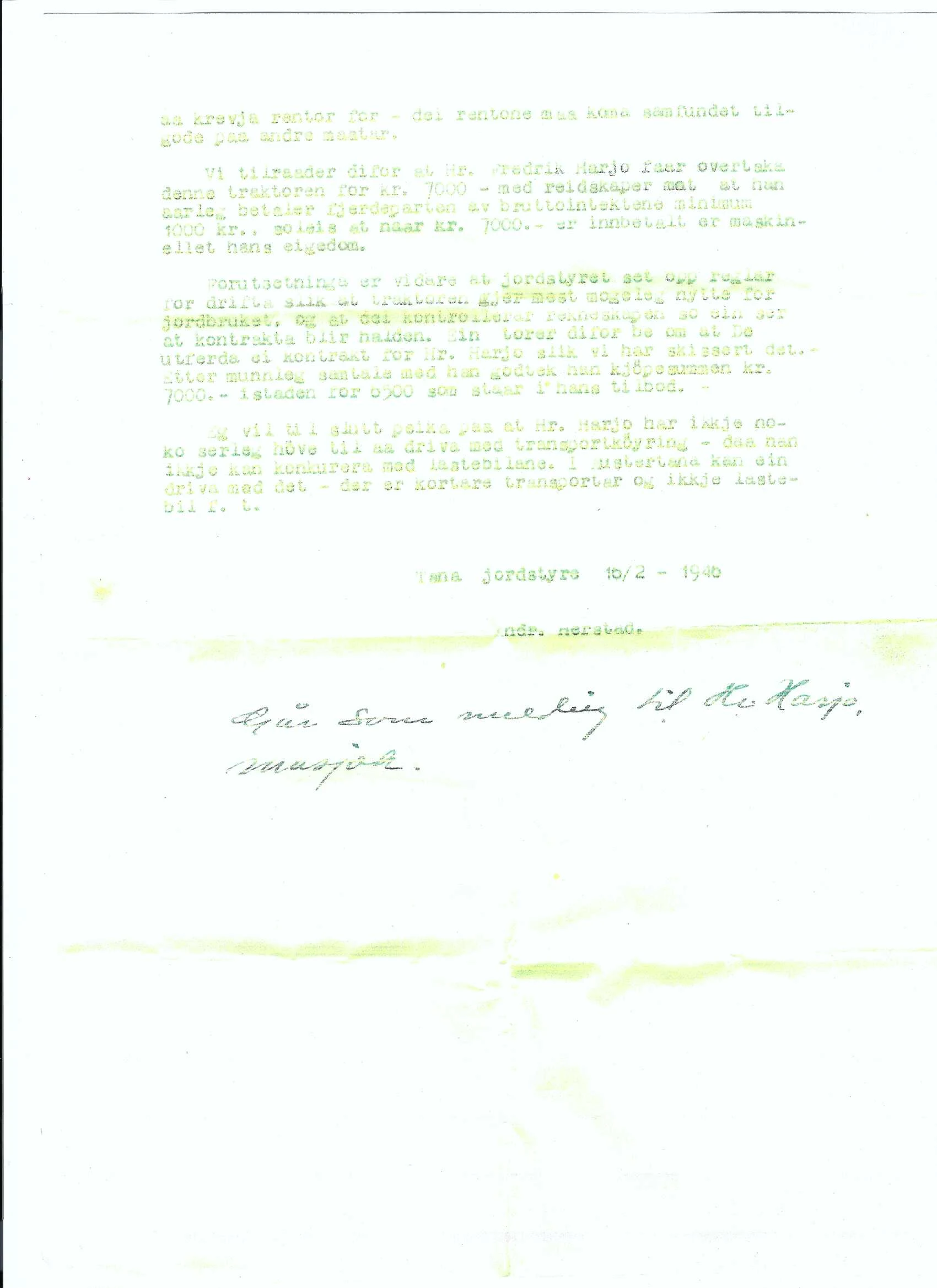
In the aftermath of the destruction, Fredrik’s practical ability comes through unusually clearly. On 16 February 1946, Andr. Nerstad of Tana Jordstyre wrote to the agricultural department of Finnmarkskontoret in Harstad about Fredrik’s application to take over a tractor. The board called him, in English translation, “the most skilled tractor driver we have in Tana.” [8]
The letter describes the small supply of tractors available locally and the difficulty of keeping one in useful operation without him. Fredrik had operated a tractor during the previous season for 2.50 kroner an hour. The board charged for ploughing, harrowing and transport, but little had remained toward the machinery’s cost. This was work to bring land into cultivation as well as an ordinary business proposition.
Fredrik could not pay the purchase price in cash. The board recommended that he take over the tractor and implements for 7,000 kroner, paying a quarter of the annual gross income, with a minimum payment of 1,000 kroner each year. Once the total had been paid, the machinery would become his property. The board proposed rules to direct its use toward agriculture and supervision of the accounts. It also reported that Fredrik had orally accepted the 7,000-kroner figure instead of the 6,500 in his own offer.
The two-page letter shows why the board wanted to reach an agreement: Fredrik’s skill could make the tractor useful to other farms as well as his own. It remains a recommendation, not a surviving signed purchase contract. A tractor and implements appear in his 1953 estate inventory at 7,000 kroner, but that later entry does not by itself prove that every term of the 1946 proposal was carried out.
1948–1953 · Injury and illness
The work that went on around him
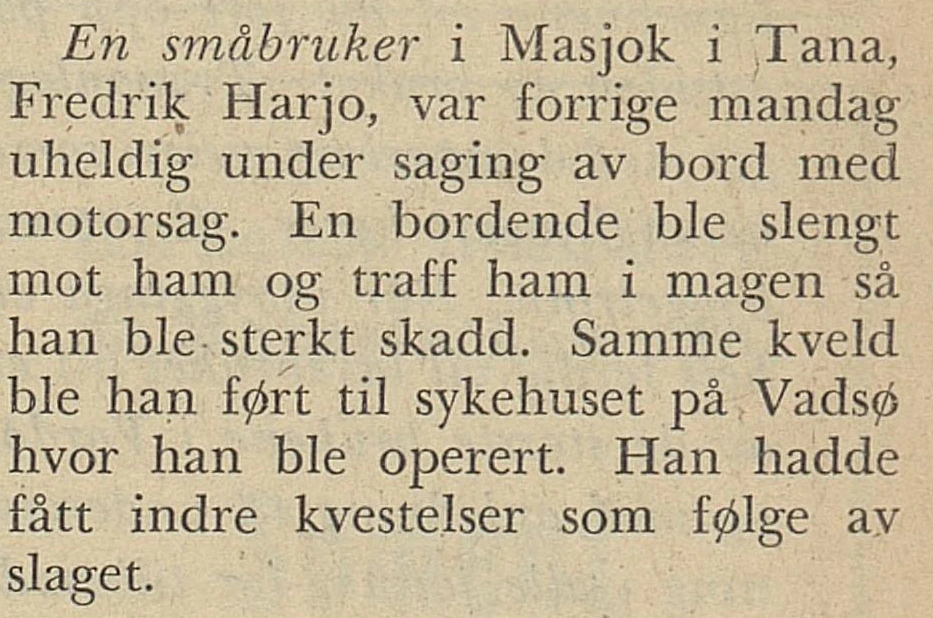
On Monday, September 20, 1948, Karl was helping a friend with a belt-driven saw when a board was thrown against his abdomen. He suffered serious internal injuries and was taken to Vadsø hospital, where he was operated on that same evening. Read the newspaper clipping. [3] [9]
The injury affected his ability to eat, and he eventually starved to death. Years later, Gunnar was glad to see the newspaper notice: he knew the story of his father’s accident but had never known its original date. [3]
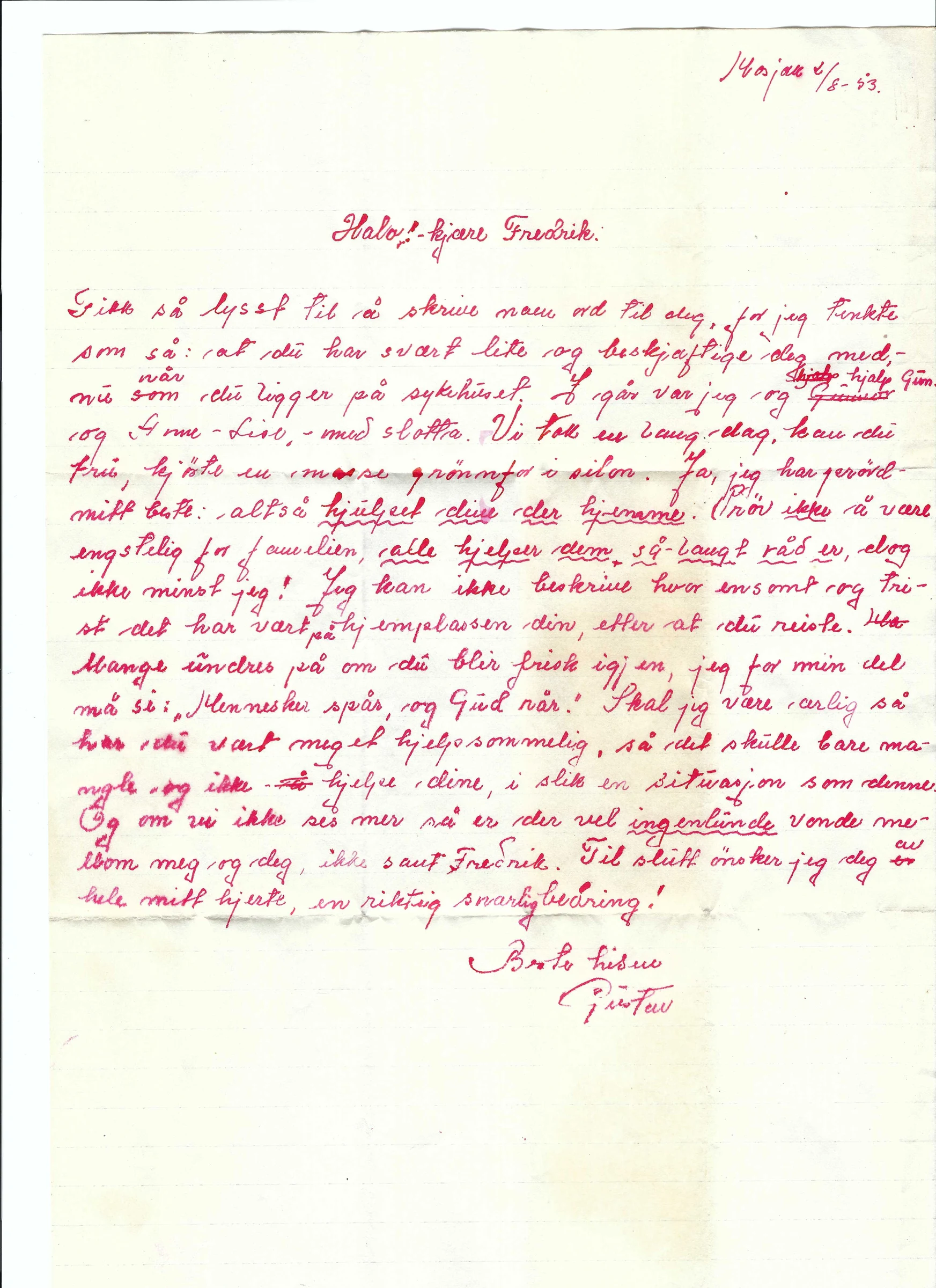
By 2 August 1953 Fredrik was in hospital. A letter written at Masjok that day tells him about haymaking with Anne-Lise and help for the family, and wishes him a recovery. The signature appears to read Gustav, although it remains provisional. The writer names neither the hospital nor Fredrik’s illness. [11]
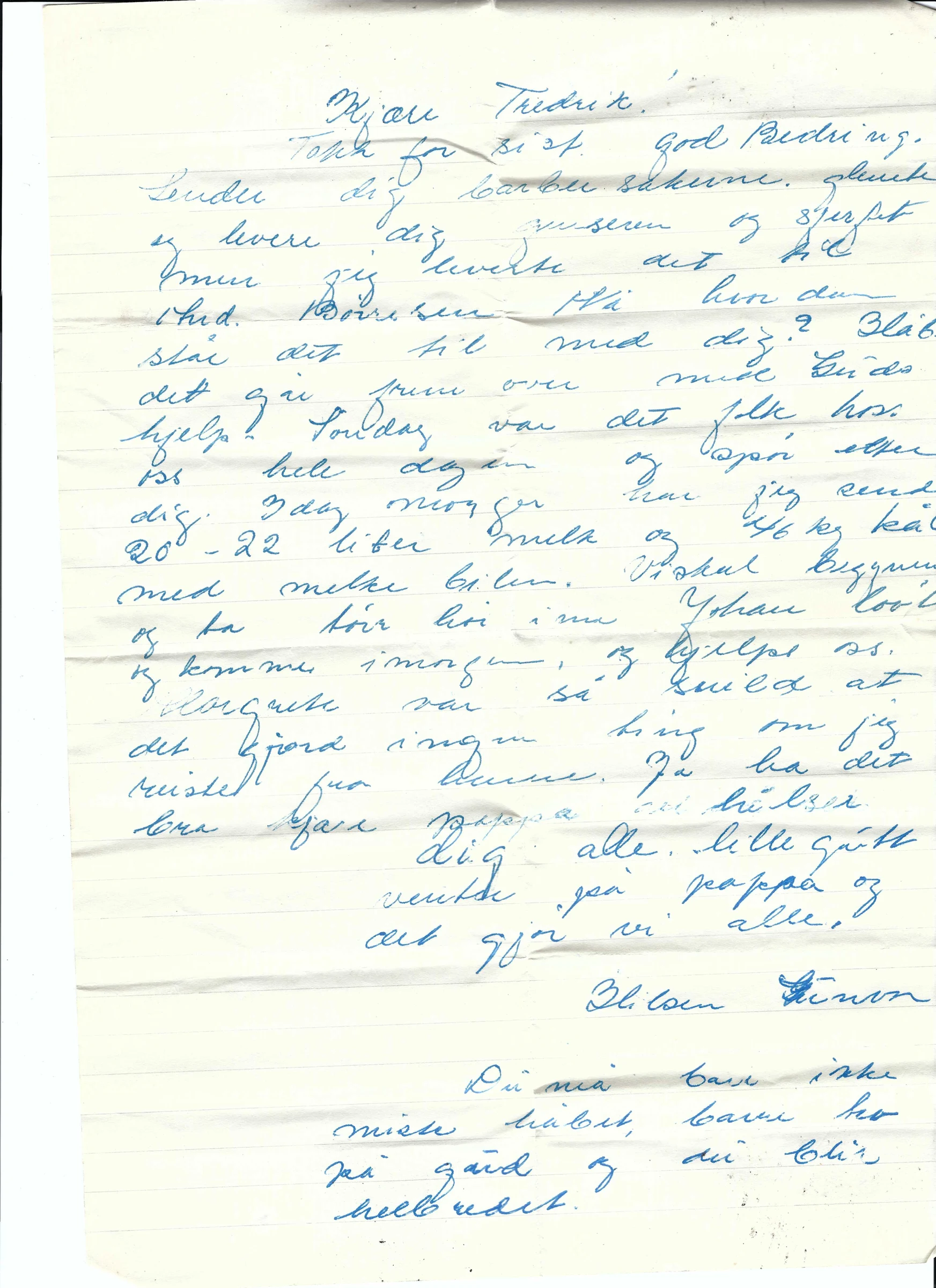
An undated note from Gunvor brings the household even closer. She sends practical things—shaving items, a newspaper and a mirror—along with news of the hay and the children. A little boy is waiting for Papa. The right edge of the scan cuts through some words, and the note cannot securely be dated to the same hospital stay. What is readable nevertheless shows the ordinary work of caring for an absent husband while keeping home and farm going. [16]
September 1953 · News across the Atlantic
A brother’s letter to Gunvor
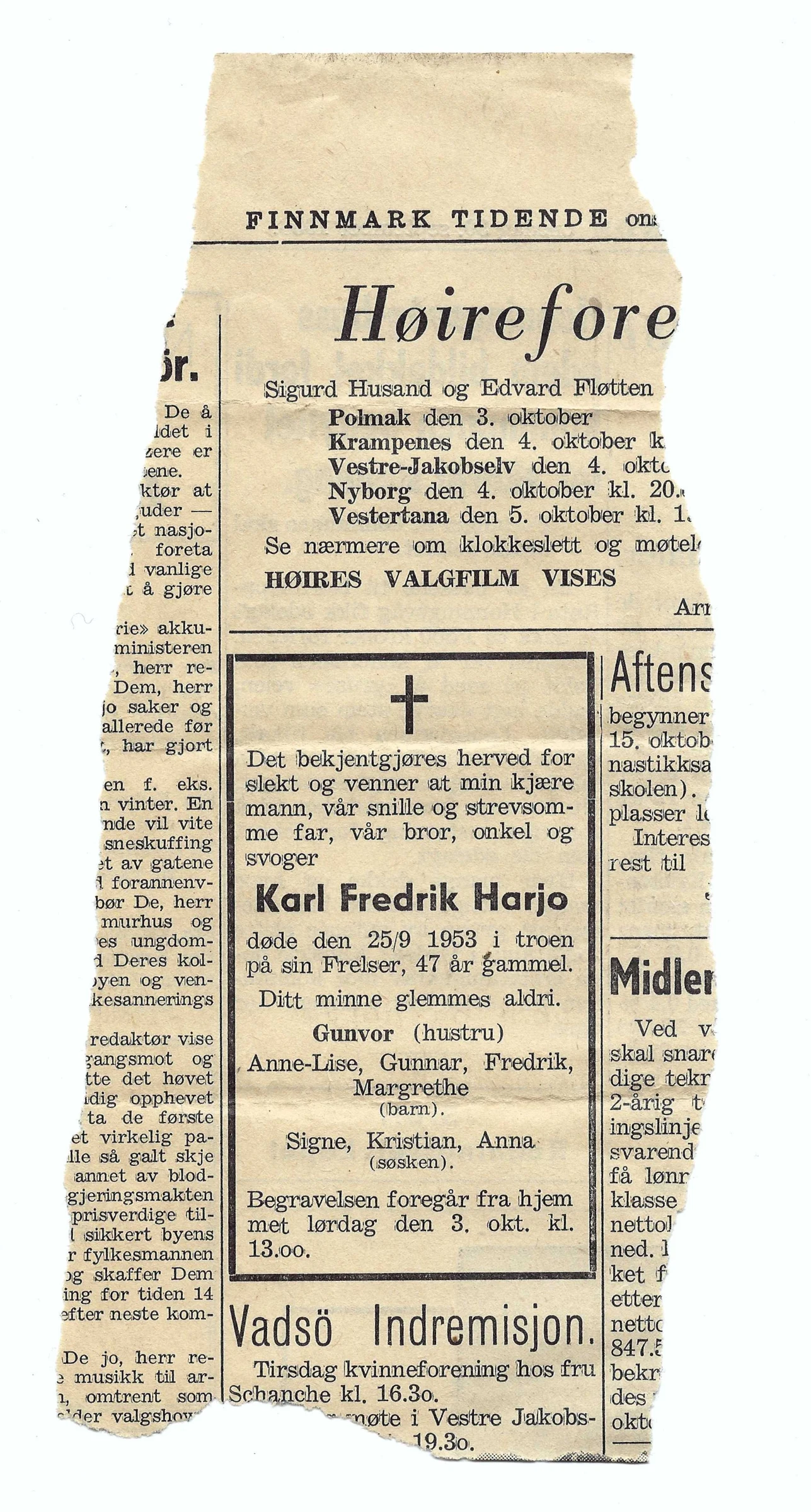
Karl Fredrik died on 25 September 1953, aged forty-seven. His family’s notice names Gunvor and their three children, together with Signe, Kristian and Anna among the bereaved siblings. It announces a funeral from the home at one o’clock on Saturday 3 October. [10]
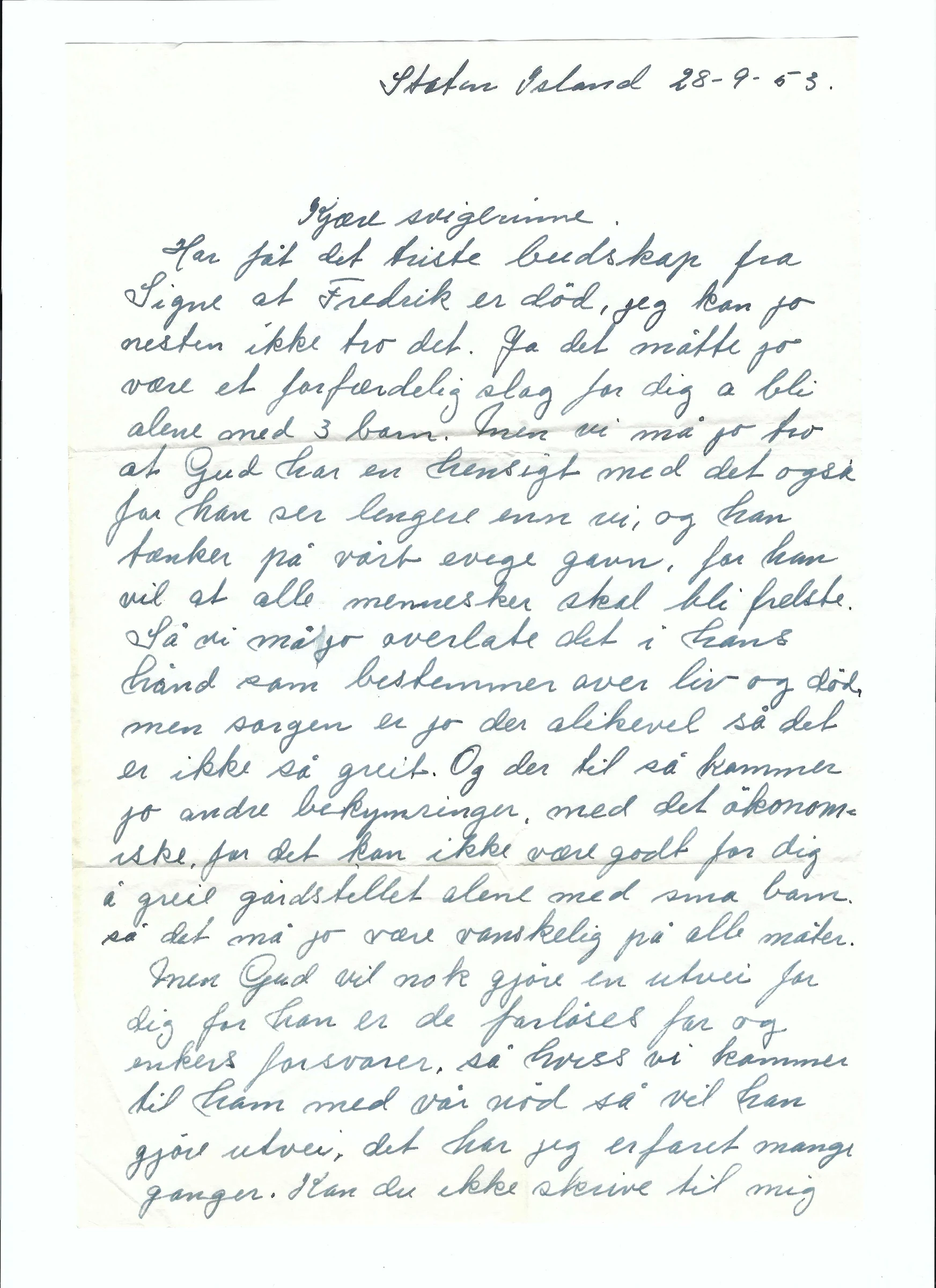
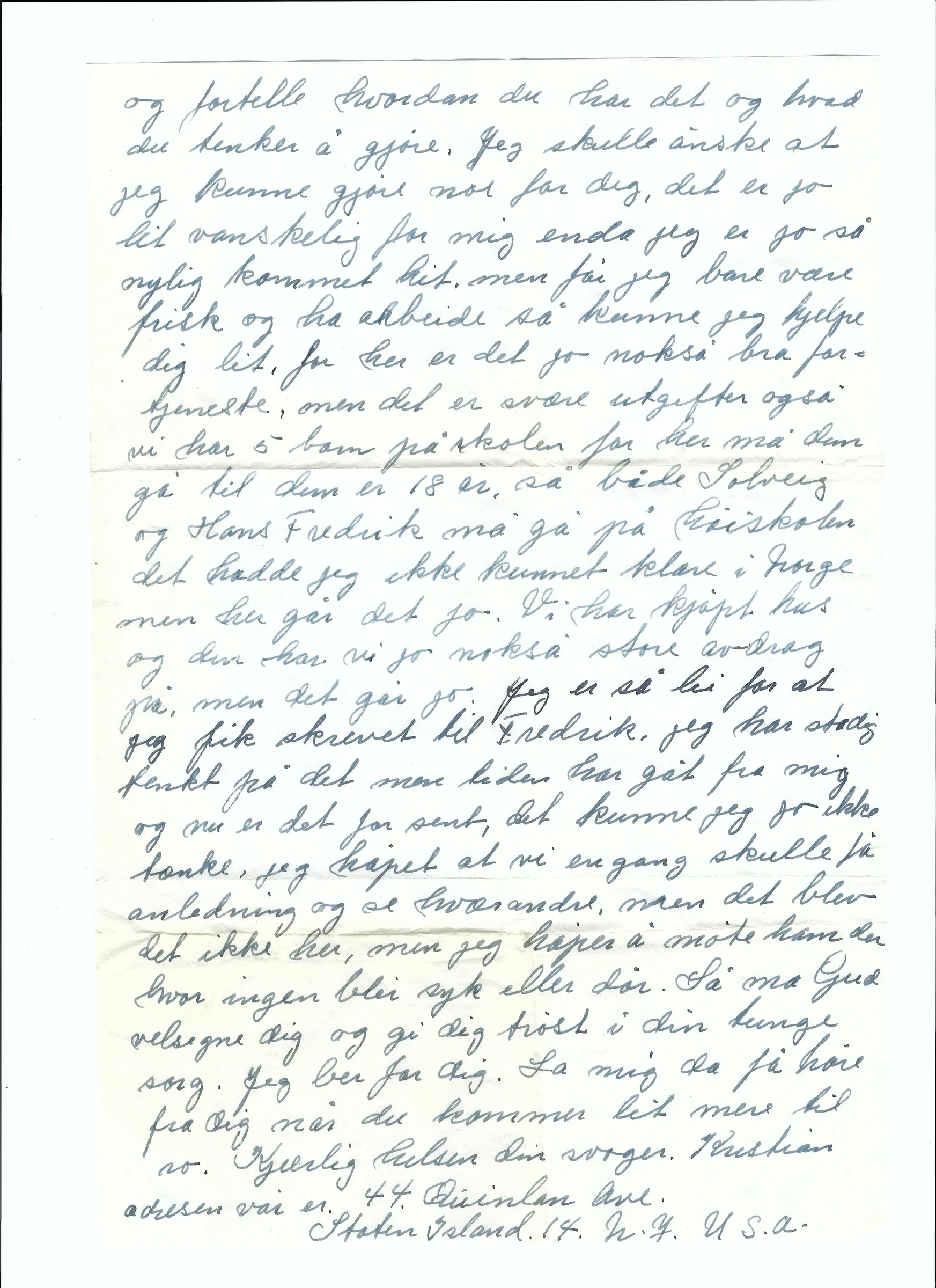
Anne-Lise was about fifteen. Gunnar was almost four, and Margrethe was still only a few months old. When Signe’s news reached Kristian in America, he wrote to Gunvor from Staten Island on 28 September. He found it difficult to believe that Fredrik was dead and thought immediately of her being left with three children and the farm to manage. [12]
Faith runs through Kristian’s letter, but so does practical worry. He asked Gunvor to tell him how she was getting on and what she planned to do. Newly arrived in America himself, with five children in school and payments on a house, he hoped that good health and steady work might allow him to help. He regretted putting off a letter to Fredrik: he had expected that they would have another chance to meet. The loss was both the death of a brother and the end of that hoped-for reunion.
1953–1954 · Gunvor’s responsibility
What remained to be cared for
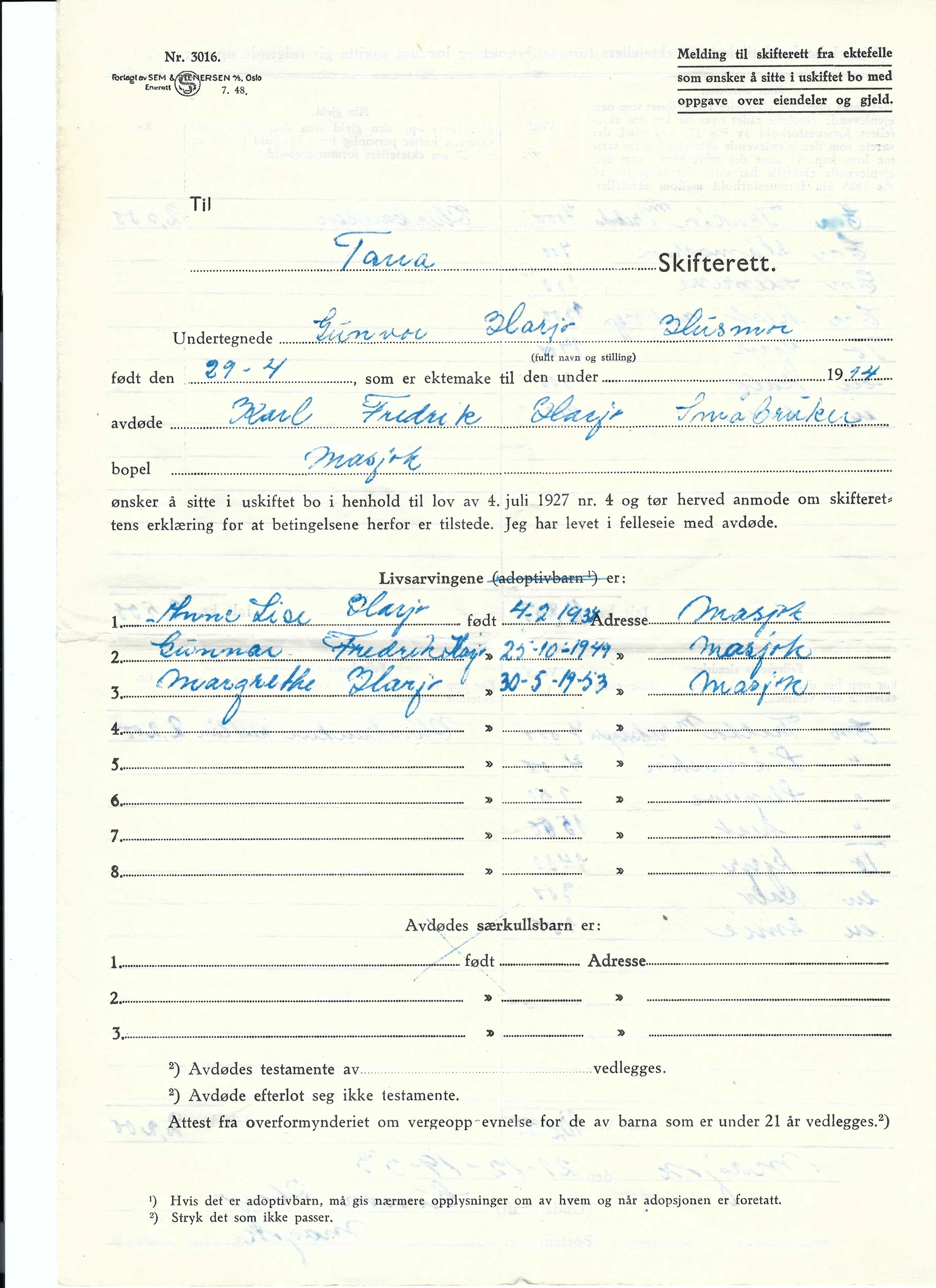
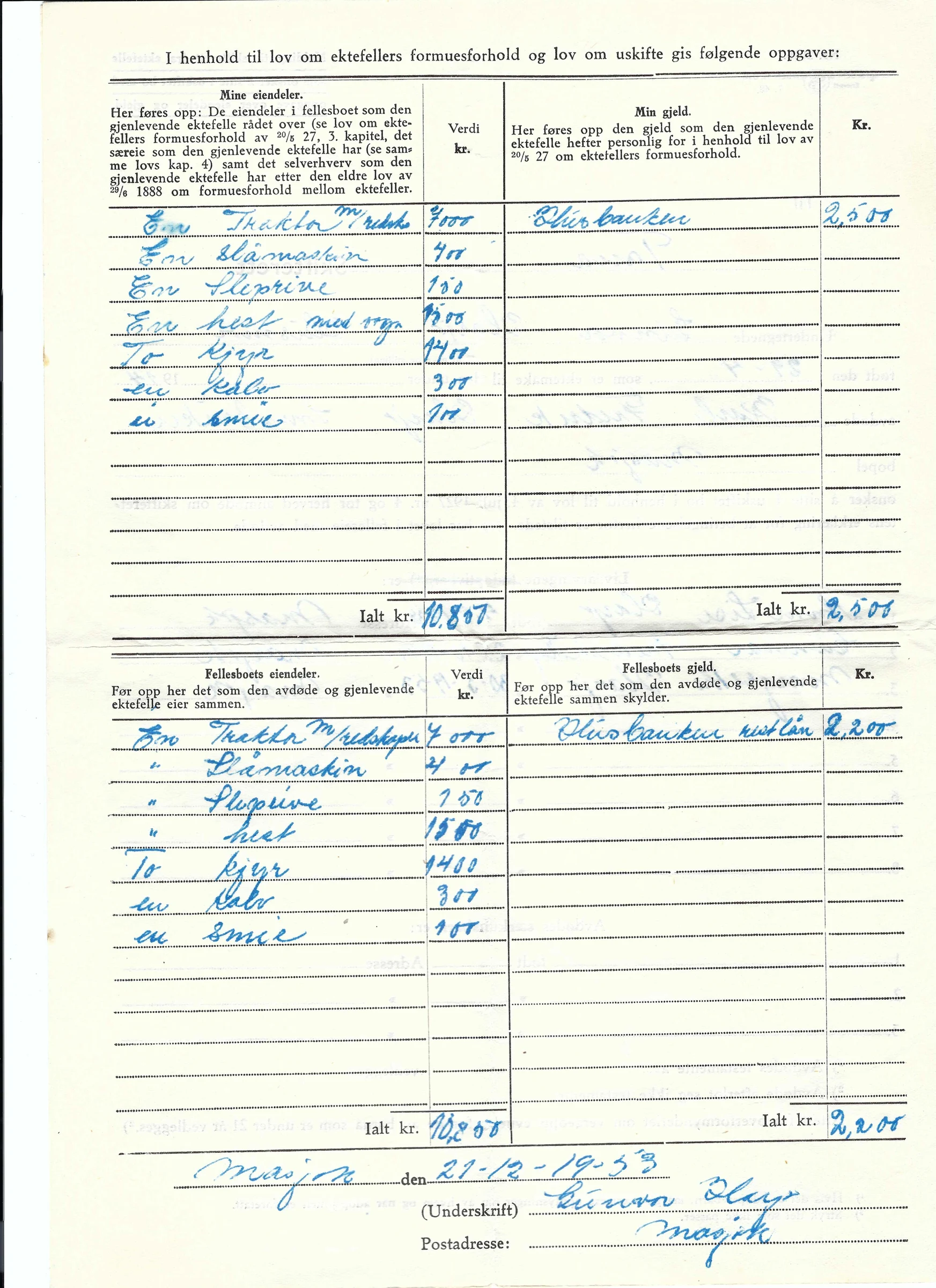
On 21 December 1953, Gunvor applied to Tana probate court to remain in an undivided estate after her husband. In practical terms, she was asking to keep the estate together rather than divide it immediately. The form lists Anne-Lise, Gunnar Fredrik and Margrethe as the three children. [6]
The inventory gives a compact picture of the working farm: a tractor with implements, a mowing machine, a hay rake, a horse and wagon, two cows, a calf and a forge. The listed values total 10,800 kroner. This inventory appears twice on the form, in separate sections; it is one list repeated, not two farms’ worth of assets. Debt figures of 2,500 and 2,200 kroner are also entered, but their relationship is unclear, so they cannot safely be combined into a net-estate calculation.
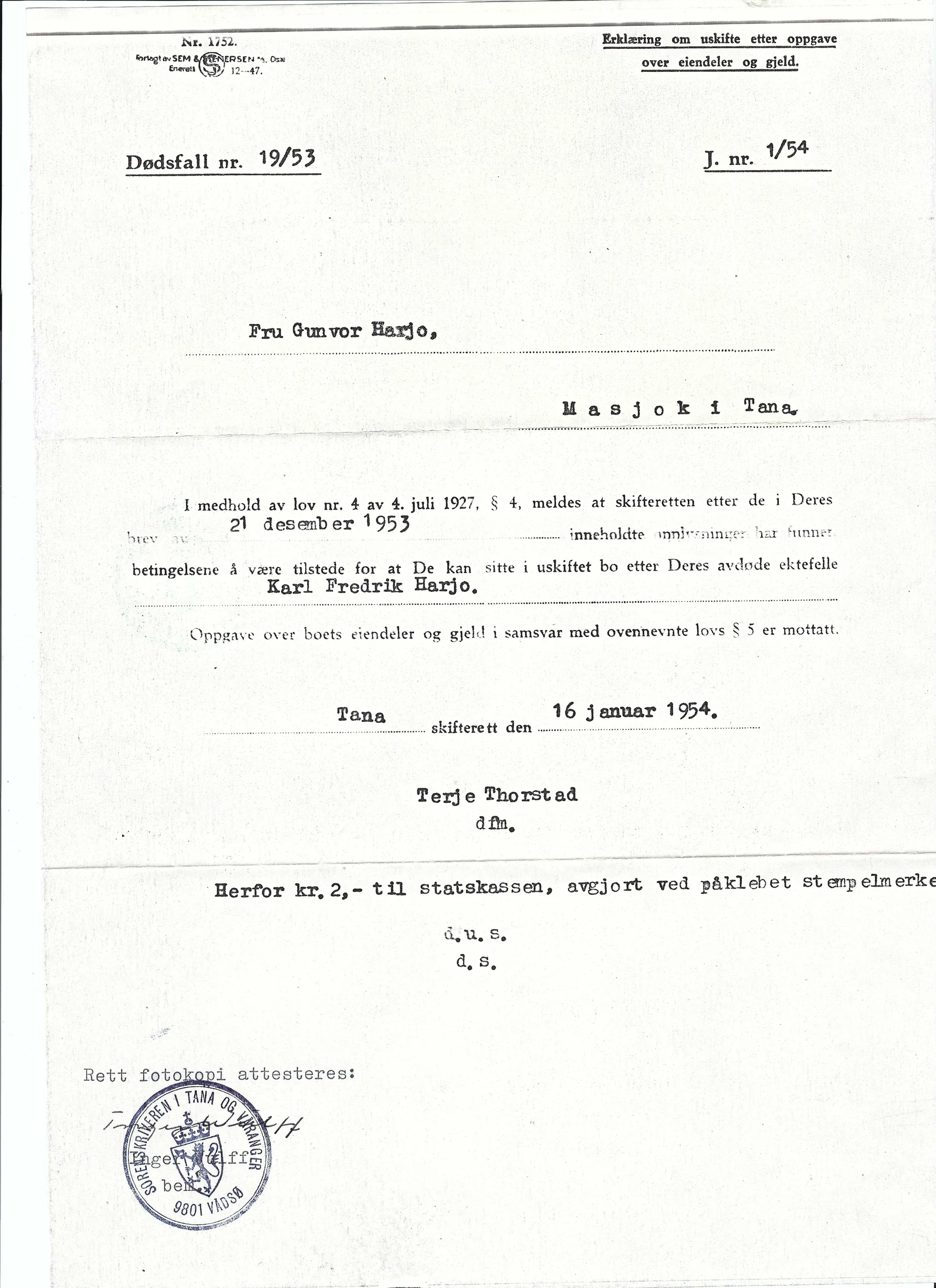
The court’s response survives. On 16 January 1954, Tana skifterett certified that the conditions were met for Gunvor to remain in an undivided estate after Karl Fredrik Harjo. The certificate completes the sequence that begins with her December application. It records a formal decision at a moment when the daily responsibility for the household had passed to her. [10]
1956–1980s · The family and its papers
Gunvor, the children and the letters that followed
Gunvor’s family continued to grow. Her daughter Bjørg Synnøve Kollstrøm was born in 1956. Her father was Johan Kollstrøm, and she was the maternal half-sister of Anne-Lise, Gunnar and Margrethe. [18]
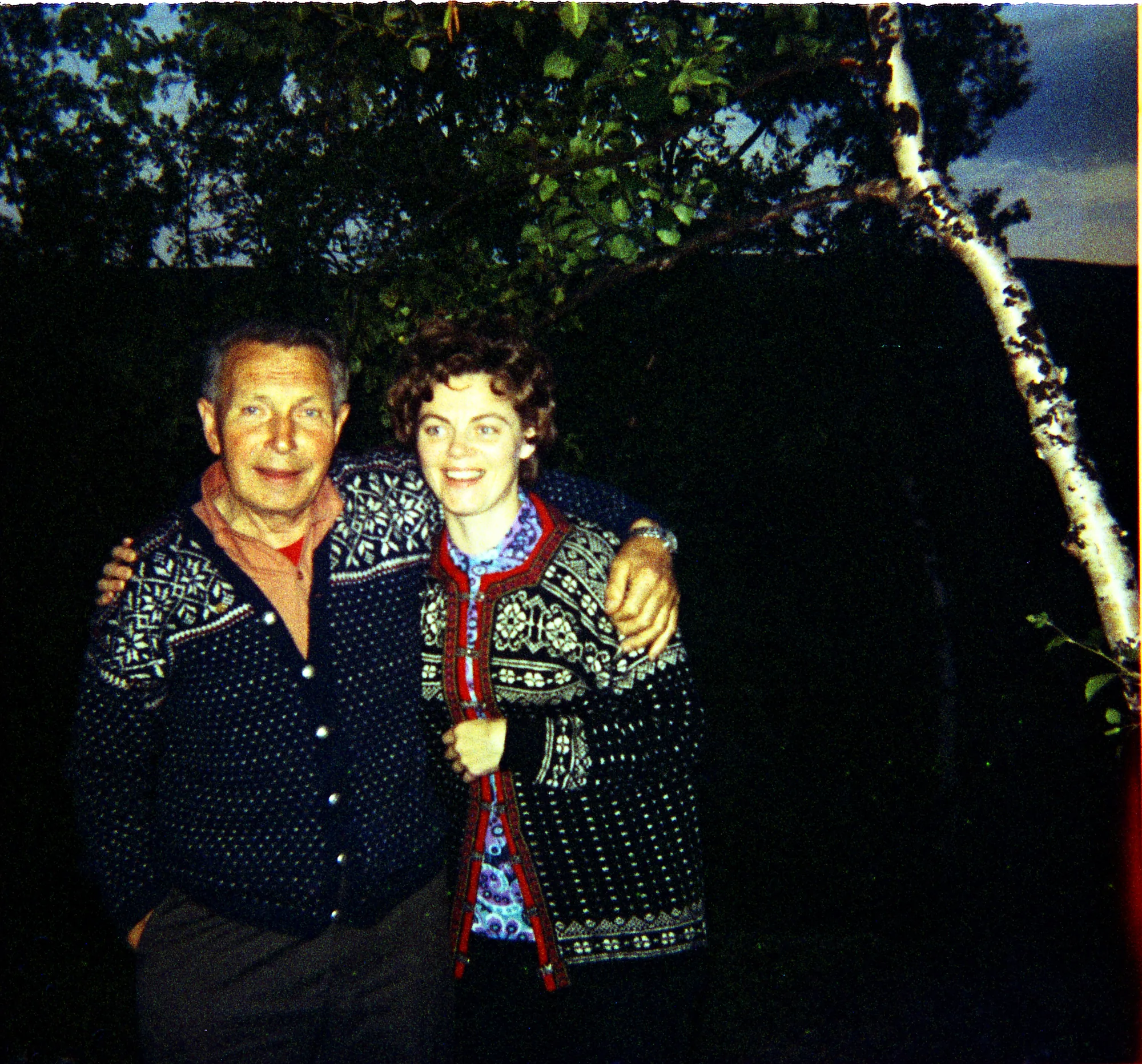
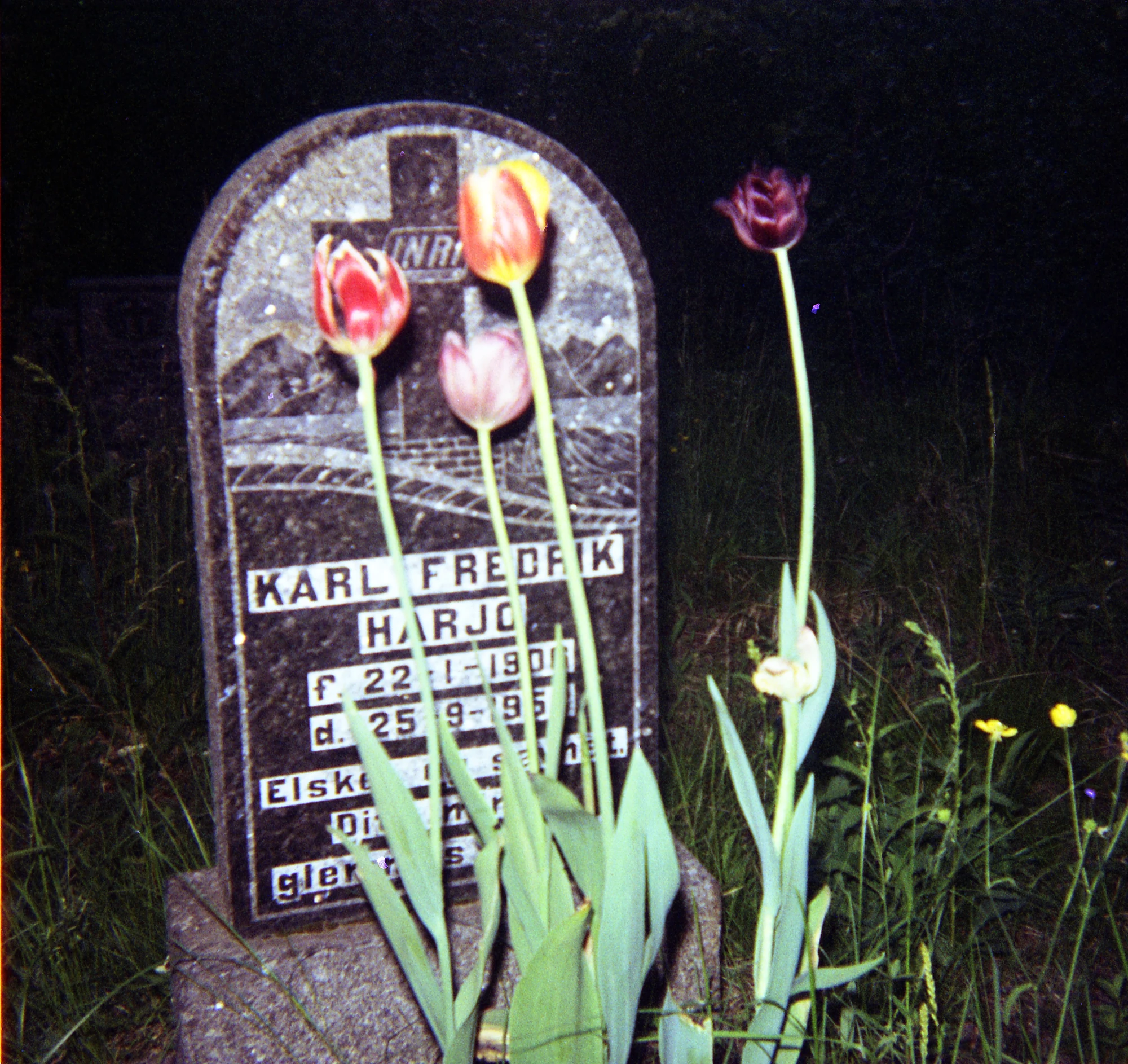
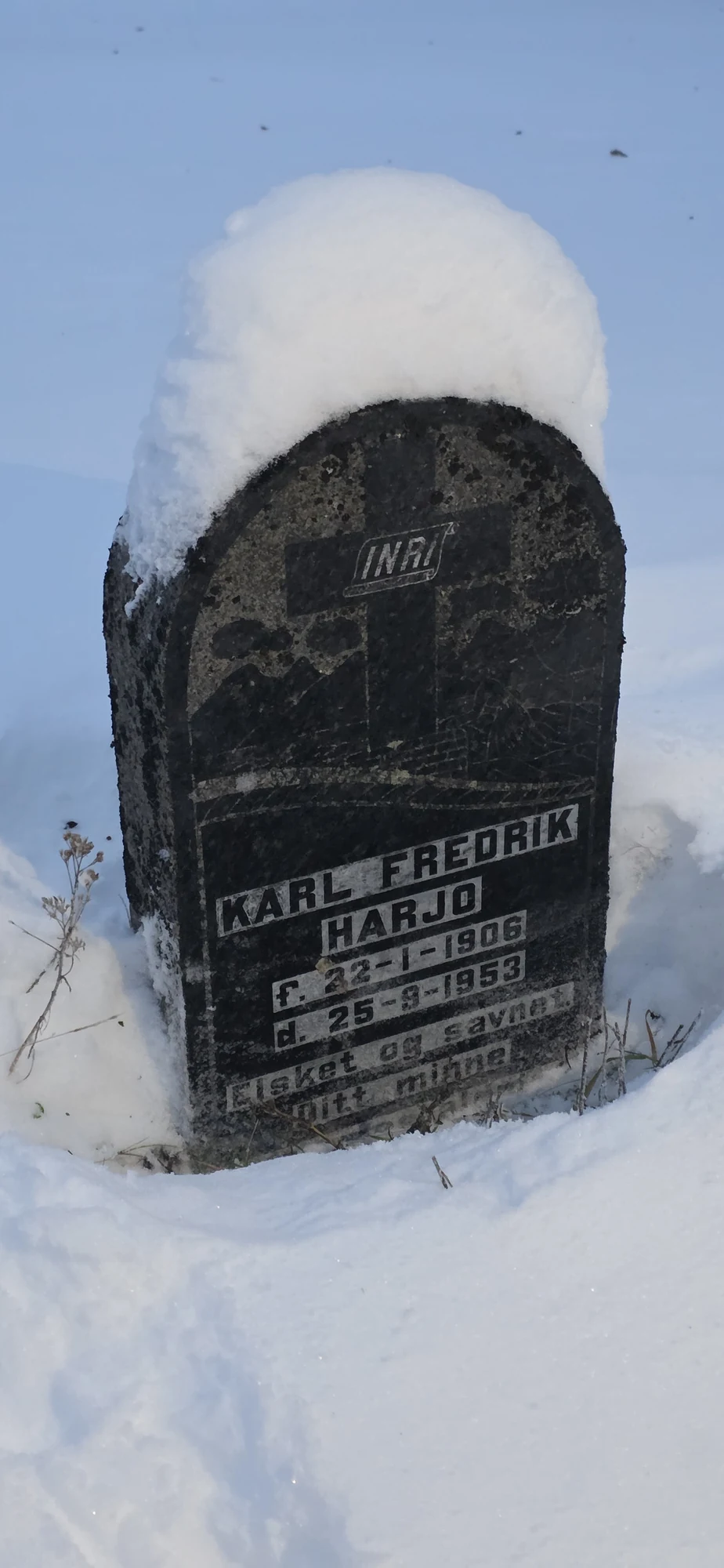
During a visit to Norway in the 1970s, Karl’s brother Hans Kristian spent time with Anne-Lise. They were photographed together at Karl’s grave, brother and daughter remembering him.
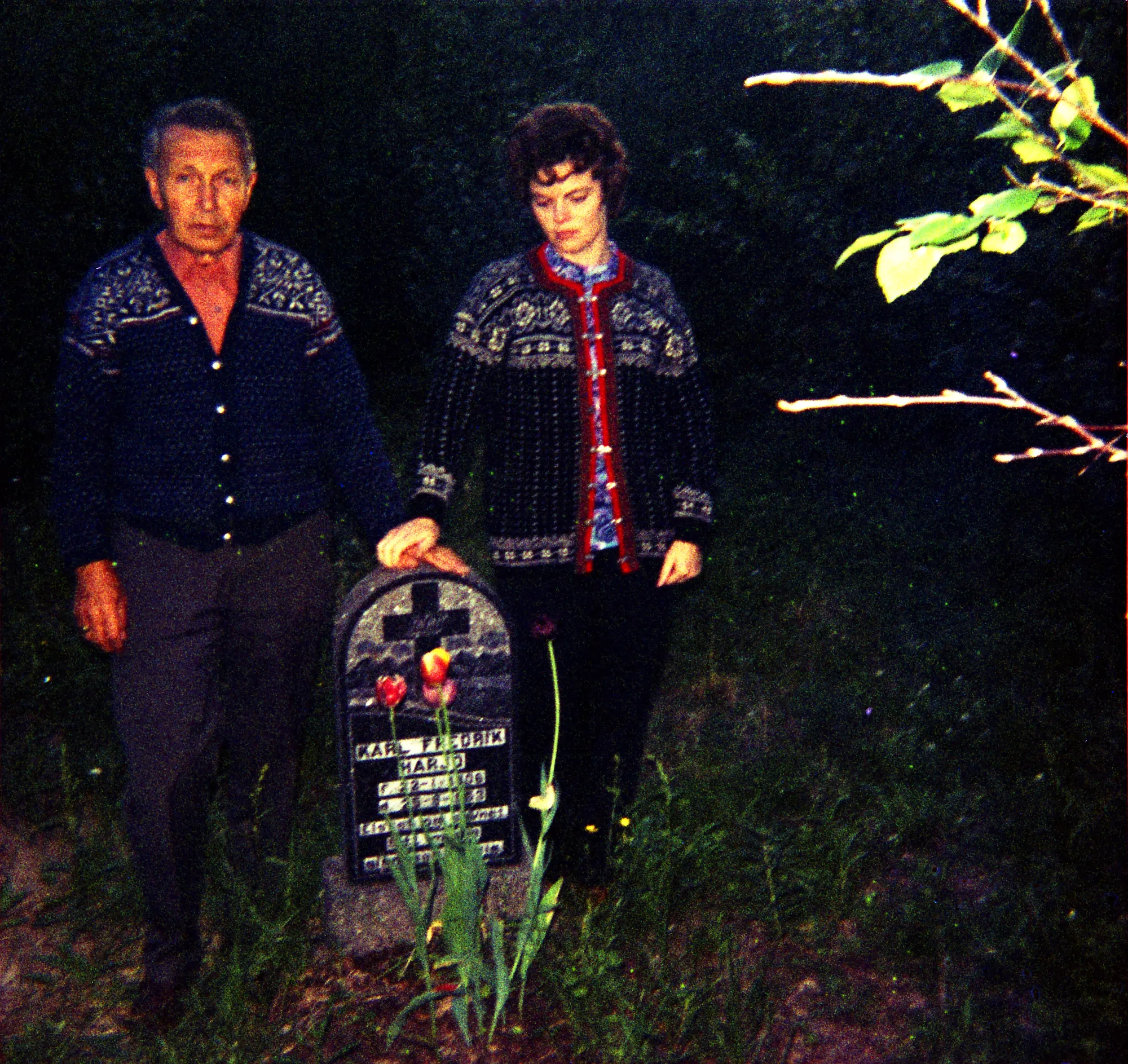
Karl’s brother and daughter during Hans’s visit to Norway in the 1970s.
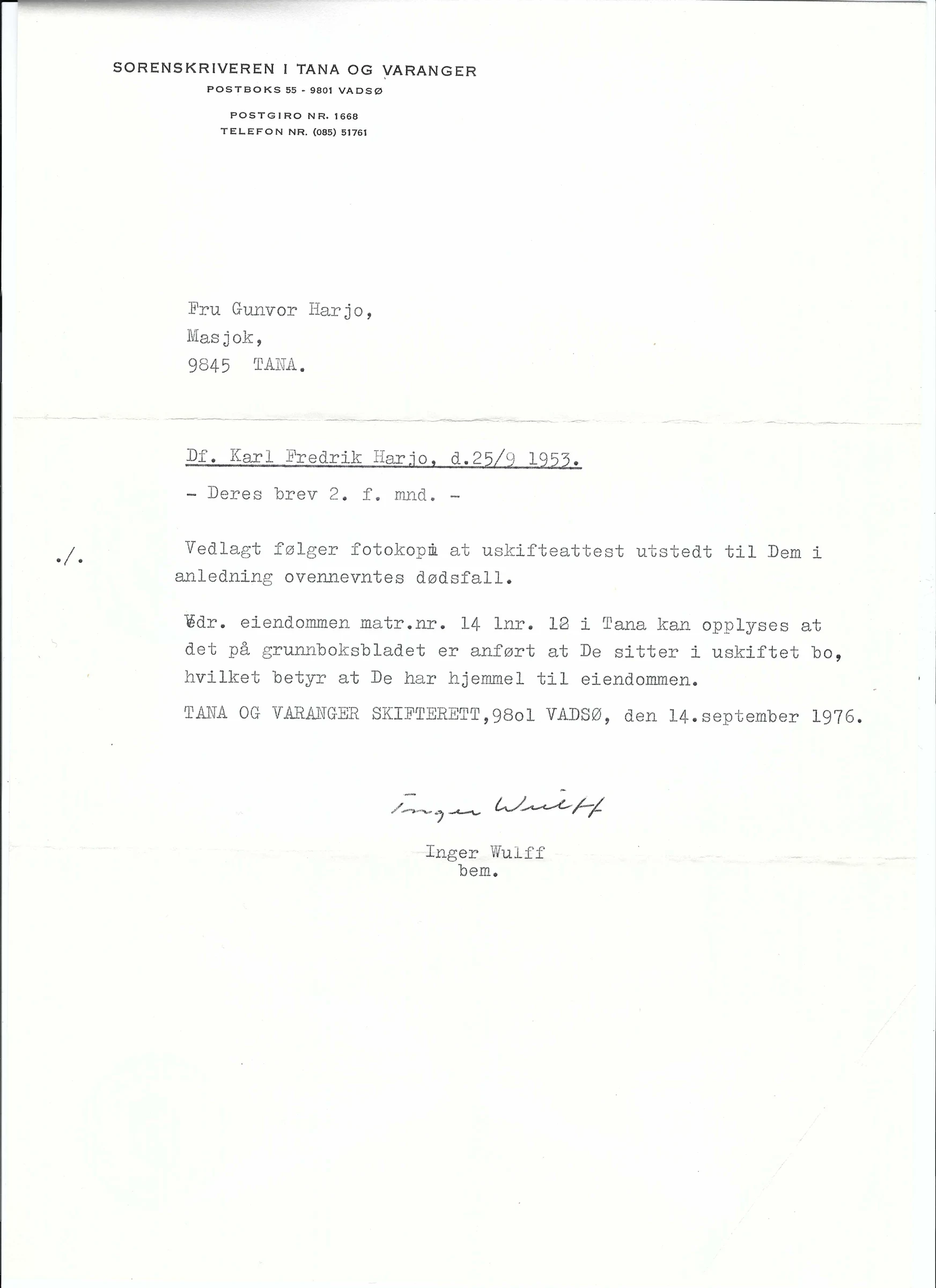
The property papers remained important long after the original estate decision. On 14 September 1976 the probate court sent Gunvor a certified copy of her estate certificate. Its covering letter states that the land register recorded her as holding the undivided estate and that she therefore had title to the property. The letter also repeats Karl’s death date, 25 September 1953. [10]
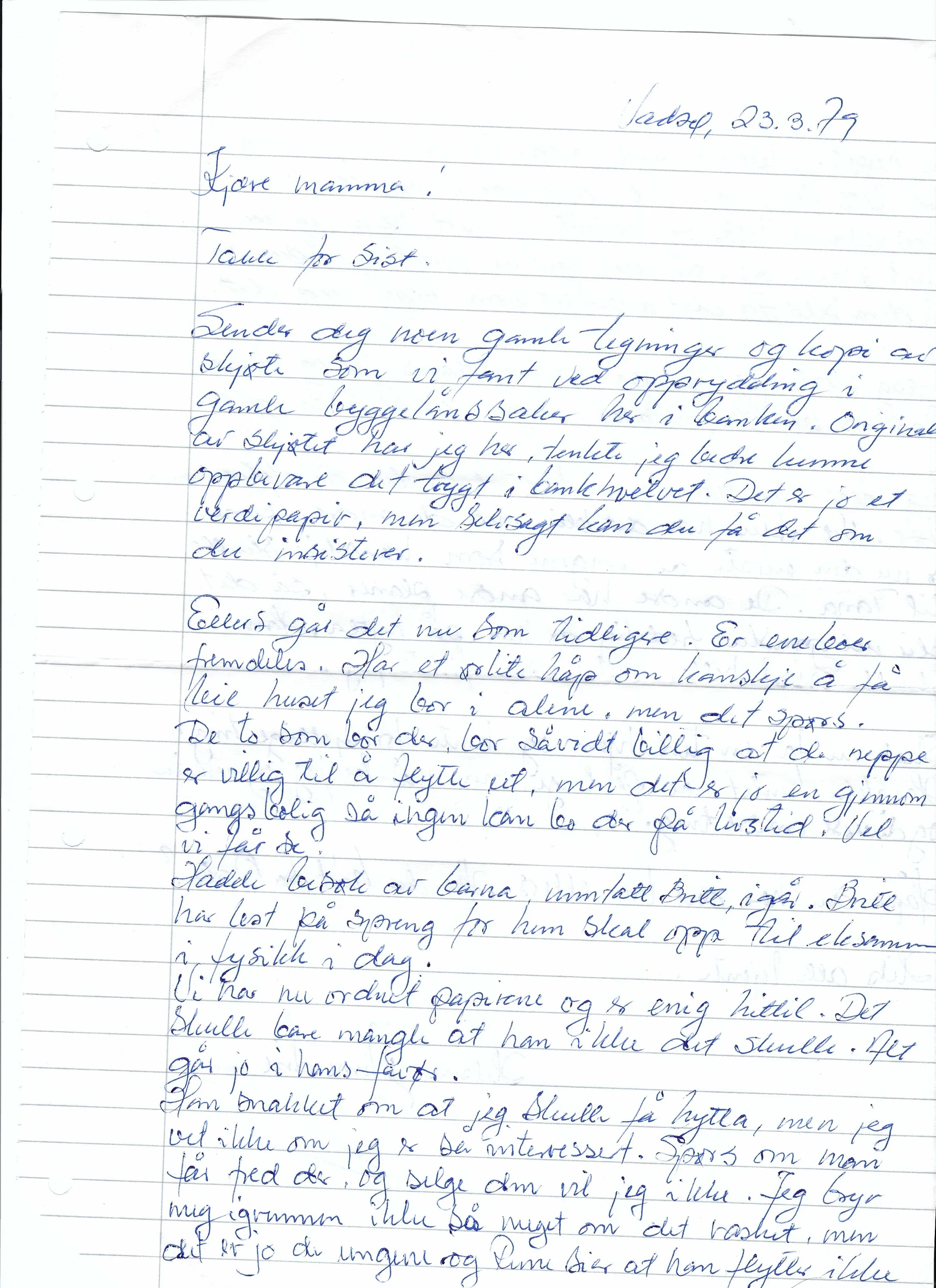
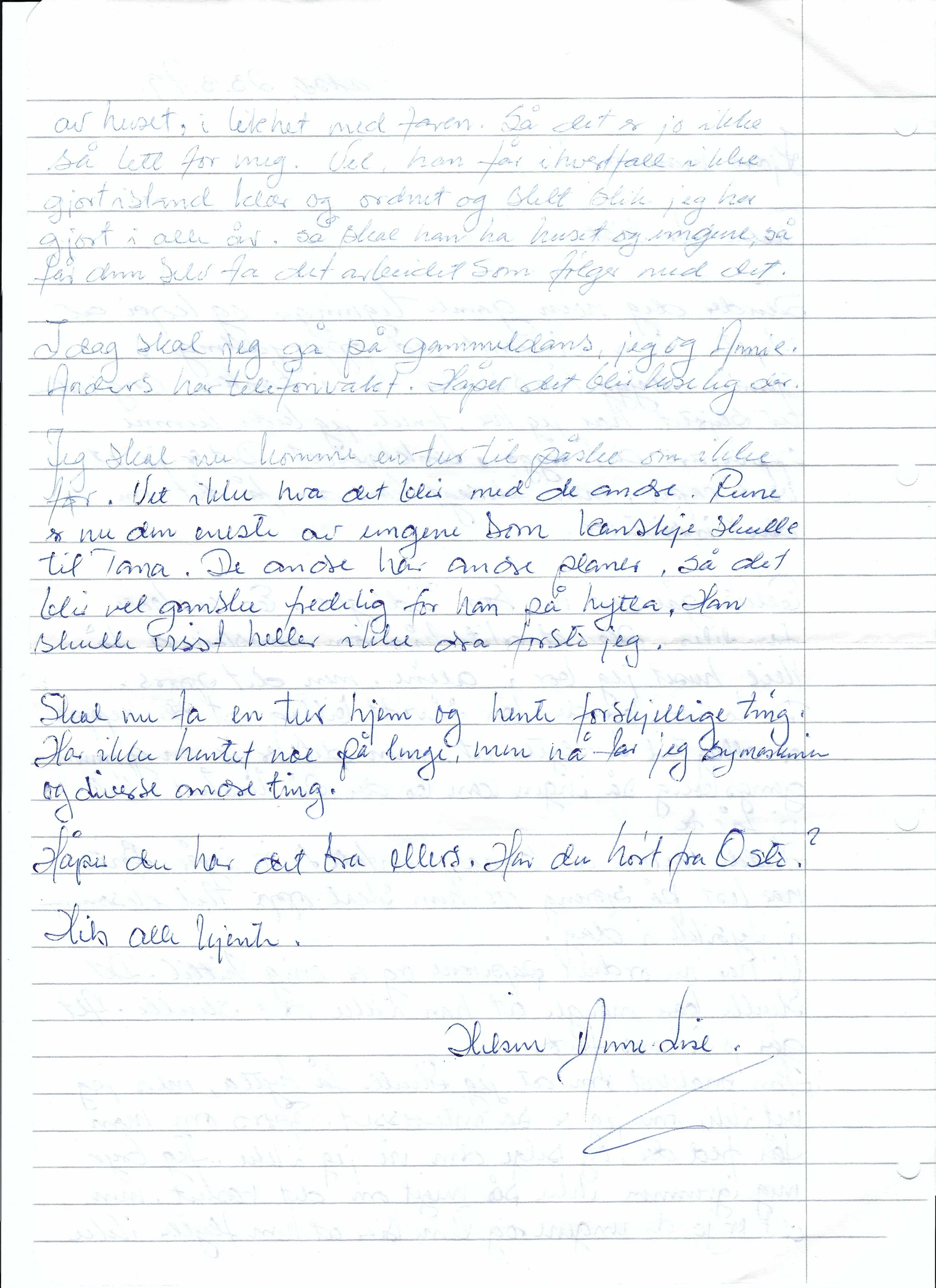
On 23 March 1979, Anne-Lise wrote to her mother from Vadsø after old building-loan files had been cleared out at the bank. She had found plans and a deed and was sending a copy; the original remained in the bank vault, and she offered to send it if her mother wanted it. The letter does not identify which deed it was, but it provides a glimpse of the care through which family papers survived. [17]
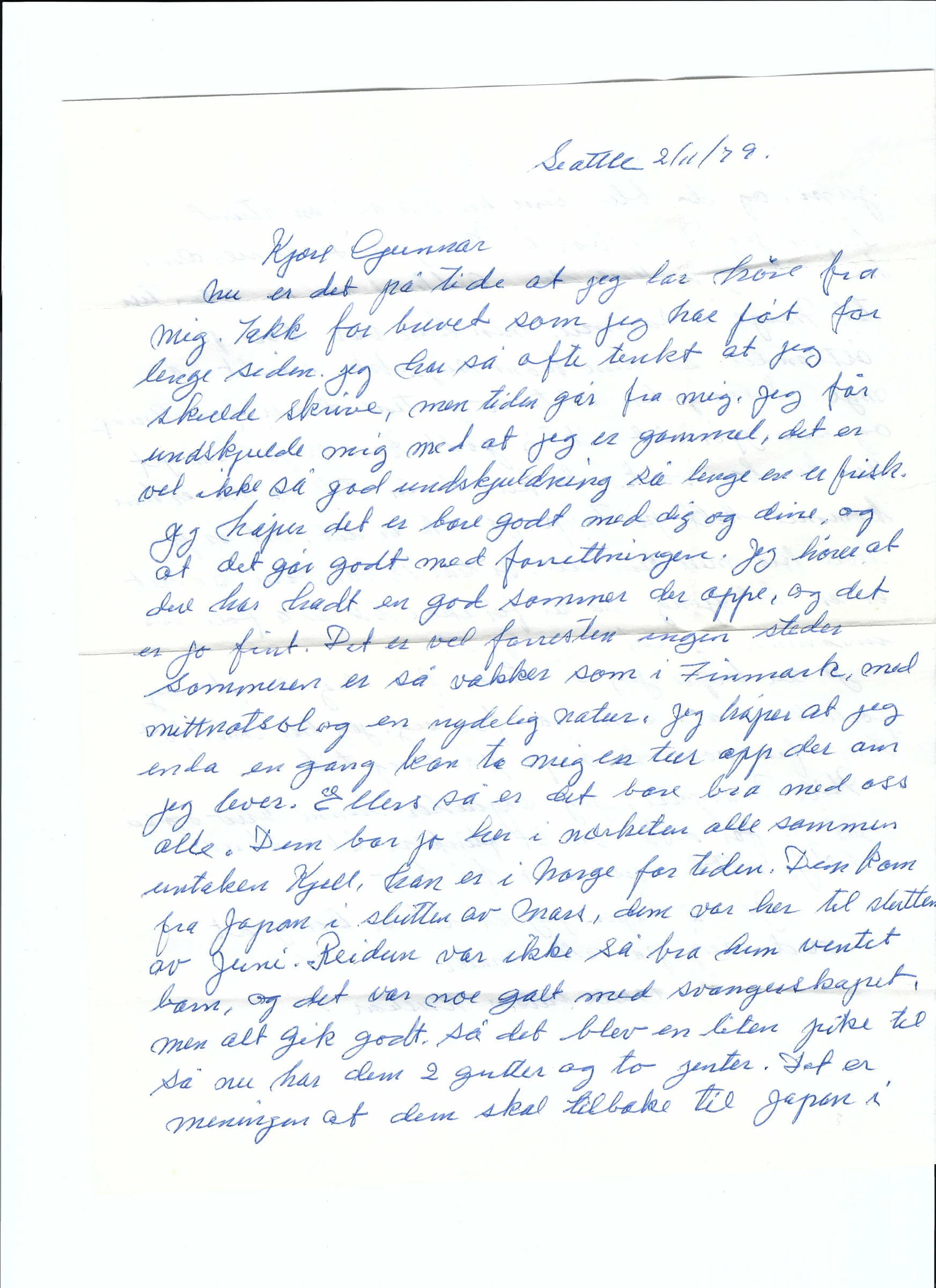
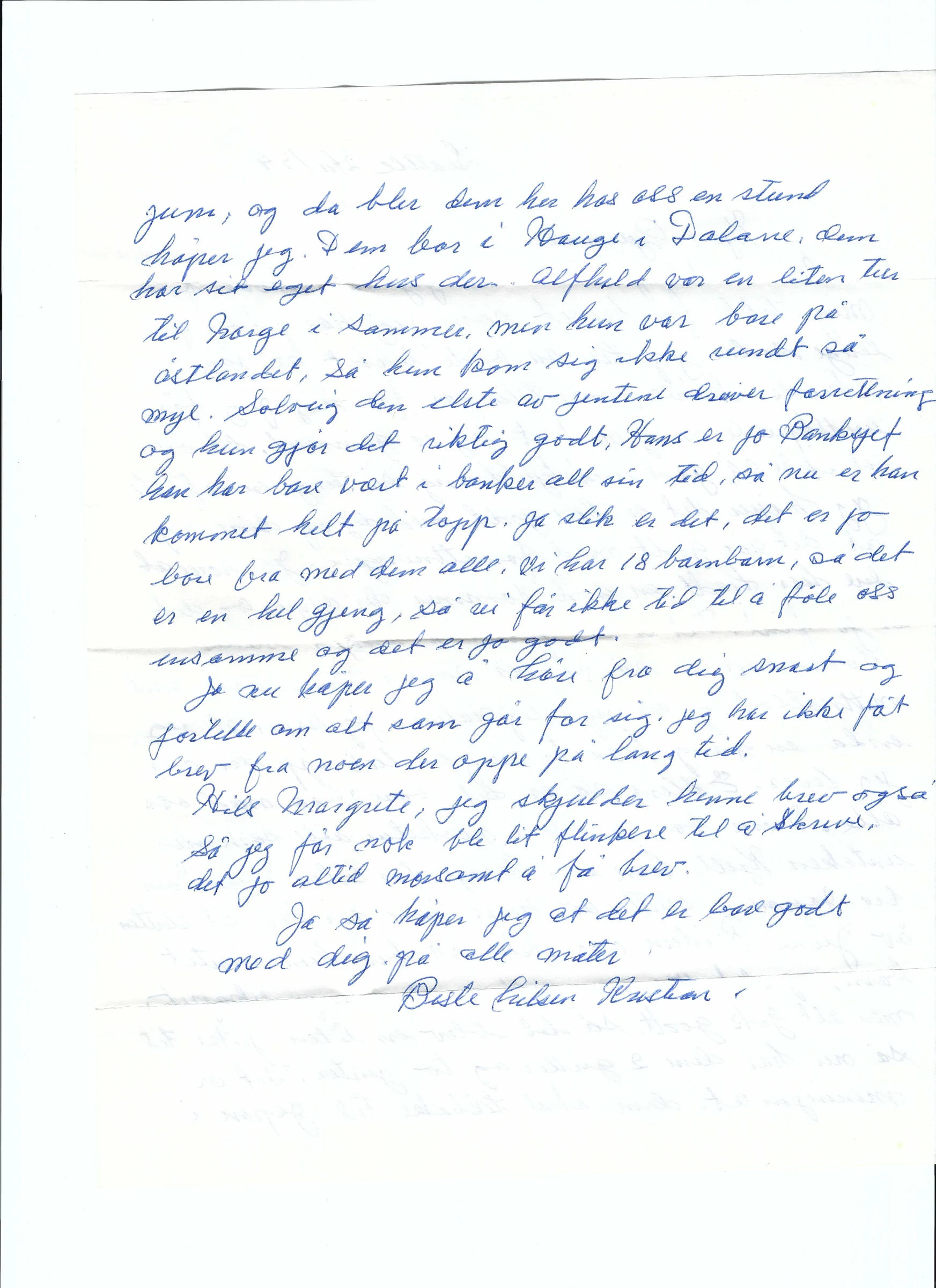
Other letters keep the family in touch across greater distances. Kristian’s later letters to Gunnar from Seattle brought news of children and grandchildren, visits to Norway and the family in Japan. An undated letter signed Britt fits Brit Marion Akerhei, Anne-Lise’s daughter, writing to her maternal grandmother about studies and nursing plans in Bergen. The tree identifies Freddy and Rune as her brothers. The correspondence preserves successive generations speaking to one another, not just looking back at Karl. [14] [18]
2025 · Returning to Masjok
The papers Gunnar kept
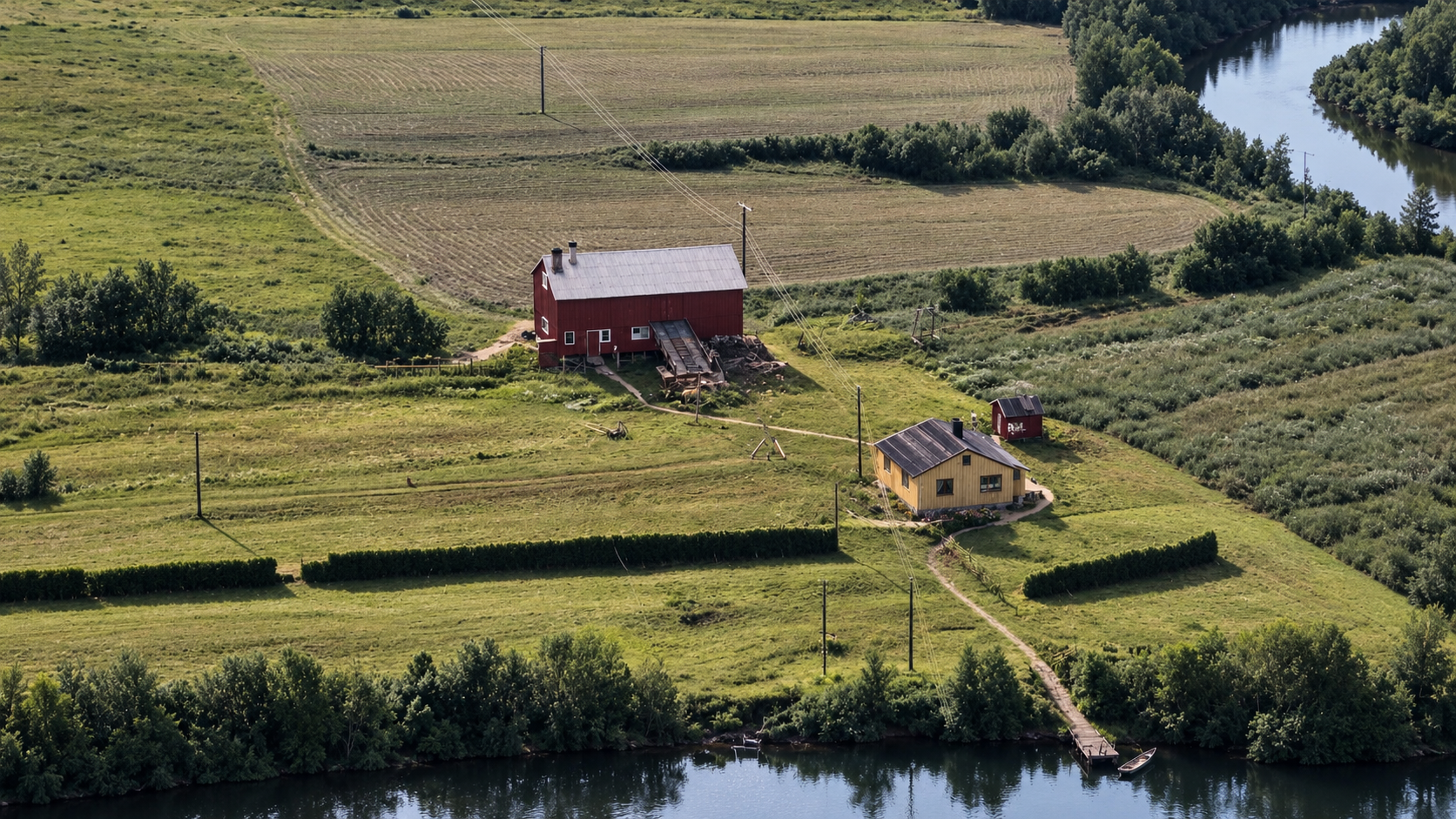
In 2025, Hans Kristian’s grandchild Isaac visited Tana, Masjok and Båtsfjord with his sister Alisa and scanned the papers that Gunnar had kept. Gunnar, Karl’s son, lives on the original Larsnes property bought by the family in 1899. That living connection gives the documents their setting: the farm is a place where later generations have continued to meet and remember. [3]
Karl’s story takes us from a childhood at Larsnes to work at sea and back to the family farm. He learned different kinds of work aboard ship, built a family with Gunvor, and became a tractor driver trusted for his skill. Through illness and loss, the work of the household continued, and the photographs, letters and memories passed on to the next generation.