Current reading edition
English translation
Square brackets mark uncertain words or editorial explanations. Songs are translated for meaning; their speakers are not necessarily the writer.
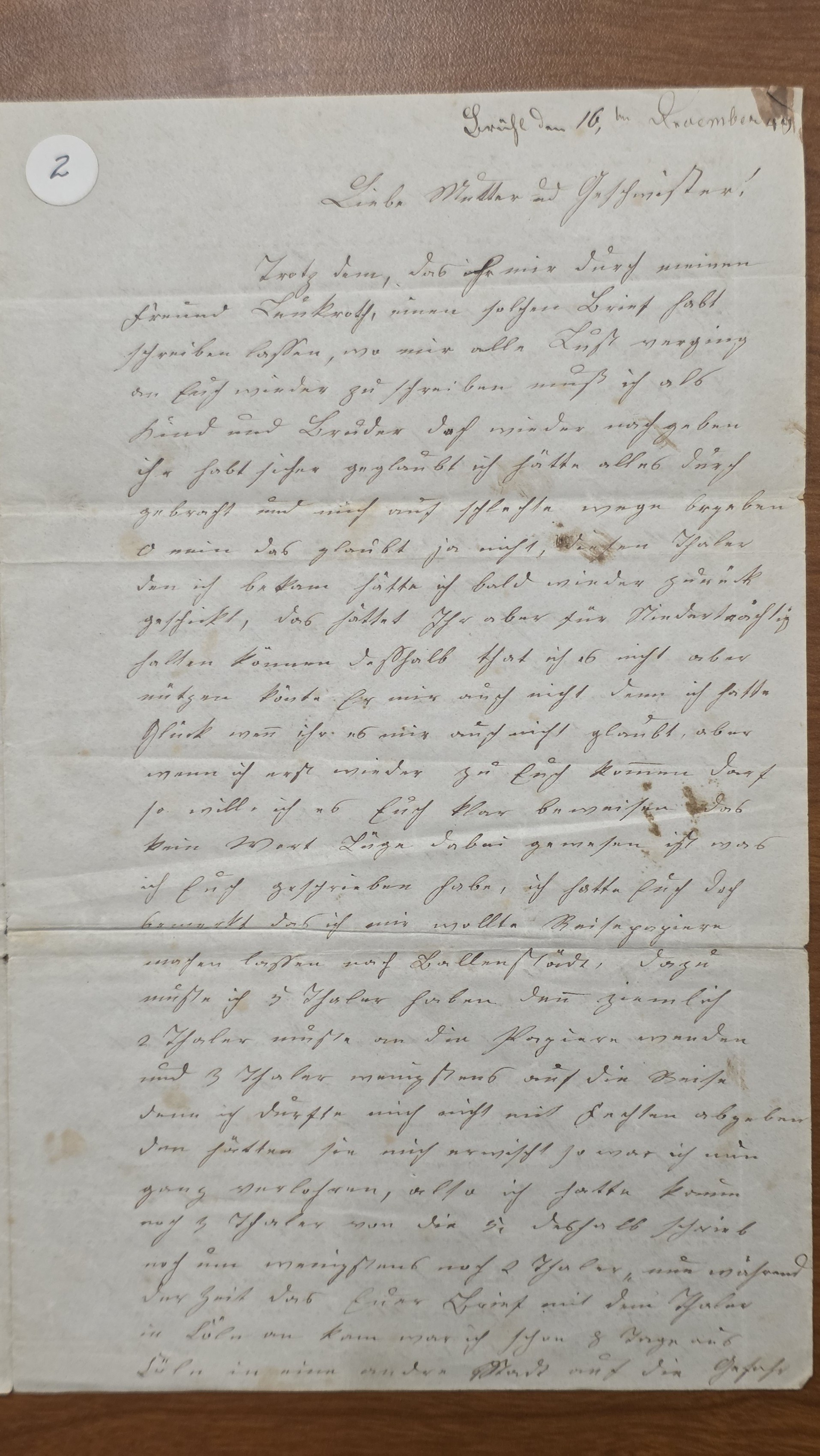
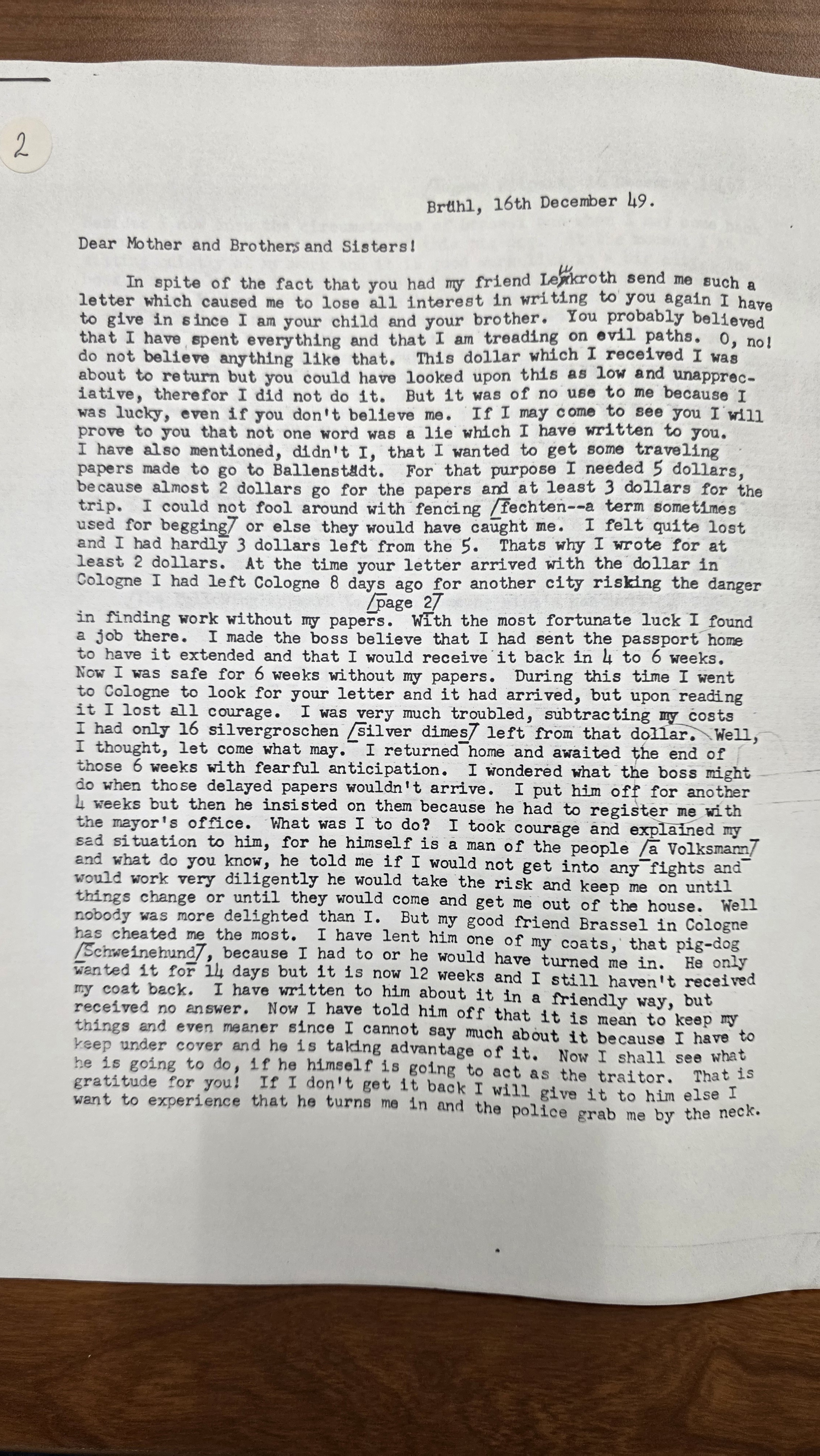
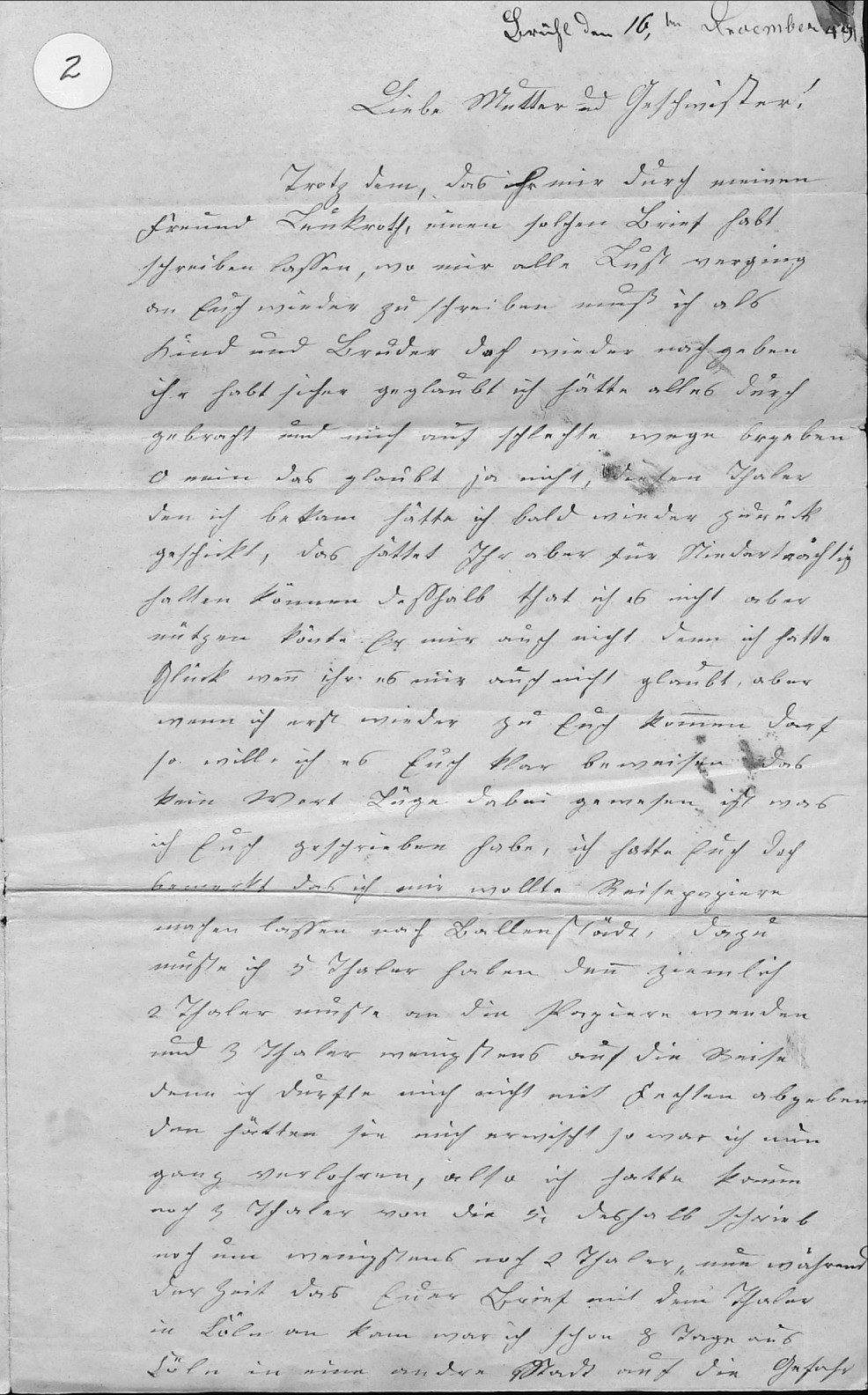
Download the English text ↓Brühl, December 16, 1849
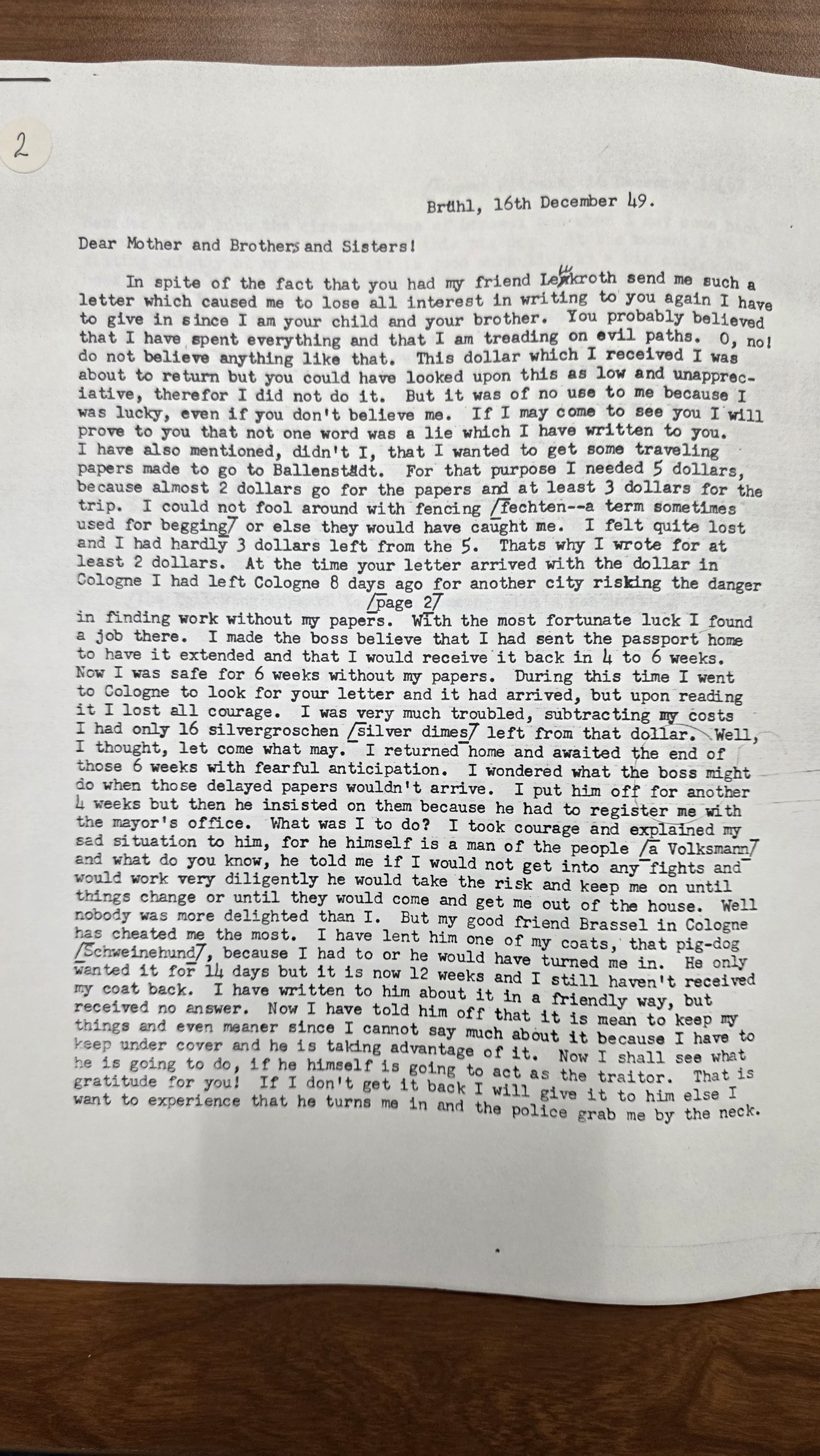
Dear Mother and siblings,
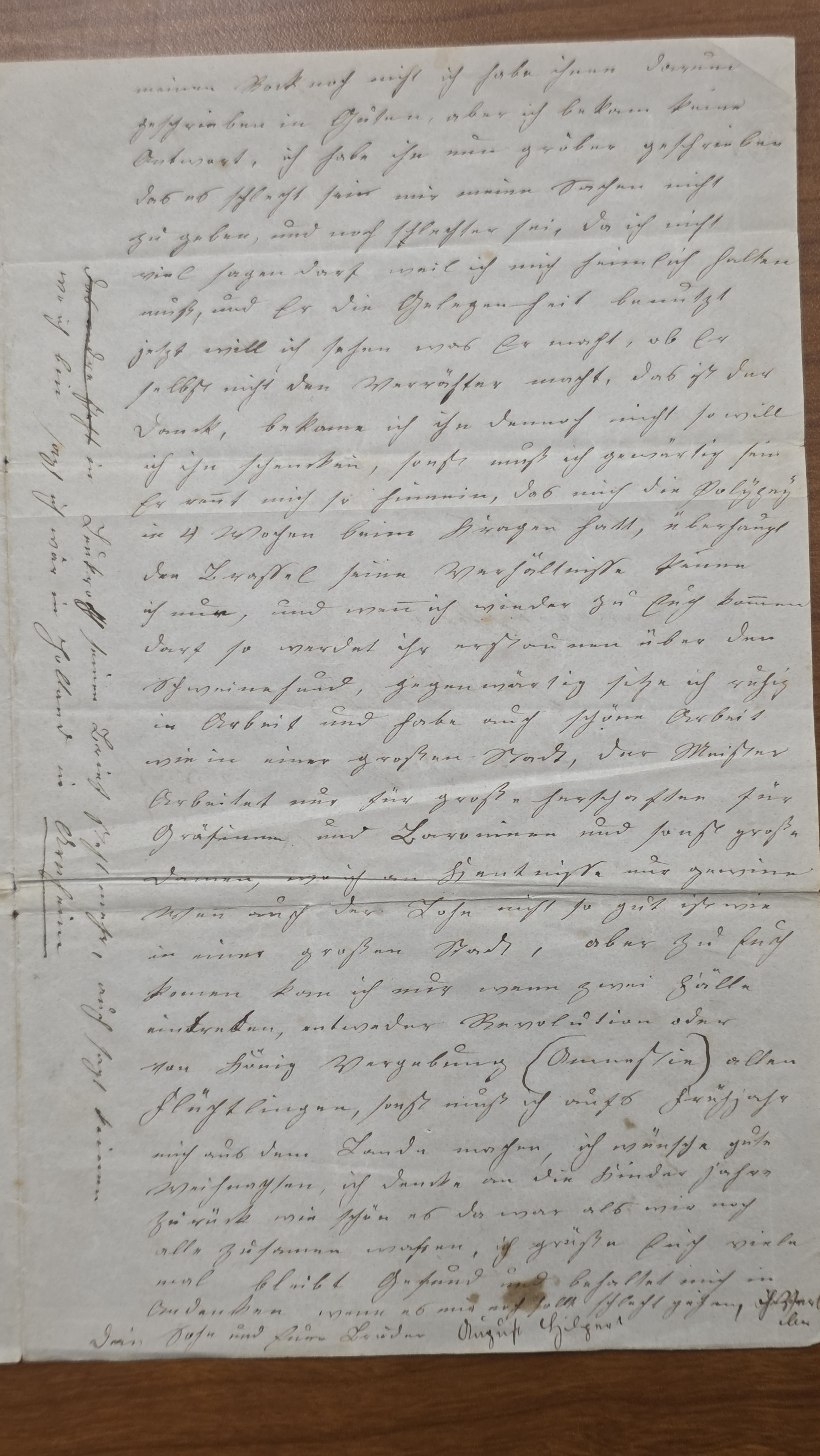
Although you had such a letter written to me through my friend [Leukroth/Lenkroth] that I lost all desire to write to you again, as your child and brother I must nevertheless give way again.
You have surely believed that I had squandered everything and gone astray. Oh no, do not believe that! I almost sent back the thaler I received, but you might have taken that as defiance, so I did not. Nor could it help me, for I had good fortune [“Glück”; the connection with the preceding sentence is unclear], even if you did not believe me. But if I am ever allowed to come back to you, I will prove clearly that there was not a word of a lie in what I wrote.
I had told you that I wanted to have travel papers made out for [Ballenstedt? — place-name uncertain]. For that I needed five thalers: namely, two thalers for the papers and at least three for the journey. For I could not deal with [unclear word or name]; if they had caught me, I would have been completely lost. I had scarcely three thalers left of the five, so I wrote asking for at least another two thalers.
By the time your letter with the thaler arrived in Cologne, I had already been away from Cologne for eight days, in another town, looking for work without a passport. Fortunately I found work. I told the master that I had sent my passport home to have it renewed and that it would come back in four to six weeks. This protected me for six weeks without a passport.
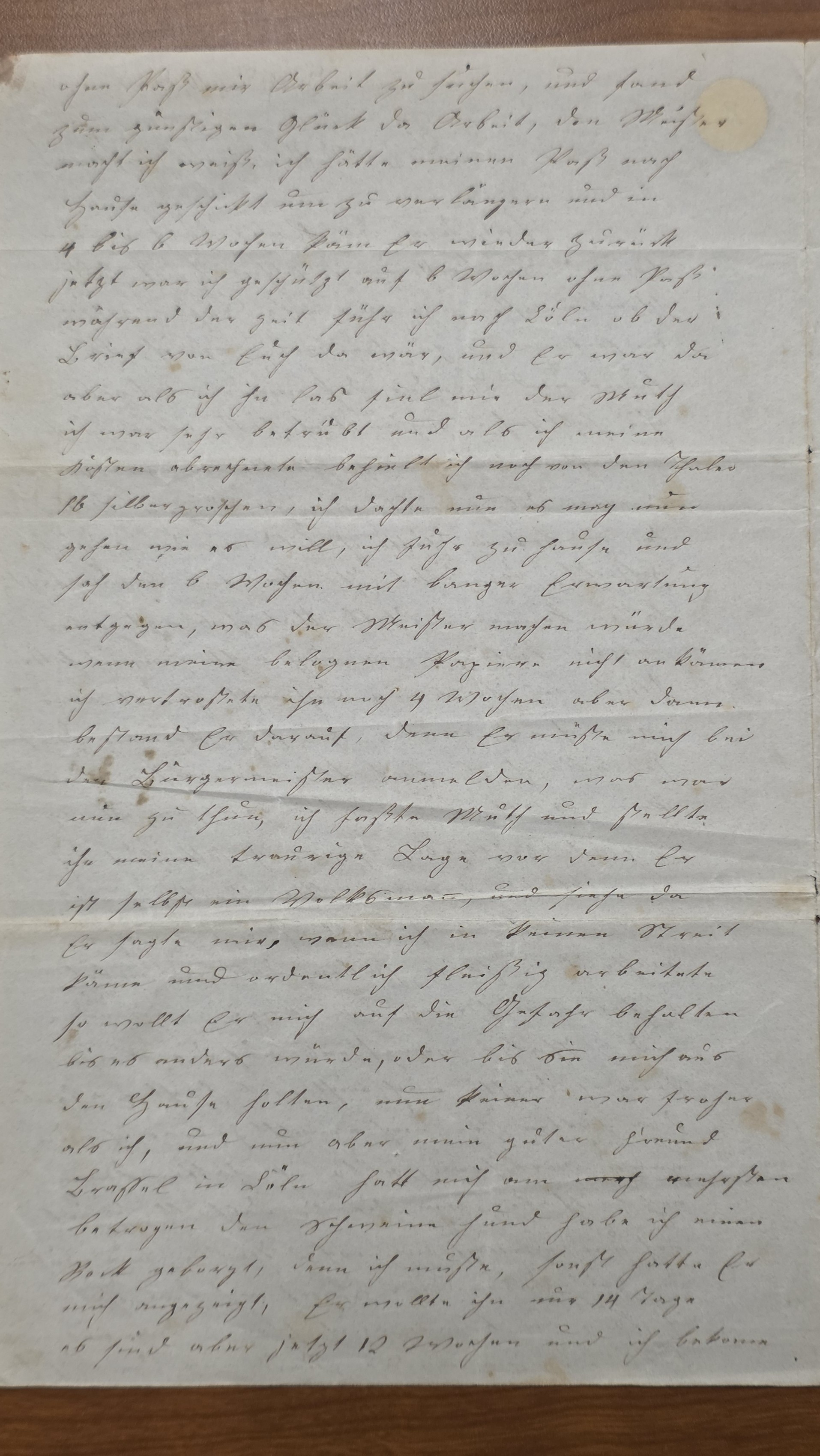
During that time I went to Cologne to see whether your letter had arrived. It was there, but when I read it my courage failed me. I was very distressed. When I settled my [account for lodging or board? — “Bissen” or similar, uncertain], I still had sixteen silver groschen left from the thaler.
I thought to myself: let things go as they will. I stayed at my lodgings and looked anxiously toward the end of the six weeks, wondering what the master would do when the papers I had lied about did not arrive.
I put him off for another four weeks, but then he insisted, for he had to register me with the mayor. What was I to do? I gathered my courage and explained my unhappy situation to him, for he himself is a man of the people [“Volksmann”]. And behold, he told me that if I kept out of trouble and worked properly and diligently, he would keep me at his own risk until things changed or they fetched me out of the house.
No one was happier than I was.
But now, my good friend Brassel in Cologne has treated me disgracefully. I lent my coat to that scoundrel because I had to; otherwise he would have reported me. He wanted to keep it for fourteen days, but it has now been twelve weeks, and I still cannot get my coat back.
I have written to him in Cologne about it but received no answer. I have now written him a harsh letter saying how bad it is of him not to return my belongings, and worse still because I cannot say much, since I have to keep myself hidden and he is taking advantage of the opportunity.
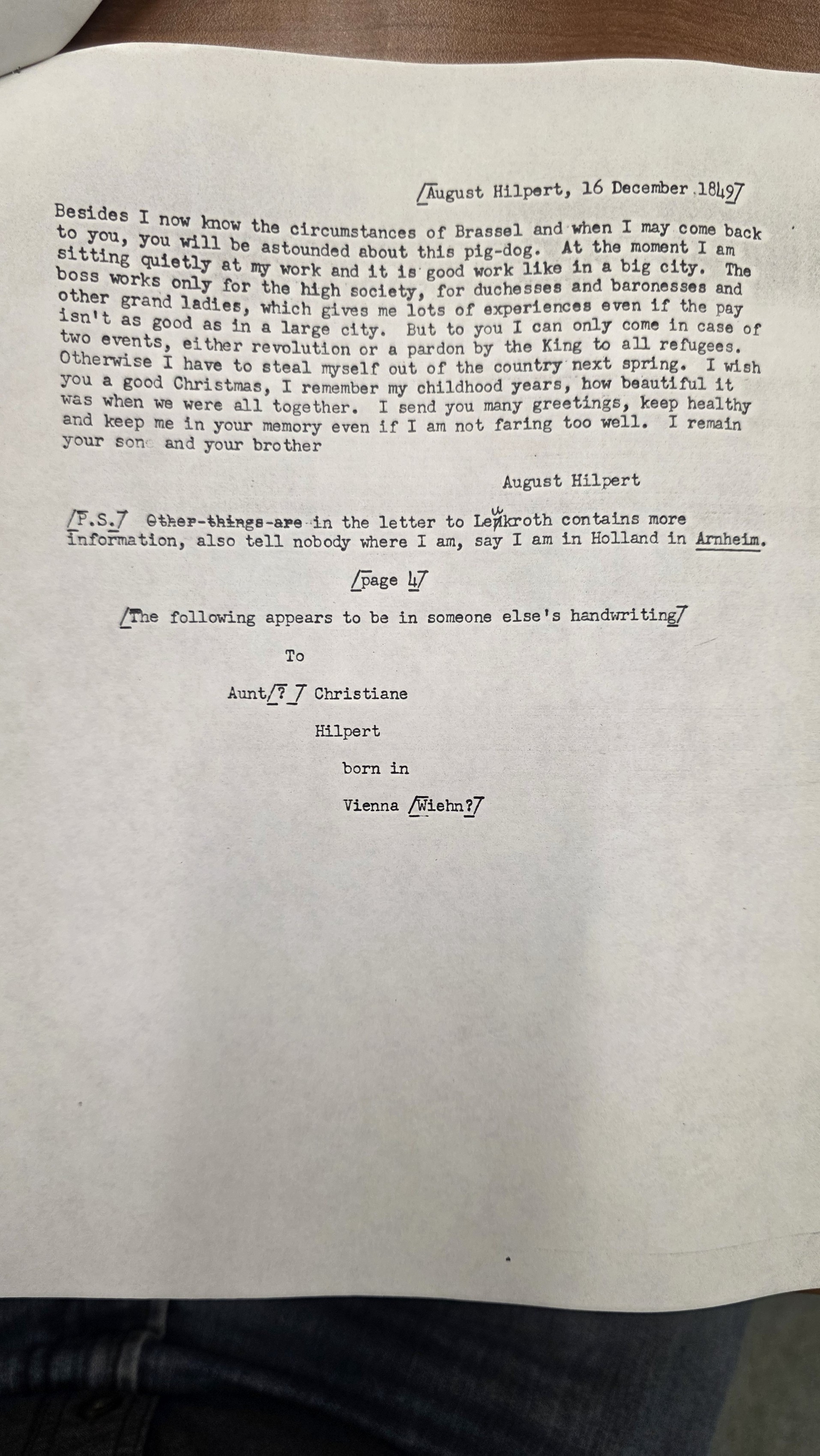
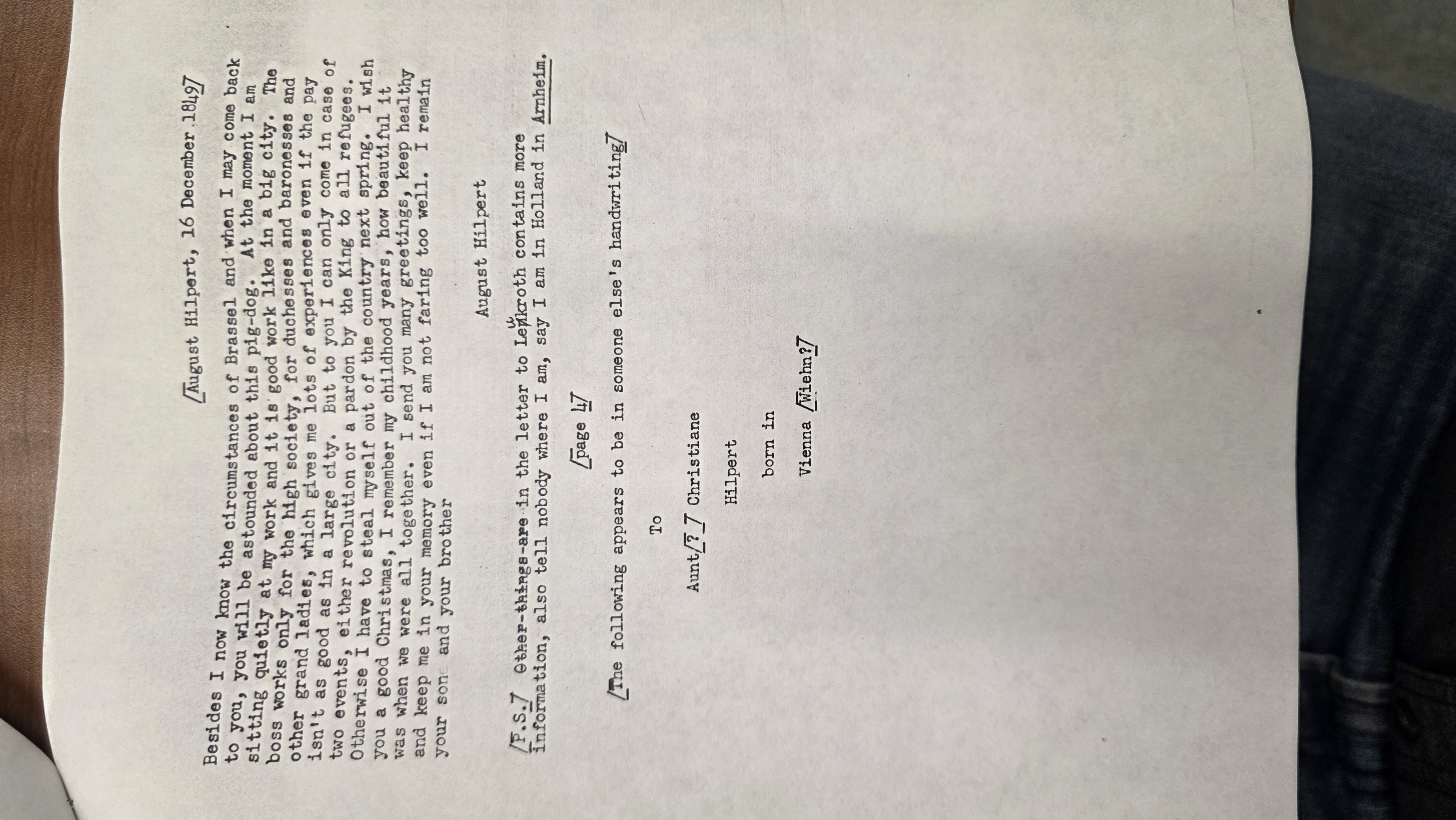
Now I shall see what he does—whether he himself will turn informer because I am threatening him. If I still do not get it back, I will let him keep it; otherwise I must expect him to betray me so that the police have me by the collar within four weeks [“beim Kragen”]. In any event, I know the scoundrel's circumstances, and if I am ever allowed to come back to you, you will hear more about him.
For the present I am steadily at work, and I have fine work, such as one would have in a large city. The master works only for great households—for countesses, baronesses and other great ladies. But the wages here are not as good as in a large city.
But I can come to you only if one of two things happens: either a revolution, or a pardon from the king—an amnesty—for all the fugitives. Otherwise, in the spring I must leave the country.
I wish you a happy Christmas. I think back to our childhood years, how lovely it was when we were all together. I send you many greetings. Stay well, and keep me in your thoughts, even if things should go badly for me.
Your son and your brother,
August [Hilpert]
[A small flourish or abbreviated final addition beside the closing is not securely legible.]
Marginal instruction
“[Opening uncertain; the historical translation directs the reader to Leukroth’s letter for further information.] Do not tell anyone where I am. Say that I am in Holland, in [Arnheim?].”
Important: The instruction to say he is in Holland is a cover story. It must not be entered as evidence that he was actually living there. The letter's own heading places him in Brühl.
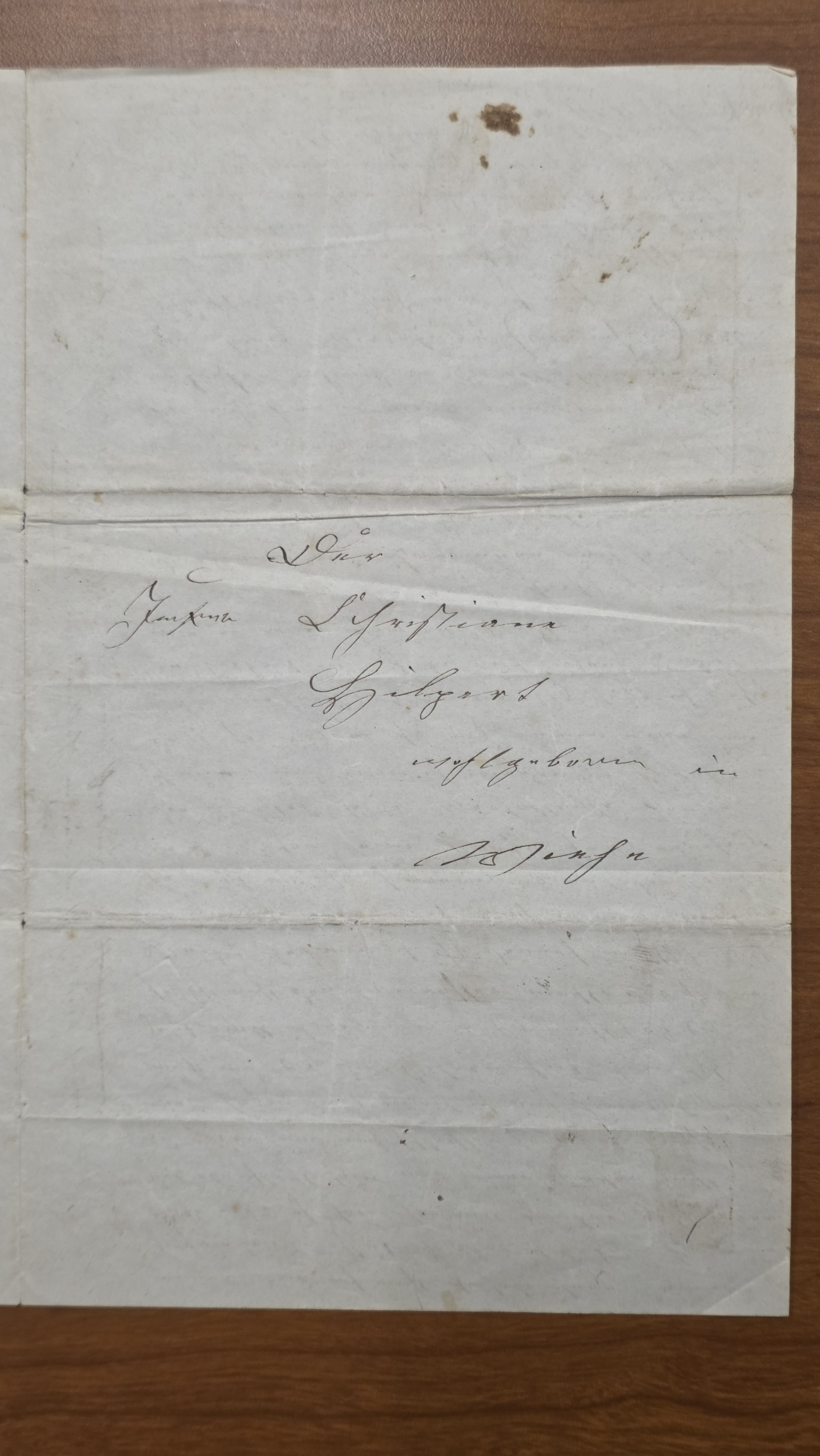
Address panel
To Miss [Christiana/Christiane] [Hilpert],
[conventional courtesy expression],
Wiehe.
This is a promising connection with the sister identified by the family as Christel (Christina), but the letter does not explicitly state that the named addressee is that sister. Preserve the manuscript's uncertain spelling until corroborating records settle it.